

William Hogarth was a prominent painter and printmaker of 18th-century England, whose work left a significant mark on British art history. He used art not only as a medium for aesthetic expression but also as a powerful tool for critiquing the moral corruption and social injustices of his time. Hogarth’s satirical art conveyed sharp criticisms of the various problems that plagued British society, and he excelled at telling stories through his paintings. His works vividly depicted different social classes, often highlighting the hypocrisy of the upper class and the suffering of the lower class, leaving a strong impression on many. Furthermore, by utilizing printmaking, Hogarth sought to spread his work to the masses, which allowed his artistic messages to reach a wider audience. His art remains a record of his era, and to this day, he is regarded as a pioneer of British art and socially critical art.
윌리엄 호가스(William Hogarth)는 18세기 영국의 대표적인 화가이자 판화가로, 영국 미술사에 큰 획을 그은 인물이다. 그는 예술을 단순히 미적인 표현에 머무르지 않고, 당대 사회의 도덕적 타락과 부조리를 강하게 비판하는 도구로 사용했다. 그의 풍자적 예술은 당시 영국 사회의 여러 문제들에 대한 신랄한 비판을 담고 있으며, 특히 서사적 구성을 통해 이야기를 전달하는 데 매우 능숙했다. 호가스는 사회의 여러 계층과 부류를 사실적으로 묘사했으며, 상류층의 위선과 타락, 하층민의 고통을 직설적으로 그려냄으로써 많은 사람들에게 강렬한 인상을 남겼다. 또한, 그는 판화를 통해 자신의 작품을 대중에게 널리 알리고자 했고, 이를 통해 더 많은 사람들에게 자신의 예술적 메시지를 전파할 수 있었다. 그의 작품은 그 자체로 시대의 기록이며, 오늘날에도 영국 예술과 사회 비판적 예술의 선구자로 평가받고 있다.
Pioneer of Narrative Satirical Art
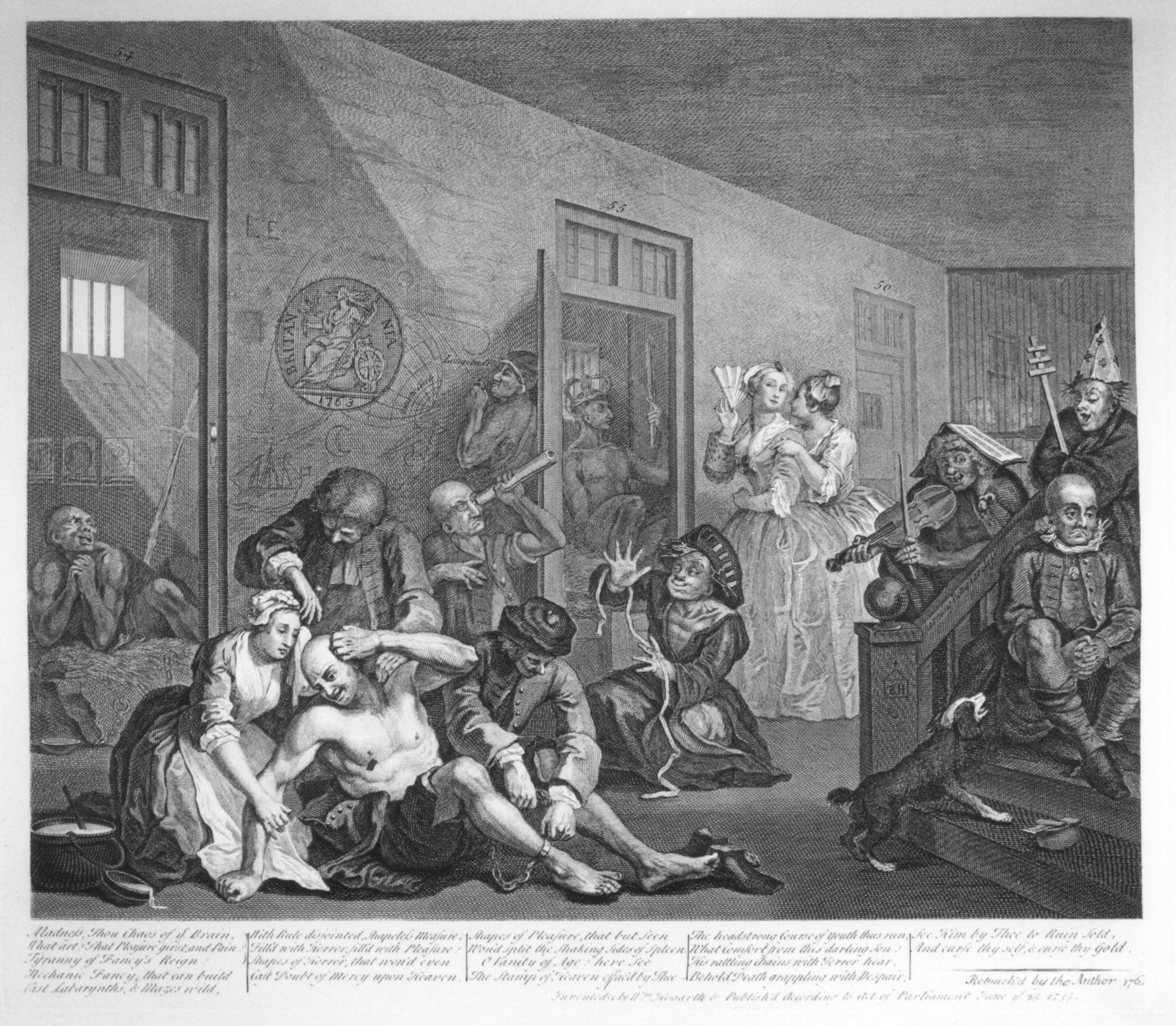
Hogarth was not just a painter but also a visual storyteller. His work, “A Rake’s Progress,” is one of his most famous narrative series that depicts the moral decline and downfall of a man through a sequence of scenes. This series follows the life of a young man who, after inheriting a fortune, squanders it through gambling, debauchery, and luxury, eventually ending up in a madhouse where he dies in misery. Comprising eight scenes, the work vividly portrays how the protagonist’s indulgence in vice leads to his ruin. In the first scene, the protagonist begins to waste his inheritance, and by the second scene, he is deeply involved in gambling and prostitution. As his life spirals out of control, the last scene shows his tragic death in a mental institution. Hogarth used this series to warn of the consequences of moral corruption, using detailed visual elements in each scene to help viewers understand the protagonist’s inner conflicts and psychological changes.
풍자적 서사 예술의 선구자
호가스는 단순한 화가가 아닌 시각적 이야기꾼이었다. 그의 작품 “탕자의 행로”(A Rake’s Progress)는 도덕적 타락과 몰락의 과정을 연속된 장면들로 묘사한 대표적인 예이다. 이 연작은 한 젊은 남자가 부유한 상속자에서부터 방탕한 생활을 거쳐 결국 정신병원에서 비참한 죽음을 맞이하기까지의 과정을 다룬다. 이 작품은 8개의 장면으로 구성되어 있으며, 각 장면은 그가 방탕과 사치에 빠져 어떻게 자신의 삶을 망치게 되는지를 생생하게 보여준다. 첫 번째 장면에서는 상속받은 재산을 낭비하기 시작하는 주인공이 등장하며, 두 번째 장면부터는 그가 도박과 매춘에 빠지는 모습을 그린다. 그의 삶은 점차 무질서와 파멸로 향해가고, 마지막 장면에서는 정신병원에서 고통스럽게 삶을 마감하게 된다. 호가스는 이 작품을 통해 당시 영국 사회의 도덕적 타락과 그로 인한 파멸을 경고하고자 했으며, 각 장면에 숨겨진 디테일한 요소들을 통해 관람자가 주인공의 내면적 갈등과 심리적 변화를 이해하도록 했다.


Marriage à-la-Mode: The Tragic Irony of Upper-Class Marriage
Another important series by Hogarth is “Marriage à-la-Mode,” a six-piece narrative that critiques the marriage practices of the English upper class. The series dramatically depicts how loveless marriages for financial and social gain inevitably lead to tragedy. In the first scene, a financially troubled nobleman arranges the marriage of his daughter to the wealthy son of a merchant. This marriage, aimed at preserving the family’s status, lacks love and mutual respect from the start. In the second scene, the newlyweds are shown indifferent to each other, and soon both are engaged in extramarital affairs. As the series progresses, their marriage begins to collapse due to infidelity. The final scene concludes tragically with the husband being murdered by his wife’s lover. Through this series, Hogarth harshly satirizes the selfish and superficial marriage customs of the upper class, prompting viewers to reflect on the true meaning of marriage.
Marriage à-la-Mode: 상류층 결혼의 비극적 아이러니
호가스의 또 다른 중요한 연작인 “Marriage à-la-Mode“는 영국 상류층의 결혼 관습을 신랄하게 비판한 작품이다. 이 6개의 연작은 사랑이 없는 결혼이 어떻게 비극적인 결말로 이어지는지를 극적으로 보여준다. 첫 번째 장면에서는 몰락한 귀족 가문이 재정적 문제를 해결하기 위해 돈 많은 상인의 딸과 결혼을 약속하는 모습이 그려진다. 이러한 결혼은 상류층의 지위를 유지하기 위한 전략적인 선택이었지만, 정작 결혼의 본질인 사랑과 신뢰는 결여된 상태였다. 두 번째 장면에서는 신혼부부가 서로에게 무관심한 모습을 보여주며, 이후 그들은 각각의 애인과 불륜을 저지른다. 세 번째 장면에서는 그들의 결혼 생활이 점차 무너지는 모습이 그려지며, 그들의 외도가 점점 더 심각해진다. 네 번째와 다섯 번째 장면에서는 외도가 폭로되고 갈등이 극대화되며, 마지막 장면에서는 남편이 아내의 애인에게 살해당하는 비극적인 결말로 끝을 맺는다. 호가스는 이 작품을 통해 당시 상류층의 형식적이고 이기적인 결혼 관습을 신랄하게 풍자하고, 결혼의 진정한 의미가 무엇인지를 고찰하도록 만들었다.


The Four Stages of Cruelty: A Warning Against Brutality
“The Four Stages of Cruelty” is another of Hogarth’s powerful series, warning against human brutality and the moral decay that follows. The series depicts how cruelty, beginning with animal abuse, eventually leads to more severe crimes, escalating to violence against humans. In the first scene, young boys are seen tormenting animals on the streets, a common sight among the lower classes of that time. The boys’ cruelty towards animals becomes more violent as they grow older. The second scene shows the protagonist as a teenager, transitioning from animal cruelty to harming people. In the third scene, as an adult, he is depicted committing murder, and in the final scene, he is executed for his crimes. Through this series, Hogarth emphasizes that small acts of cruelty, if unchecked, can escalate into greater crimes that affect society as a whole. His work warns against the moral consequences of allowing brutality to go unchallenged, underscoring the importance of addressing such behaviors early on.
The Four Stages of Cruelty: 잔인함에 대한 경고
“The Four Stages of Cruelty“는 호가스가 인간의 잔인함과 그로 인한 도덕적 타락을 경고한 강력한 작품이다. 이 시리즈는 인간이 어떻게 잔인함을 학습하고, 그것이 결국 큰 범죄로 발전하는지를 4개의 단계로 묘사하고 있다. 첫 번째 장면에서는 어린아이들이 동물들을 학대하는 모습이 그려지며, 이는 당시 하층민들 사이에서 흔히 볼 수 있었던 장면이다. 아이들은 고양이와 개를 학대하고, 이러한 잔인함은 그들이 점차 성장하면서 더욱 심각해진다. 두 번째 장면에서는 청소년이 된 주인공이 동물 학대에서 벗어나 사람을 해치는 범죄자가 되는 과정을 보여준다. 세 번째 장면에서는 그가 성인이 되어 살인을 저지르는 장면이 묘사되며, 마지막 장면에서는 그가 결국 처형당하는 모습이 그려진다. 호가스는 이 시리즈를 통해 인간의 잔인함이 동물 학대에서 시작되어 점차 더 큰 범죄로 이어질 수 있음을 경고하고, 인간의 도덕적 타락이 사회 전체에 미치는 영향을 강조했다. 또한, 그는 이 작품을 통해 사회가 이러한 잔인함을 방치했을 때 결국 그 결과는 처참할 수밖에 없다는 메시지를 전달했다.


Hogarth’s Artistic Techniques and Originality
Hogarth’s originality extended beyond the themes of his work to his artistic techniques. He did not merely depict the outward appearance of his subjects but delved deeply into their social contexts and inner worlds. Through the expressions and gestures of his characters, he vividly conveyed their emotions and the situations they were in, allowing viewers to empathize with the lives of his subjects and sense their psychological transformations. Moreover, Hogarth excelled at composing complex scenes, often embedding multiple narratives within a single image. His works often featured numerous characters and events intertwined in a single scene, and viewers could infer different stories from the intricate details. For example, in “A Rake’s Progress” and “Marriage à-la-Mode,” the interactions between characters and the detailed settings in which they are placed play a critical role in advancing the narrative. Hogarth also used printmaking to disseminate his work more widely to the public, which played a key role in spreading his social messages. His prints were accessible not only to the upper class but also to the lower classes, greatly expanding his artistic influence.
호가스의 예술적 기법과 독창성
호가스는 예술적 표현에서 매우 독창적이었다. 그의 작품은 단순히 인물의 외형을 묘사하는 것에 그치지 않고, 그 인물이 속한 사회적 맥락과 그들의 내면세계를 정교하게 표현했다. 그는 인물들의 표정과 몸짓을 통해 그들이 처한 상황과 감정을 생생하게 전달했으며, 이를 통해 관객들은 작품 속 인물들의 삶에 공감하고 그들의 심리적 변화를 느낄 수 있었다. 또한, 호가스는 매우 복잡한 장면 구성을 통해 하나의 그림 속에 여러 이야기를 동시에 담아내는 데 능했다. 그의 작품은 종종 하나의 장면 안에 여러 인물과 사건이 얽혀 있으며, 관람자는 그림 속의 세부 요소들을 통해 각각의 이야기를 유추할 수 있다. 예를 들어, “탕자의 행로“와 “Marriage à-la-Mode“에서는 인물들이 서로 상호작용하는 방식과 그들이 처한 공간의 디테일이 이야기의 전개를 설명하는 중요한 역할을 한다. 또한, 호가스는 판화 작업을 통해 자신의 작품을 대중에게 보다 널리 알리고자 했으며, 이는 그의 사회적 메시지를 더 많은 사람들에게 전달하는 데 중요한 역할을 했다. 그의 판화는 당시 영국의 상류층뿐만 아니라 하층민들까지도 쉽게 접할 수 있었으며, 이를 통해 그의 예술적 영향력은 더욱 확장되었다.


Lesser-Known Rumors and Behind-the-Scenes Stories
Hogarth was known for being a highly proud artist, and he often had conflicts with his contemporaries. He is particularly remembered for his disputes with the Royal Academy, which stemmed from the fact that his artistic philosophy differed significantly from the traditional academic approach. While the Royal Academy emphasized classical art education, Hogarth preferred realistic and socially critical art. This difference often led to his feeling marginalized within the academic art community. Despite his efforts to reform art education, his innovative ideas did not gain much traction within the scholarly art world. Nevertheless, Hogarth continued to produce works that reflected his philosophy, unabashedly critiquing the hypocrisy and corruption of the upper class. His critical stance sometimes resulted in tensions with the aristocracy and powerful figures of his time. Hogarth was also known to be fiercely independent in his personal life, valuing his artistic autonomy. This independence allowed him to persist in his creative endeavors, even when facing criticism from the art world.
잘 알려지지 않은 소문과 비하인드 스토리
호가스는 매우 자부심이 강한 예술가로 알려져 있었으며, 동시대 예술가들과의 갈등도 자주 발생했다. 그는 왕립 아카데미와의 마찰로 유명한데, 이는 그의 예술적 철학이 전통적인 학문적 예술과는 상당히 달랐기 때문이다. 왕립 아카데미는 고전적 예술 교육을 중시했지만, 호가스는 현실적이고 사회 비판적인 예술을 선호했다. 이러한 차이로 인해 그는 종종 아카데미 내부에서 소외된 느낌을 받았다고 전해진다. 또한, 그는 미술 교육을 개혁하려는 시도를 여러 번 했지만, 그의 혁신적인 아이디어는 당시의 학문적 예술계에서 큰 반향을 일으키지 못했다. 그럼에도 불구하고, 호가스는 자신의 예술적 철학을 고수하며 사회적 메시지를 담은 작품을 계속해서 발표했다. 그는 특히 상류층의 위선과 부패를 비판하는 데 주저하지 않았으며, 이러한 그의 태도는 종종 상류층 인사들과의 갈등을 야기하기도 했다. 또한, 그는 개인적으로도 매우 독립적인 성격이었으며, 자신의 예술적 자율성을 매우 중요시했다. 이는 그가 당시 예술계에서 비판받을 때에도 자신의 작품 세계를 굽히지 않고 지속할 수 있었던 이유 중 하나였다.


Hogarth’s Impact on British Society
Hogarth’s works had a profound impact on British society. He transcended the traditional role of the artist to become a vocal critic of social injustices and moral decay. His works, particularly those that satirized the hypocrisy and corruption of the upper class, delivered scathing critiques of the ruling elite and the upper echelons of society. By depicting the extravagance and debauchery of the aristocracy, Hogarth warned of the detrimental effects these behaviors had on society at large. Moreover, his realistic portrayals of the lower classes brought attention to their suffering and the inequalities they faced. His works left a lasting impression on the public, sparking political and moral debates. Through his art, Hogarth demonstrated that art could be a powerful tool for societal change rather than merely a means of providing aesthetic pleasure. This notion greatly influenced future artists and laid the groundwork for a new model of socially engaged art.
호가스와 영국 사회에 미친 영향
호가스의 작품은 당시 영국 사회에 큰 반향을 일으켰다. 그는 단순히 예술가로서의 역할을 넘어서, 사회적 부조리와 도덕적 타락을 강하게 비판하는 사회적 목소리로 기능했다. 그의 작품들은 특히 영국 상류층의 위선과 부패를 신랄하게 풍자함으로써, 당시 권력자들과 지배 계층에 대한 날카로운 비판을 담고 있었다. 호가스는 상류층의 사치와 방탕한 생활을 그림으로 묘사하며, 그들의 행동이 사회 전체에 미치는 악영향을 경고했다. 또한, 그는 하층민의 삶을 사실적으로 묘사함으로써 그들이 겪는 고통과 불평등을 드러냈다. 그의 작품은 대중에게 깊은 인상을 남겼으며, 그의 사회적 메시지는 예술적 표현을 넘어 정치적, 도덕적 논쟁을 불러일으켰다. 호가스는 그의 작품을 통해 예술이 단순한 미적 쾌락을 위한 것이 아니라, 사회적 변화를 촉구하는 강력한 도구가 될 수 있음을 보여주었다. 이는 이후 예술가들에게 큰 영향을 미쳤으며, 예술을 통해 사회적 변화를 추구하는 새로운 방식의 예술적 모델을 제시했다.


Hogarth’s Legacy and Later Reception
Hogarth’s influence extended far beyond his lifetime. His narrative, satirical style served as a significant inspiration for artists in the 19th and 20th centuries. Writers such as Charles Dickens drew upon Hogarth’s work for inspiration in crafting socially conscious novels, and his impact was also felt in the realms of literature and theater. Additionally, his realistic and detailed approach to depicting scenes provided valuable lessons for later painters. In modern times, Hogarth’s works continue to be recognized for their enduring social and political messages. His art is seen not only as a historical record of his era but also as containing universal themes that resonate with contemporary audiences. Hogarth proved that art could be a powerful medium for communicating with the public and critiquing societal issues. His works serve as a reminder of the potent influence that art can wield in shaping public discourse and driving social change, continuing to inspire and provoke thought in audiences today.
호가스의 유산과 후대의 평가
호가스는 그의 작품을 통해 후대 예술가들에게 큰 영향을 미쳤다. 특히 그의 풍자적 서사 방식은 19세기와 20세기의 많은 예술가들에게 중요한 영감을 주었다. 찰스 디킨스와 같은 문학가들은 그의 작품에서 영감을 받아 사회적 문제를 다루는 소설을 썼으며, 그의 영향력은 문학과 연극 분야에서도 두드러졌다. 또한, 그의 사실적이고 세부적인 묘사 기법은 후대 화가들에게도 중요한 교훈이 되었다. 현대에 이르러서도 호가스의 작품들은 여전히 사회적, 정치적 메시지를 담은 예술의 대표작으로 평가받고 있다. 그의 작품은 단순히 그 시대의 기록이 아니라, 오늘날에도 공감할 수 있는 보편적인 메시지를 담고 있다. 호가스는 예술이 단순히 상류층의 사치품이 아니라, 대중과 소통하고 사회적 문제를 고발하는 도구임을 몸소 증명한 예술가였다. 그의 작품은 오늘날에도 많은 사람들에게 영감을 주며, 예술이 가진 강력한 힘을 상기시켜 준다.


Keywords: William Hogarth, British painter, satirical artist, A Rake’s Progress, Marriage à-la-Mode, The Four Stages of Cruelty, British society satire, 18th-century art, British printmaking
키워드: 윌리엄 호가스, William Hogarth, 풍자 화가, 영국 화가, 탕자의 행로, Marriage à-la-Mode, The Four Stages of Cruelty, 영국 사회 풍자, 18세기 예술, 영국 판화
References:
- “William Hogarth: A Life in Art” by Jenny Uglow
- “Hogarth and His Times” by David Bindman
- The Tate Gallery: https://www.tate.org.uk/art/artists/william-hogarth-265
- British Museum: https://www.britishmuseum.org/collection/term/BIOG40225
- Encyclopaedia Britannica: https://www.britannica.com/biography/William-Hogarth
Leave a Reply