

The Ascetic Artist
Edgar Degas (1834-1917) was a central figure in the French Impressionist movement, yet his artistic approach differed from the typical characteristics of Impressionism. Throughout his life, Degas explored figures and everyday life scenes, developing a unique artistic language. Born into a wealthy banking family in Paris, Degas showed an early interest in art and received fine art education with the support of his affluent parents. He enrolled in the École des Beaux-Arts in Paris, where he honed his skills by learning classical painting techniques. Degas traveled to Italy to study the works of Renaissance masters, particularly influenced by Raphael and Michelangelo. During this period, Degas primarily worked on traditional portraits and historical paintings. He was also influenced by Ingres, Delacroix, and Courbet, and followed their motto of sacrificing everything for art, living a life of celibacy, restraining from worldly desires. While there are rumors that he had encounters with a few women, records are scarce. Degas often depicted women in a calm and contemplative manner, approaching them as subjects of study rather than objects of desire.
금욕의 예술가
에드가 드가(Edgar Degas, 1834-1917)는 프랑스 인상주의 운동의 중심인물이었지만, 그의 예술적 접근은 인상주의의 전형적인 특징과는 달랐다. 드가는 평생에 걸쳐 인물과 일상적인 삶의 장면을 탐구하며 그만의 독특한 예술적 언어를 개발했다. 파리의 부유한 은행가 가정에서 태어난 드가는 어린 시절부터 예술에 대한 관심을 보였고, 부유한 부모의 지원을 받아 미술 교육을 받을 수 있었다. 그는 파리 국립고등미술학교(École des Beaux-Arts)에 입학해 고전적 회화 기법을 배우며 자신의 기술을 발전시켰다. 드가는 이탈리아로 유학을 가서 르네상스 거장들의 작품을 연구했으며, 특히 라파엘로, 미켈란젤로의 영향을 받았다. 이 시기의 드가는 전통적인 초상화와 역사화를 주로 작업했다. 그는 앵그르, 들라크루아, 쿠르베 등에게도 영향을 받는데 그들의 예술을 위해 모든 것을 포기하라는 모토를 따라 세속적 욕망을 절제한 독신남으로 평생을 살아간다. 몇몇의 여성을 만났다는 설도 있지만 기록이 거의 남아있지 않고 있으며 드가의 여성에 대한 묘사는 종종 고요하고 관조적이며, 그의 작품에서는 여성을 하나의 연구 대상으로서 접근한 측면이 강하다.


Indoor Work Due to Deteriorating Vision
Degas joined the Impressionist group in the late 1860s but maintained a distinctive style, marked by his attachment to traditional techniques, setting him apart from the typical features of Impressionism. While Impressionists focused on natural light and color experiments, Degas emphasized lines and forms, aiming to reveal the inner characteristics of his subjects. In 1870, Degas’ vision began to deteriorate, making it difficult for him to work under bright light. Consequently, he preferred indoor scenes over landscapes, capturing everyday life in the city and its inhabitants. Unlike other Impressionists, Degas favored working in his studio rather than en plein air (outdoors), often collecting various artworks and photographic references to incorporate into his work.
시력 저하에 따른 실내 작업
드가는 1860년대 후반에 인상주의자 그룹에 합류했지만, 전통적 기법에 대한 애착으로 인해 인상주의의 전형적인 특징과는 차별화된 스타일을 유지했다. 인상주의자들이 자연광과 색채 실험에 중점을 둔 반면, 드가는 선과 형태를 강조하며, 인물의 내면적 특성을 드러내는 데 주력했다. 1870년 그의 시력은 갑자기 나빠지기 시작한다. 밝은 빛을 오래 보는 것이 힘들어지고 그에 따라 풍경화보다는 실내 장면을 선호했으며, 도시의 일상적인 삶과 그 속에서의 인물을 포착했다. 또한, 드가는 인상주의 화가들과 달리 앙플레네르(En plein air) 기법, 즉 야외에서 직접 그림을 그리는 것보다는 스튜디오에서 작업하는 것을 더 선호했으며 여러 예술 작품을 수집하고 사진자료를 남기며 본인의 작품에 활용하였다.


Ballerinas in the Darkness
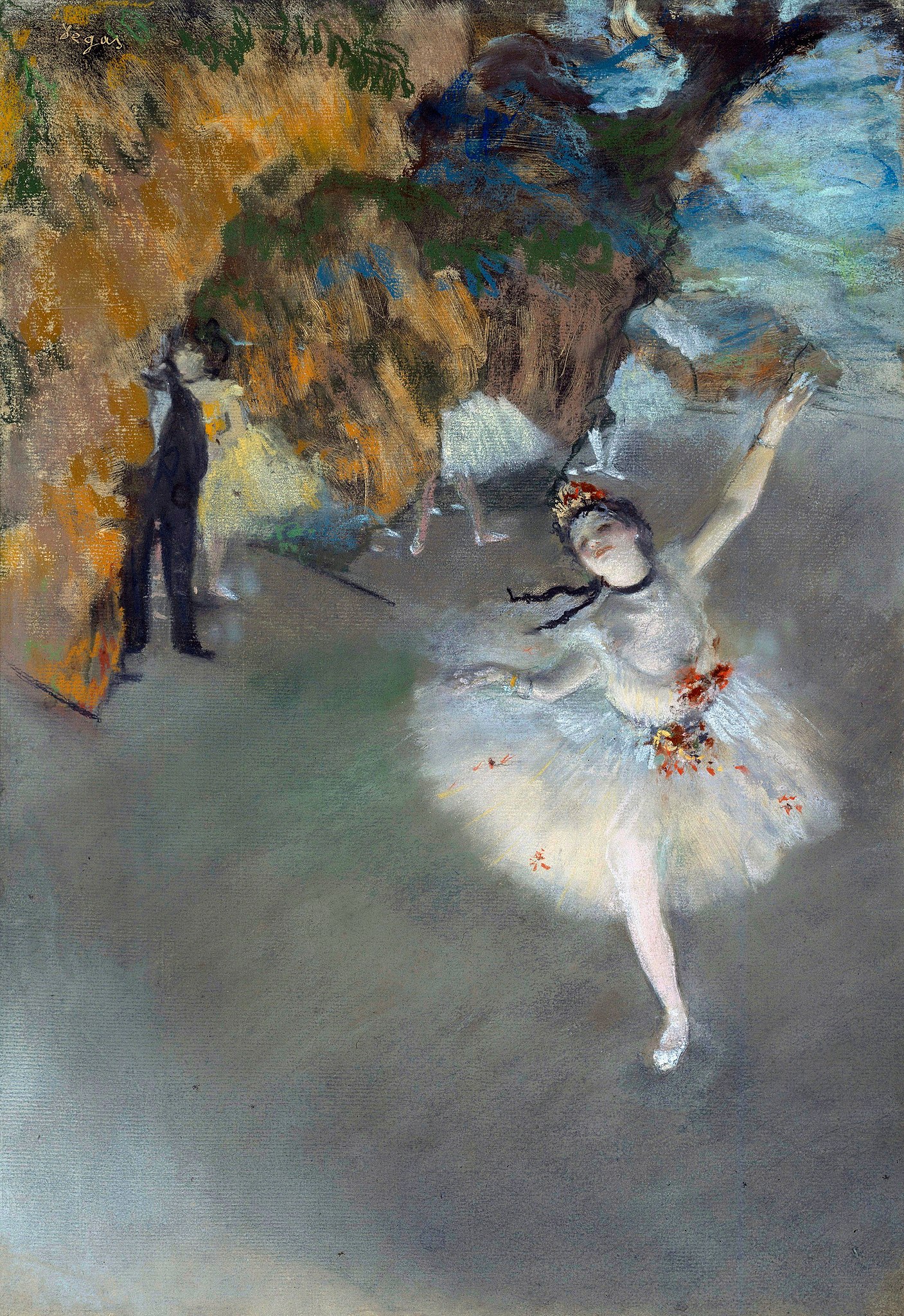
Degas is best known for his works featuring ballet dancers. He captured not only ballerinas on stage but also moments during rehearsals and breaks. Degas’ ballet paintings intricately depict the dynamic movements and muscular tension of the dancers, reflecting their rigorous training and graceful postures. While today’s ballerinas are often portrayed as receiving expensive education and being depicted as beautiful and elegant, most ballerinas of Degas’ time came from poor backgrounds and were forced into ballet at a young age. The competition was fierce, as success could bring immense wealth. Some of these dancers even sold their bodies to the aristocratic men who were the main audience at the time. Degas, who despised this reality, observed the dancers directly in their rehearsal rooms, capturing their lives in his work. As an ascetic, Degas expressed sympathy and affection for the ballerinas in his art, distancing himself from the typical male gaze of the time that objectified them.
어둠 속의 발레리나
드가는 발레 무용수들을 주제로 한 작품으로 가장 잘 알려져 있다. 그는 무대 위의 발레리나뿐만 아니라, 리허설 중이거나 휴식을 취하는 순간들을 포착했다. 드가의 발레리나 작품은 무용수들의 역동적인 움직임과 근육의 긴장을 세밀하게 묘사하며, 이들의 고된 훈련 과정과 우아한 자태를 동시에 담아냈다. 요즘은 발레리나들이 비싼 교육을 받고 아름답고 우아하게 묘사되는 경우가 많지만 당시 발레리나들을 빈민가 출신이 대부분이었는데 어릴 때부터 의지와 상관없이 발레를 시작했다. 성공하면 엄청난 부를 얻게 되기 때문에 경쟁 또한 심했다. 이들은 유명해지기 위해 당시 주 관객이었던 귀족 남성들에게 몸을 팔기도 했다. 드가는 이러한 현실을 경멸하며 발레 연습실에서 무용수들을 직접 관찰하며 그들의 삶을 담아냈다. 금욕 주의자였던 드가는 당시 일반적인 남성들의 시각에서 벗어나 발레리나들을 성적대상으로 보지 않고 그들에 대한 동정과 애정을 작품에 표현했다.


Experimental Composition and Pastels
In addition to ballerinas, Degas depicted everyday scenes in Paris, illustrating various social classes. His works portray the lives of common people as well as the lifestyle of the upper class. He depicted scenes in various locations, such as post offices, racetracks, cafes, and opera houses, capturing the complexity and vibrancy of modern urban life. He also portrayed hardworking women, such as singers and laundresses, just as he did with the ballerinas. Degas broke away from traditional composition, experimenting with unconventional perspectives, often featuring diagonal cuts, asymmetrical arrangements, and unusual angles, which were considered highly innovative at the time. There is a theory that Degas used pastels instead of oil paints because they were easier to handle due to his failing eyesight. Although the exact reason is unknown, pastels allowed him to express soft and vibrant tones, playing a particularly significant role in his later works. Through his pastel series of ballerinas and bathing women, Degas maximized his color sense and delicate depiction skills. Degas was also skilled in sculpture, with his most famous work being Little Dancer of Fourteen Years. This sculpture, based on a real ballet dancer model, was noted for its realistic expression and intricate details. When creating his works, Degas used various materials, and this sculpture was later cast in bronze.
실험적 구도와 파스텔
발레리나 외에도 그는 파리의 일상적인 장면을 그리며, 사회의 다양한 계층을 묘사했다. 그의 작품에서 서민들의 삶은 물론, 상류층의 생활도 찾아볼 수 있다. 그는 우체국, 경마장, 카페, 오페라 하우스 등 다양한 장소에서의 장면을 묘사하며 현대 도시의 복잡성과 활기를 포착했다. 이 과정에서 발레리나처럼 힘들게 일하는 여가수나 세탁부들도 묘사한다. 그는 기존의 전통적인 구도를 탈피하여, 실험적인 시점을 시도했으며 흔히 사선으로 자른 구도, 비대칭적 배치, 특이한 각도에서 본 장면들이 나타나며, 이는 당시로서는 매우 혁신적인 시도였다. 시력 때문에 유화보다 좀 더 쓰기 쉬운 파스텔을 사용했다는 설도 있다. 정확한 이유는 모르지만 파스텔은 부드럽고 생동감 있는 색조로 표현되었으며, 특히 그의 후기 작품에서 파스텔이 더욱 중요한 역할을 했다. 드가는 파스텔로 그린 발레리나와 목욕하는 여성들의 시리즈를 통해 그의 색채 감각과 섬세한 묘사력을 극대화했다. 드가는 회화뿐만 아니라 조각에서도 뛰어난 솜씨를 발휘했는데 그의 조각 작품 중 가장 유명한 것은 “14세의 작은 무용수”이다. 이 작품은 실제 무용수 모델을 기반으로 만들어졌으며, 사실적인 표현과 섬세한 디테일로 주목받았다. 드가는 작품을 만들 때 다양한 소재를 사용했으며, 후에는 이 조각상이 청동으로 주조되었다.


A Lonely Final Years
As Degas grew older, he led an increasingly isolated life. His social activities became more limited as his vision deteriorated further, leading him to choose a life of seclusion. He spent most of his time in his studio, minimizing contact with others. Although Degas never lost his passion for art, his later years were marked by solitude and loneliness. He passed away in Paris on September 27, 1917, and his funeral was a modest affair. Despite his private nature, Degas occupies a significant place in art history. As an ascetic, he devoted his life to exploring everyday life and the human psyche. The mystery surrounding his private life and his solitude are closely connected to the depth of his art, demonstrating how seriously Degas took his life as an artist.
고독한 말년
드가는 나이가 들수록 점점 더 고립된 삶을 살았다. 말년에 시력이 악화되면서 그의 사회적 활동은 더욱 제한되었고, 이는 그가 고립된 삶을 선택하는 데 영향을 미쳤다. 그는 작업실에서 대부분의 시간을 보냈으며, 사람들과의 접촉을 최소화했다. 드가는 죽기 전까지 예술에 대한 열정을 잃지 않았지만, 그의 말년은 상당히 외롭고 고독했다. 그는 파리에서 1917년 9월 27일에 사망했으며, 그의 장례식은 소박하게 치러졌다. 드가는 그의 사적인 성향에도 불구하고, 예술사에서 중요한 위치를 차지하는 인물이다. 그는 금욕주의자로서 일상적인 삶과 인간의 내면을 탐구하는 데 평생을 바쳤고 그의 사생활에 대한 미스터리와 고독은 그의 예술적 깊이와 긴밀하게 연결되어 있으며, 이는 드가가 예술가로서의 삶을 얼마나 진지하게 받아들였는지를 보여준다.


References / 내용 출처
- The Met — Degas (1834–1917)
- National Gallery of Art — Edgar Degas
- Edgar-Degas.net — edgar-degas.net
- Wikipedia — Edgar Degas
Leave a Reply