

The Icon of Artistic Innovation, Pablo Picasso
Pablo Picasso (October 25, 1881 – April 8, 1973) was a genius artist born in Málaga, Spain, who fundamentally changed the direction of 20th-century modern art. His father, José Ruiz Blasco, was an art teacher and painter, and young Picasso displayed artistic talent from an early age. At 14, he entered the School of Fine Arts in Barcelona, outperforming adult students, and later studied at the Royal Academy of San Fernando in Madrid. Unsatisfied with traditional educational methods, he began to forge his own path. Through relentless experimentation and creativity, Picasso led various art movements, and his works continue to inspire people across times and borders.
예술 혁신의 아이콘, 파블로 피카소
파블로 피카소(1881년 10월 25일 ~ 1973년 4월 8일)는 스페인 말라가에서 태어난 천재 예술가로, 20세기 현대 미술의 방향을 근본적으로 바꾼 혁신적인 인물이다. 그의 아버지 호세 루이스 블라스코는 미술 교사이자 화가였으며, 어린 피카소는 일찍부터 예술적인 재능을 발휘하였다. 14세의 나이에 바르셀로나의 미술 학교에 입학하여 성인 학생들보다 뛰어난 실력을 보여주었으며, 이후 마드리드의 산 페르난도 왕립 미술 아카데미에서도 수학하였다. 그러나 그는 전통적인 교육 방식에 만족하지 못하고 독자적인 길을 걷기 시작하였다. 피카소는 끊임없는 실험과 창의성을 통해 다양한 예술 운동을 주도하였으며, 그의 작품은 시대와 국경을 넘어 많은 사람들에게 영감을 주고 있다.


The Blue Period and Human Solitude
From 1901 to 1904, the Blue Period was one of the darkest times in Picasso’s life. The suicide of his close friend, Carlos Casagemas, deeply shocked him and significantly influenced his work. Paintings from this period predominantly use cold blue tones to depict marginalized individuals, the poor, and lonely figures. The masterpiece “La Vie” delves deeply into themes like love, death, and solitude, expressing the complexity of human existence and inner conflicts. During this period, Picasso further developed his sensitivity as an artist and heightened his interest in social issues. His works served not just as paintings but as messages embodying the pains of the era and personal agony.
청색 시대와 인간의 고독
1901년부터 1904년까지의 청색 시대는 피카소의 삶에서 가장 어두운 시기 중 하나였다. 그의 절친한 친구 카를로스 카사헤마스의 자살은 피카소에게 깊은 충격을 주었으며, 이는 그의 작품에도 큰 영향을 미쳤다. 이 시기의 작품들은 주로 파란색 계열의 차가운 색채를 사용하여 사회의 소외된 계층, 가난한 사람들, 그리고 외로운 인물들을 묘사하였다. 대표작인 ‘인생'(La Vie)은 사랑, 죽음, 고독 등의 주제를 심도 있게 다루며, 인간 존재의 복잡성과 내면의 갈등을 표현하였다. 피카소는 이 시기를 통해 예술가로서의 감수성을 더욱 깊게 발전시켰으며, 사회적 이슈에 대한 관심도 높아졌다. 그의 작품들은 단순한 그림이 아니라 시대의 아픔과 개인의 고뇌를 담은 메시지로서의 역할을 하였다.


The Rose Period and Expression of Hope
From 1904 to 1906, the Rose Period brought a bright wind of change to Picasso’s work. After moving to Paris, he was inspired by the new environment and people, escaping from previous gloom. Works from this period primarily use warm rose and orange tones, containing positive emotions like love, hope, and joy. “Family of Saltimbanques” is a piece depicting the lives of wandering acrobats, shedding warm light on society’s fringe figures. This work subtly expresses human joys and sorrows and the journey of life, evoking deep empathy in viewers. Through this period, Picasso perfectly harmonized color and emotion, exploring new possibilities as an artist.
장미색 시대와 희망의 표현
1904년부터 1906년까지의 장미색 시대는 피카소의 작품에 밝은 변화의 바람을 불러일으켰다. 파리로 이주한 그는 새로운 환경과 사람들로부터 영감을 받아 이전의 우울함에서 벗어나게 되었다. 이 시기의 작품들은 따뜻한 장미색과 오렌지색 계열의 색채를 주로 사용하였으며, 사랑, 희망, 즐거움 등의 긍정적인 감정을 담고 있다. ‘곡예사 가족'(Family of Saltimbanques)은 떠돌이 곡예사들의 삶을 그린 작품으로, 사회의 주변인물을 따뜻한 시선으로 조명하였다. 이 작품은 인간의 희로애락과 삶의 여정을 섬세하게 표현하여 관객들에게 깊은 공감을 불러일으켰다. 피카소는 이 시기를 통해 색채와 감정의 조화를 완벽하게 이뤄내며, 예술가로서의 새로운 가능성을 탐구하였다.


The Birth of Cubism and ‘Les Demoiselles d’Avignon’
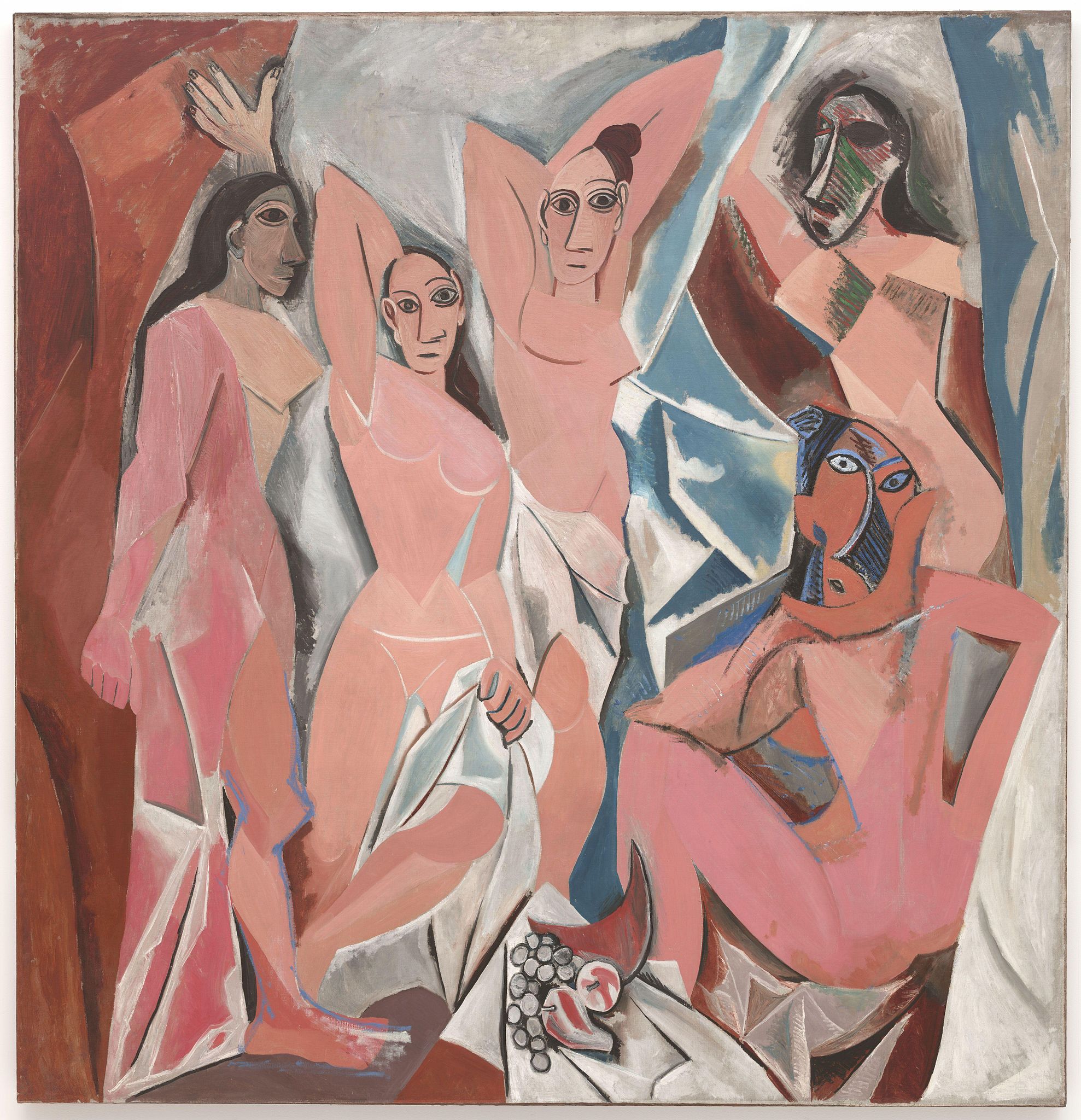
Completed in 1907, “Les Demoiselles d’Avignon” showcases the pinnacle of Picasso’s artistic innovation. Inspired by African primitive art and Iberian sculptures, he attempted a new interpretation of form and space. In this work, Picasso rejected traditional perspective and realistic expression, breaking down figures into geometric shapes and capturing various viewpoints on a single canvas. This provided viewers with a powerful shock and stirred significant controversy in the art world at the time. However, the piece signaled the birth of Cubism, playing a decisive role in expanding the abstraction and plurality of modern art. Picasso’s innovation opened new possibilities regarding the essence and expression methods of art.
입체파의 탄생과 ‘아비뇽의 처녀들’
1907년에 완성된 ‘아비뇽의 처녀들'(Les Demoiselles d’Avignon)은 피카소의 예술적 혁신의 정점을 보여주는 작품이다. 그는 아프리카의 원시 예술과 이베리아 반도의 고대 조각에서 영감을 받아 형태와 공간에 대한 새로운 해석을 시도하였다. 이 작품에서 피카소는 전통적인 원근법과 사실적인 표현을 거부하고, 인물들을 기하학적인 형태로 분해하여 다양한 시점을 한 화면에 담았다. 이는 관객들에게 강렬한 충격을 주었으며, 당시 예술계에 큰 논란을 일으켰다. 그러나 이 작품은 이후 입체파의 탄생을 알리는 신호탄이 되었으며, 현대 미술의 추상성과 다원성을 확대하는 데 결정적인 역할을 하였다. 피카소의 이러한 혁신은 예술의 본질과 표현 방법에 대한 새로운 가능성을 열어주었다.


‘Guernica’ and the Tragedy of War
Created in 1937, “Guernica” embodies Picasso’s anger and sorrow over the bombing of Guernica by German air forces during the Spanish Civil War. He produced this piece for display at the Spanish Pavilion of the Paris International Exposition, symbolically expressing the horrors of war on a massive black-and-white canvas. Elements like horses, bulls, and screaming women represent violence and suffering, and the chaotic, destroyed space intensely conveys the tragedy of war. “Guernica” transcends being merely an artwork, becoming an icon of anti-war movements worldwide. It remains a representative example of how art can influence society and politics.
전쟁의 비극을 담은 ‘게르니카’
1937년에 제작된 ‘게르니카'(Guernica)는 스페인 내전 중 독일 공군의 게르니카 폭격에 대한 피카소의 분노와 슬픔을 담은 대작이다. 그는 파리 만국 박람회의 스페인관에 전시할 작품으로 이 작품을 제작하였으며, 흑백의 거대한 캔버스에 전쟁의 참상을 상징적으로 표현하였다. 작품 속의 말, 황소, 여성의 비명 등은 폭력과 고통의 상징으로 사용되었으며, 혼란스럽고 파괴된 공간은 전쟁의 비극성을 강렬하게 전달한다. ‘게르니카’는 단순한 예술 작품을 넘어 전쟁 반대의 아이콘으로 자리매김하였으며, 세계 각국에서 반전 운동의 상징으로 활용되었다. 이 작품은 예술이 사회와 정치에 어떻게 영향을 미칠 수 있는지를 보여주는 대표적인 사례로 남아 있다.


Expansion into Various Art Fields
Picasso excelled not only in painting but also in sculpture, ceramics, printmaking, and stage design. He wasn’t confined to traditional materials and techniques, exploring new expression methods. His sculpture “Bull’s Head“, created using a bicycle seat and handlebars to represent a bull’s head, was an innovative attempt to transform everyday objects into art. He was also passionate about ceramics, leaving behind diverse ceramic works, and spread his art widely through printmaking. Picasso’s versatility broadened the boundaries of art and significantly contributed to the diversification of modern art.
다양한 예술 분야로의 확장
피카소는 회화 외에도 조각, 도자기, 판화, 무대 디자인 등 다양한 예술 분야에서 두각을 나타냈다. 그는 전통적인 재료와 기법에 얽매이지 않고, 새로운 표현 방식을 탐구하였다. 그의 조각 작품 ‘자전거 안장과 핸들바'(Bull’s Head)는 자전거의 안장과 핸들바를 이용하여 황소의 머리를 형상화한 작품으로, 일상적인 사물을 예술 작품으로 승화시킨 혁신적인 시도였다. 또한 그는 도자기 제작에 심취하여 다채로운 도자기 작품을 남겼으며, 판화 작업을 통해 대중에게 자신의 예술을 널리 알렸다. 피카소의 이러한 다양성은 예술의 경계를 넓히고, 현대 예술의 다원화에 큰 기여를 하였다.

Lesser-Known Anecdotes and Rumors
Picasso attracted much attention not only for his passionate artistic activities but also for his colorful personal life. His complex relationships with numerous women led to various rumors and anecdotes. Some of his lovers directly influenced his works, which is reflected in his art. He was also famous as an art collector, actively acquiring not only his own works but also those of other artists. There’s a rumor that Picasso sometimes signed his works with his left hand to leave a unique signature. However, some stories about his private life are exaggerated or unverified, so careful consideration is needed. His artistic achievements surpass such personal controversies.
알려지지 않은 일화와 소문
피카소는 열정적인 예술 활동과 더불어 다채로운 개인사로도 많은 관심을 받았다. 그는 수많은 여성들과의 복잡한 관계로 인해 다양한 소문과 일화를 남겼다. 그의 연인들 중 일부는 그의 작품에 직접적인 영향을 주었으며, 이는 작품 속에 반영되었다. 또한 그는 예술품 수집가로서도 유명하였으며, 자신의 작품뿐만 아니라 다른 예술가들의 작품도 적극적으로 수집하였다. 피카소는 자신만의 독특한 서명을 남기기 위해 왼손으로 글씨를 쓰기도 하였다는 소문이 있다. 그러나 그의 사생활에 관한 이야기 중 일부는 과장되거나 확인되지 않은 것들이므로 신중한 접근이 필요하다. 그의 예술적 업적은 이러한 개인적인 논란을 넘어선 가치가 있다.


Picasso’s Legacy and Impact on Modern Art
Picasso’s unique artistic world profoundly influenced modern art. Throughout his life, he left over 50,000 works, showing his passionate dedication to creation. His pieces are housed in major museums worldwide and are re-evaluated through numerous exhibitions and studies each year. Picasso’s relentless experimentation and creativity expanded the possibilities of art, serving as a source of inspiration for many artists. His legacy greatly contributed to the development and diversity of modern art and will continue to be researched and respected. Picasso was a pioneer who showed how art can go beyond personal expression to influence society and the world.
피카소의 유산과 현대 미술에 미친 영향
피카소의 독창적인 예술 세계는 현대 미술에 지대한 영향을 미쳤다. 그는 평생에 걸쳐 5만 점이 넘는 작품을 남겼으며, 이는 그가 얼마나 열정적으로 창작에 몰두하였는지를 보여준다. 그의 작품들은 전 세계의 주요 미술관에 소장되어 있으며, 매년 수많은 전시회와 연구를 통해 그 가치를 재조명받고 있다. 피카소의 끊임없는 실험과 창의성은 예술의 가능성을 확장시켰으며, 많은 예술가들에게 영감의 원천이 되고 있다. 그의 유산은 현대 미술의 발전과 다양성에 큰 기여를 하였으며, 앞으로도 계속해서 연구되고 존중받을 것이다. 피카소는 예술이 어떻게 개인의 표현을 넘어 사회와 세계에 영향을 미칠 수 있는지를 보여준 선구자였다.


Keywords: Pablo Picasso, Picasso works, Les Demoiselles d’Avignon, Guernica, Cubism, Blue Period, Rose Period, Modern Art, Picasso Anecdotes, Picasso Sculptures, Picasso’s Influence
키워드: 파블로 피카소, 피카소 작품, 아비뇽의 처녀들, 게르니카, 입체파, 청색 시대, 장미색 시대, 현대 미술, 피카소 일화, 피카소 조각 작품, 피카소 영향력
References:
- Official website of the National Museum of Modern and Contemporary Art
- Official website of the Picasso Museum
- Art encyclopedias and art history-related books
- Art history papers and academic journals
- BBC art documentaries and related video materials
Leave a Reply