

The Birth of a Revolutionary Artist
Édouard Manet (1832-1883) is considered one of the most prominent French painters of the 19th century and a pioneer of modern painting. Born into a wealthy family in Paris, he developed an early interest in art and literature. However, his family wanted him to pursue a more traditional career in law or the navy. After failing the naval entrance exam twice, Manet defied his family’s wishes and pursued a career in art. He studied in Thomas Couture’s atelier, where he received traditional art education, but soon became disillusioned with the academic style and sought to create his own artistic vision.
Manet traveled across Europe, exposing himself to a variety of artistic styles. He was particularly inspired by the works of Rembrandt and Frans Hals in the Netherlands, whose realistic depictions and dramatic use of chiaroscuro greatly influenced him. He also drew inspiration from the Spanish masters, particularly Diego Velázquez and Francisco Goya. These experiences laid the foundation for his break from traditional painting techniques and exploration of new forms of expression.
전통을 거부한 혁신가의 탄생
에두아르 마네(Édouard Manet, 1832-1883)는 19세기 프랑스의 대표적인 화가로, 현대 회화의 선구자로 평가받는다. 파리의 부유한 가정에서 태어난 그는 어릴 때부터 예술과 문학에 관심을 가졌다. 그러나 그의 가족은 그가 법률이나 해군 같은 전통적인 길을 걷기를 원했다. 마네는 해군 입학시험에 두 번 실패한 후, 가족의 반대를 무릅쓰고 예술의 길로 들어섰다. 그는 토마 쿠튀르의 아틀리에에서 전통적인 미술 교육을 받았지만, 곧 아카데믹한 방식에 회의를 느끼고 독자적인 예술 세계를 추구하기 시작했다.
마네는 유럽 각지를 여행하며 다양한 예술 작품을 접했다. 특히 네덜란드에서 렘브란트, 프란스 할스의 작품에 깊은 감명을 받았다. 그들의 현실적인 묘사와 강렬한 명암 대비는 마네의 작품 세계에 큰 영향을 주었다. 또한 스페인의 디에고 벨라스케스와 프란시스코 고야의 작품에서도 영감을 얻었다. 이러한 경험은 그가 전통적인 회화 기법에서 벗어나 새로운 표현 방식을 탐구하는 데 밑거름이 되었다.


“Le Déjeuner sur l’herbe” and Its Social Impact
One of Manet’s most famous works, “Le Déjeuner sur l’herbe” (The Luncheon on the Grass, 1863), sent shockwaves through both the art world and society at large. The painting featured a naked woman seated with clothed men in a forest, a composition that overturned traditional historical and mythological depictions. Audiences considered the painting indecent and morally inappropriate, leading it to be rejected from the official Paris Salon. Consequently, it was displayed at the Salon des Refusés (Exhibition of Rejects), where it garnered significant attention.
The woman’s provocative gaze and the realistic portrayal left a lasting impression on viewers. Through this work, Manet aimed to critique societal hypocrisy and moral double standards. By breaking away from the constraints of traditional art, he sought to represent modern life and reality in a sincere manner. This painting marked a significant turning point in the direction of modern art.
“풀밭 위의 점심식사”와 사회적 반향
마네의 대표작 중 하나인 “풀밭 위의 점심식사”(Le Déjeuner sur l’herbe, 1863)는 당시 미술계와 사회에 큰 충격을 안겨주었다. 이 작품은 나체의 여인과 옷을 입은 남성들이 숲 속에서 함께 있는 모습을 그렸는데, 이는 기존의 역사화나 신화화를 뒤집는 파격적인 구성이었다. 관객들은 이 작품을 외설적이고 도덕적으로 부적절하다고 비난하며, 프랑스 살롱에서는 전시를 거부당했다. 이에 따라 살롱 거부전(Salon des Refusés)이 열렸고, 마네의 작품은 그곳에서 큰 주목을 받았다.
작품 속 여성의 도발적인 시선과 현실적인 묘사는 관객들에게 강한 인상을 남겼다. 마네는 이 작품을 통해 사회의 위선과 도덕적 이중성을 비판하고자 했다. 그는 전통적인 미술에서 벗어나 현대인의 삶과 현실을 진솔하게 표현하려는 의지를 보여주었다. 이 작품은 이후 현대 미술의 방향성을 제시하는 중요한 계기가 되었다.


“Olympia”: Realism and Social Critique
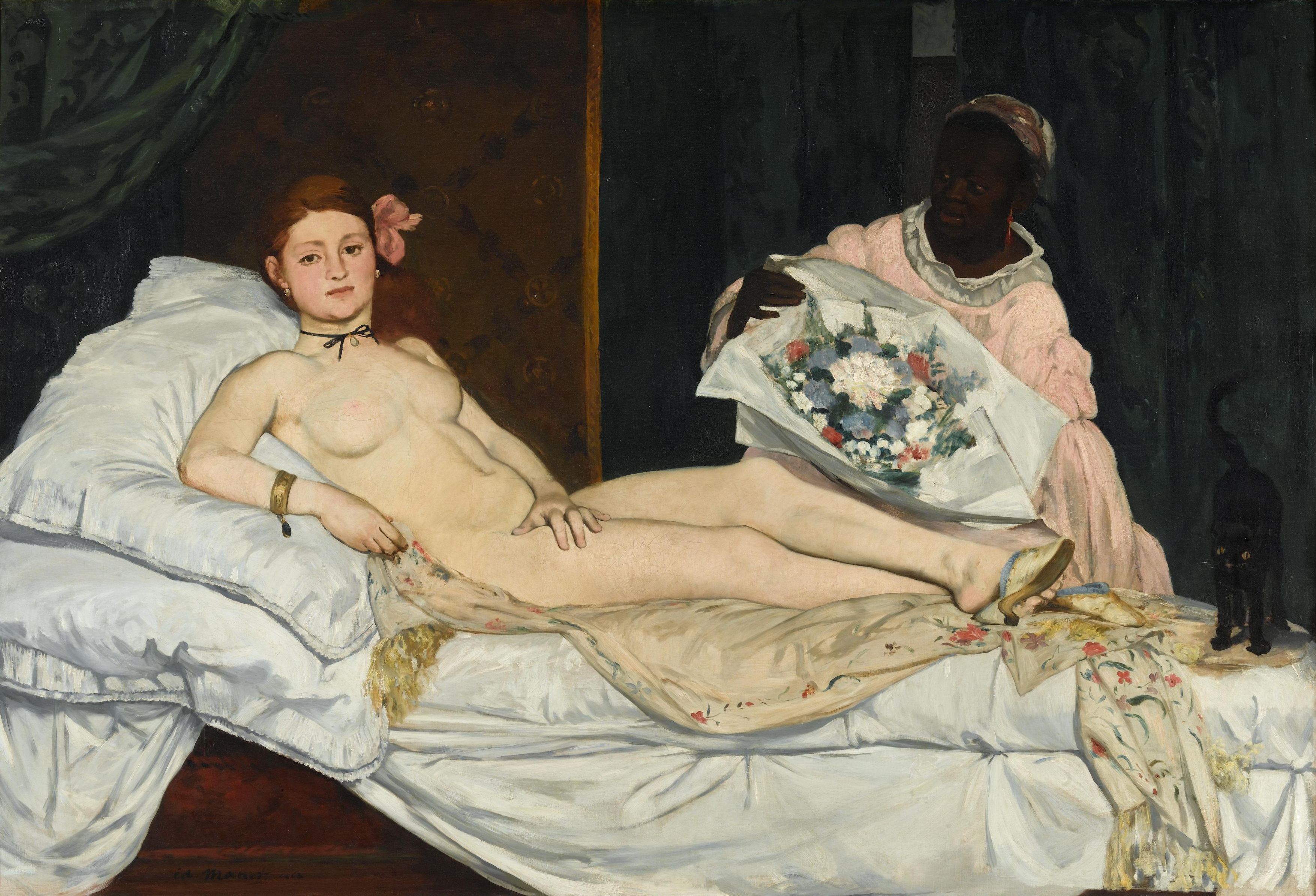
Manet’s “Olympia” (1863) further fueled societal controversy. This work shattered the conventions of traditional nudes by portraying a prostitute as the subject. Olympia’s cold gaze and assertive posture unsettled audiences, challenging the moral codes of the time.
Although the painting was met with ridicule and derision, Manet intended to critique social hypocrisy and class inequality. By depicting reality without embellishment, he opened up new possibilities for art. “Olympia” is now regarded as a critical turning point in modern art, inspiring countless future artists.
“올랭피아”로 드러난 현실주의와 사회 비판
“올랭피아”(Olympia, 1863)는 마네의 또 다른 대표작으로, 사회적 논란을 더욱 가중시켰다. 이 작품은 전통적인 누드화의 관습을 깨뜨리고, 매춘부를 모델로 삼아 현실적인 인물을 그렸다. 올랭피아의 차가운 시선과 당당한 자세는 관객들에게 불편함을 주었으며, 이는 당시 사회의 도덕적 기준에 큰 도전을 제기했다.
작품은 비난과 조롱의 대상이 되었지만, 마네는 이를 통해 사회의 위선과 계급적 불평등을 비판하고자 했다. 그는 현실을 왜곡하지 않고 있는 그대로 묘사함으로써 예술의 새로운 가능성을 열었다. “올랭피아”는 이후 현대 미술의 중요한 전환점으로 인정받았으며, 많은 예술가들에게 영감을 주었다.


Connection with Impressionism, Yet an Independent Path
Manet played a crucial role in the development of Impressionism through his interactions with young artists of the time. He frequently socialized with Claude Monet, Edgar Degas, Pierre-Auguste Renoir, and others, meeting in cafés to discuss art and philosophy. Together, they rejected the rigid rules of the academic art system, opting to depict natural landscapes and modern urban scenes directly.
However, Manet never fully identified as an Impressionist. While he influenced the movement’s techniques and theories, he maintained his own unique style. His works straddled the line between Realism and Impressionism, exemplifying the diversity of modern art. He made innovative strides in the use of light and color, which left a lasting legacy for future artists.
인상주의와의 연계, 그러나 독자적인 길
마네는 당시 신진 예술가들과 교류하며 인상주의의 탄생에 기여했다. 그는 클로드 모네, 에드가 드가, 피에르 오귀스트 르누아르 등과 함께 카페에서 모임을 가지며 예술과 철학에 대해 토론했다. 이들은 전통적인 미술 아카데미의 규범에서 벗어나 자연과 현대 도시의 풍경을 직접 묘사하는 새로운 기법을 개발하였다.
그러나 마네는 자신을 인상주의자로 규정하지 않았다. 그는 인상주의의 기법과 이론에 영향을 주었지만, 자신의 작품 세계를 유지하며 독자적인 길을 걸었다. 그의 작품은 현실주의와 인상주의의 경계를 넘나들며, 현대 미술의 다양성을 보여주었다. 특히 그는 빛과 색채의 표현에 있어서 혁신적인 시도를 하였으며, 이는 후대 예술가들에게 큰 영감을 주었다.


Artistic Partnership with Berthe Morisot
Manet had a deep artistic relationship with the female painter Berthe Morisot. Morisot posed as a model for several of his works, and the two shared a special relationship, exchanging artistic advice and inspiration. Through Manet, Morisot became acquainted with other Impressionist painters and later established herself as one of the key female figures in the Impressionist movement.
Their relationship went beyond that of teacher and student. Manet admired Morisot’s delicate sensibility and distinctive use of color, while she was profoundly influenced by his innovative techniques and realistic depictions. Their collaboration greatly enriched both of their artistic journeys.
베르트 모리조와의 예술적 동반자 관계
마네는 여성 화가 베르트 모리조와 깊은 예술적 교류를 나누었다. 모리조는 그의 작품에 모델로 참여하였으며, 두 사람은 서로의 작품에 대해 조언하고 영감을 주고받는 특별한 관계를 유지하였다. 모리조는 마네를 통해 인상주의 화가들과 교류하게 되었고, 이후 인상주의의 중요한 여성 화가로서 자리매김하였다.
그들의 관계는 단순한 스승과 제자의 관계를 넘어선 것이었다. 마네는 모리조의 섬세한 감성과 독특한 색채 감각을 높이 평가하였으며, 그녀 역시 그의 혁신적인 기법과 현실적인 표현에 깊은 감명을 받았다. 그들의 예술적 협력은 서로의 작품 세계를 더욱 풍부하게 만들었다.


Political Engagement and Social Participation
Manet was deeply interested in politics and social issues, as well as art. He lived through tumultuous times, such as the Franco-Prussian War in 1870 and the Paris Commune in 1871, and used his art to express his political views. Works like “The Execution of Emperor Maximilian” capture the horrors of war and social unrest.
He supported ideas of freedom and equality, which are reflected in his artworks. Manet demonstrated that art could serve as a vehicle for conveying social messages beyond mere aesthetic expression. His stance influenced the later development of socially engaged art.
정치적 관심과 사회 참여
마네는 예술뿐만 아니라 정치와 사회 문제에도 깊은 관심을 가졌다. 그는 1870년 프랑스-프로이센 전쟁과 1871년 파리 코뮌 등 격동의 시기를 경험하며 작품을 통해 자신의 정치적 견해를 표현했다. 특히 “막시밀리안 황제의 처형“과 같은 작품에서는 전쟁의 참상과 사회의 혼란을 담아냈다.
그는 자유와 평등을 추구하는 사상을 지지하였으며, 이는 그의 작품 속에 녹아들어 있다. 마네는 예술이 단순한 미적 표현을 넘어 사회적 메시지를 전달하는 도구가 될 수 있음을 보여주었다. 그의 이러한 태도는 이후 사회 참여적 예술의 발전에 영향을 주었다.


Declining Health and Unyielding Passion for Art
In his later years, Manet’s health rapidly deteriorated. He suffered from complications of syphilis, which weakened his body, eventually leading to the amputation of his leg. Despite his physical suffering, he continued to work on his art. His final works, mainly small still lifes and flower paintings, reflect his refined sensibility and love for life.
Even from his sickbed, Manet never put down his brush, maintaining his passion for art until the very end. His unwavering dedication to his craft inspired many, showcasing his authenticity as an artist. Manet passed away on April 30, 1883, but his art and legacy endure.
말년의 건강 악화와 예술에 대한 열정
마네는 말년에 건강이 급격히 악화되었다. 매독으로 인한 합병증은 그의 신체를 쇠약하게 만들었으며, 결국 다리 절단 수술을 받아야 했다. 그러나 그는 이러한 고통 속에서도 작품 활동을 멈추지 않았다. 그의 마지막 작품들은 작은 규모의 정물화와 꽃 그림으로, 이는 그의 내면의 섬세한 감성과 삶에 대한 애정을 보여준다.
그는 병상에서도 붓을 놓지 않았으며, 예술에 대한 열정을 끝까지 유지했다. 그의 이러한 모습은 많은 이들에게 감동을 주었으며, 예술가로서의 진정성을 보여주는 대표적인 사례로 남아 있다. 마네는 1883년 4월 30일 세상을 떠났지만, 그의 작품과 정신은 영원히 기억되고 있다.


Legacy and Modern Reinterpretation
Édouard Manet is often hailed as the father of modern painting, leaving an indelible mark on the history of art. He broke away from traditional painting techniques, introducing contemporary subjects and innovative forms of expression. His works are displayed in museums around the world, and they continue to be studied and interpreted.
Today, his works are revisited through a modern lens. His critiques of society, explorations of human nature, and depictions of urban life remain relevant topics in contemporary discussions. Art historians continue to examine his works in the context of the development of modern art, highlighting their significance in art education.
Manet’s innovative spirit and artistic passion continue to inspire future generations of artists. His works, far from being mere paintings, serve as witnesses to his era and carry messages for the future. His artistic legacy will continue to shine, providing inspiration and challenge to all who encounter his art.
예술사에 남긴 유산과 현대적 재해석
에두아르 마네는 현대 미술의 아버지로 불리며, 그의 작품들은 예술사에 큰 족적을 남겼다. 그는 전통적인 회화 기법을 탈피하여 현실적인 주제와 혁신적인 표현 방식을 도입함으로써 예술의 새로운 지평을 열었다. 그의 작품은 전 세계의 미술관에서 전시되고 있으며, 연구와 해석이 끊임없이 이루어지고 있다.
오늘날 그의 작품은 다양한 시각으로 재해석되고 있다. 사회 비판적인 메시지, 인간의 내면에 대한 탐구, 현대 도시의 묘사 등은 현대 사회에서도 유의미한 주제로 다가온다. 미술사학자들은 그의 작품을 통해 현대 미술의 흐름과 발전을 연구하고 있으며, 이는 예술 교육에서도 중요한 위치를 차지하고 있다.
마네의 혁신적인 정신과 예술적 열정은 후대의 예술가들에게 귀감이 되고 있다. 그의 작품은 단순한 예술 작품을 넘어 시대의 증인이자 미래를 향한 메시지로서 가치가 있다. 그의 예술적 유산은 앞으로도 계속해서 빛나며, 많은 이들에게 영감과 도전을 제공할 것이다.


Keywords: Édouard Manet, Manet biography, Manet Luncheon on the Grass, Olympia controversy, Manet and Impressionism, Manet political views, Manet and Berthe Morisot, Manet final works
키워드: 에두아르 마네, 마네 생애, 마네 풀밭 위의 점심식사, 올랭피아 논란, 마네와 인상
- Wikipedia: https://en.wikipedia.org/wiki/%C3%89douard_Manet
- Manet.org: https://www.manet.org/
- The National Gallery: https://www.nationalgallery.org.uk/artists/edouard-manet
- MET: https://www.metmuseum.org/toah/hd/mane/hd_mane.htm
Leave a Reply