

Vincent van Gogh is one of the most prominent figures of Post-Impressionism, whose artistic achievements and tumultuous life have secured him a significant place in modern art history. This article delves deeply into his artistic development, major works, lesser-known anecdotes, and the enduring impact of his creations on the contemporary art scene.
Vincent van Gogh는 후기 인상주의를 대표하는 화가 중 한 명으로, 그의 예술적 성취와 고통스러운 생애는 현대 미술사에서 중요한 위치를 차지한다. 이번 글에서는 그의 예술적 발전과 대표 작품, 그리고 잘 알려지지 않은 이야기를 심도 있게 다루며, 그의 작품들이 어떻게 오늘날까지 영향을 미치고 있는지 살펴볼 것이다.
The Journey Toward Becoming an Artist: An Unstable Beginning
Born in 1853 in Zundert, Netherlands, Vincent van Gogh grew up in a relatively ordinary family. Coming from a lineage of Catholic clergy, he was raised in a religious environment, but his life was unstable from an early age. Although he showed talent in drawing during his youth, he drifted through various professions before fully committing to being an artist. While his brother Theo found success as an art dealer, van Gogh struggled to adapt to the same profession and faced multiple failures. He later worked as a missionary in impoverished areas but couldn’t sustain that path either. These hardships brought him inner turmoil but paradoxically led him to dedicate himself entirely to art.
At the age of 27, van Gogh embarked on his journey as an artist in earnest. His initial works were characterized by dark tones and realistic subjects, often depicting the lives of peasants. Early pieces like “The Potato Eaters” realistically portrayed the suffering and poverty of everyday life. However, his approach began to change after he moved to Paris and interacted with Impressionist painters, paving the way for a new direction in his art. These early experiences laid the foundation for his artistic development and served as a crucial turning point in shaping his unique style.
예술가로 향하는 여정: 불안정한 시작
1853년 네덜란드의 주운데르트에서 태어난 Vincent van Gogh는 비교적 평범한 가정에서 자라났다. 그는 가톨릭 성직자 집안 출신으로, 종교적인 분위기에서 자랐으나 그의 삶은 일찍부터 불안정했다. 어린 시절부터 그림에 재능을 보였으나, 미술가로서의 길을 본격적으로 걷기 전까지 여러 가지 직업을 전전했다. 그의 형인 테오는 화상으로 성공적인 경력을 쌓아갔지만, 반 고흐는 화상일에 적응하지 못하고 수차례의 실패를 겪었다. 그 후 반 고흐는 전도사로 활동하며 빈민가에서 생활했으나, 이마저도 오래가지 못했다. 이러한 시련들은 그에게 내면적인 고통을 안겨주었지만, 역설적으로 그가 예술에 전념하게 된 계기가 되었다.
고흐는 27세에 이르러 본격적으로 예술가로서의 길을 걷기 시작했다. 그가 처음 시작한 작품들은 대체로 어두운 색조와 현실주의적인 주제를 다루었으며, 특히 농민의 삶을 묘사한 작품들이 다수였다. “감자 먹는 사람들“과 같은 초기작은 현실적인 삶의 고통과 가난을 사실적으로 그려냈다. 하지만 이러한 사실주의적 접근은 그가 후에 파리에서 인상주의 화가들과 교류하며 새로운 방향으로 변화하게 된다. 고흐의 초반 경력은 그의 예술적 발전을 위한 기초를 마련했으며, 당시의 경험들이 그의 독창적인 스타일을 형성하는 중요한 전환점이 되었다.


Beyond Impressionism: The Master of Post-Impressionism
Van Gogh’s encounters with Impressionist painters in Paris had a profound impact on his artistic world. Through interactions with artists like Claude Monet, Edgar Degas, and Georges Seurat, he deepened his understanding of color. Rather than merely imitating the Impressionist style, van Gogh developed his own by employing more vibrant colors and emotional expressions. He aimed not just to visually reproduce nature but to visualize his emotions and inner world through color and brushwork. This effort played a significant role in leading the new art movement known as Post-Impressionism.
Van Gogh focused on emotionally portraying subjects and figures in his works by using bright colors. While Impressionists concentrated on capturing transient light and color changes, van Gogh went a step further by using color as a tool for emotional expression. Works like “The Starry Night” and “Bedroom in Arles” demonstrate that he sought to project his mental state and emotions onto his art, going beyond mere representation. In this regard, van Gogh is considered a pioneer of Post-Impressionism, and his unique artistic world has greatly influenced the development of modern art.
인상주의를 넘어: 후기 인상주의의 거장
파리에서 인상주의 화가들과의 만남은 반 고흐의 예술 세계에 큰 영향을 미쳤다. 특히 클로드 모네, 에드가 드가, 그리고 조르주 쇠라와 같은 예술가들과의 교류를 통해 그는 색채에 대한 이해를 깊이 있게 발전시켰다. 그러나 고흐는 단순히 인상주의 화풍을 모방하는 데 그치지 않고, 더욱 강렬한 색감과 감정적인 표현을 통해 자신만의 스타일을 만들어갔다. 그는 자연을 단순히 시각적으로 재현하는 것이 아니라, 자신의 감정과 내면의 세계를 색채와 붓 터치를 통해 시각화하려는 시도를 했다. 이런 시도는 후기 인상주의라는 새로운 미술 사조를 이끄는 데 중요한 역할을 했다.
고흐는 특히 밝은 색을 사용해 작품 속의 사물이나 인물을 감정적으로 표현하는 데 집중했다. 인상주의자들이 순간적인 빛과 색채의 변화를 포착하는 데 집중했다면, 고흐는 그보다 한 걸음 더 나아가 색을 감정의 도구로 활용했다. “별이 빛나는 밤“이나 “아를의 침실“과 같은 작품에서 볼 수 있듯이, 그는 현실의 재현을 넘어, 자신의 정신적 상태와 감정을 작품에 투영하려고 했다. 이러한 점에서 고흐는 후기 인상주의의 선구자로 평가받으며, 그의 독창적인 예술 세계는 현대 미술의 발전에 커다란 영향을 미쳤다.


The “Sunflowers” Series: Flowers Painted with the Colors of the Soul
Van Gogh’s “Sunflowers” series is one of his most symbolic and celebrated works, representing his artistic universe. Created in 1888 in Arles, France, these paintings were intended to decorate a room to welcome his friend and fellow artist Paul Gauguin. At the time, van Gogh dreamed of forming a new artistic community with Gauguin. Their friendship was crucial to van Gogh, but it eventually led to a tragic end. The sunflowers became more than just a symbol of friendship; they embodied life and hope for him.
The “Sunflowers” paintings revolve around bright yellow hues, a significant color that frequently appears in his other works. For van Gogh, yellow symbolized light and hope. However, the sunflowers in these paintings are depicted not only in vibrant bloom but also in states of wilting, possibly reflecting his inner pain and sense of loss. His thick brushstrokes vividly convey the texture of the petals and stems, allowing for emotional expression beyond a simple still life. The series transcends being mere floral paintings and is considered a vital work that encapsulates his artistic concerns and mental state.
해바라기 시리즈: 영혼의 색채로 그린 꽃
반 고흐의 “해바라기” 시리즈는 그의 예술적 세계를 상징하는 대표작 중 하나로 손꼽힌다. 이 시리즈는 그가 1888년 프랑스 아를에서 폴 고갱을 맞이하기 위해 준비한 방을 장식하기 위해 제작된 것으로 알려져 있다. 당시 고흐는 고갱과 함께 새로운 예술 공동체를 구성하려는 꿈을 꾸고 있었다. 고갱과의 우정은 고흐에게 매우 중요한 의미를 가졌지만, 이 관계는 곧 파국을 맞이하게 된다. 그러나 해바라기는 고흐에게 단순한 우정의 상징을 넘어, 생명력과 희망을 나타내는 상징적인 요소로 자리 잡았다.
“해바라기“는 밝은 노란색을 중심으로 구성된 작품으로, 이 색은 고흐의 다른 작품에서도 자주 등장하는 중요한 색채 중 하나다. 노란색은 그에게 있어서 빛과 희망을 상징하는 색이었다. 하지만 이 작품 속 해바라기에는 밝고 생동감 있는 모습뿐만 아니라, 시들어가는 모습도 함께 그려져 있다. 이는 고흐가 느꼈던 내면의 고통과 상실감을 상징하는 요소로 해석될 수 있다. 특히, 그의 두꺼운 붓질은 해바라기의 꽃잎과 줄기의 질감을 생동감 있게 표현하여, 단순한 정물화 이상의 감정적인 표현을 가능하게 했다. 고흐의 “해바라기”는 단순한 꽃 그림을 넘어, 그의 예술적 고민과 정신적 상태를 담은 중요한 작품으로 평가받는다.


“The Starry Night”: Chaos in a Tranquil Night
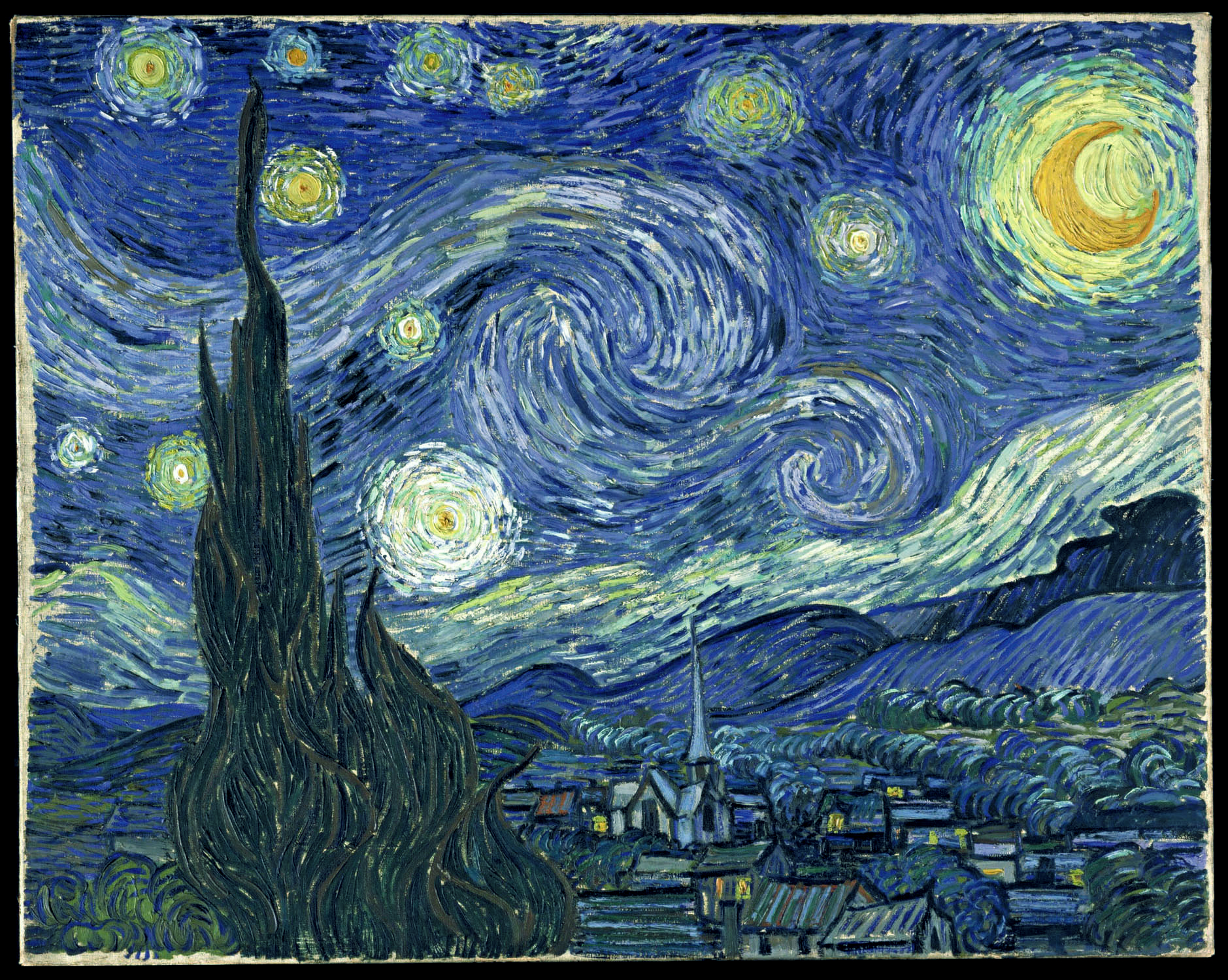
“The Starry Night” is one of van Gogh’s most iconic and well-known pieces, created in 1889 during his stay in a mental hospital. This painting visually represents his psychological pain and turmoil, featuring a swirling sky, shining stars, and the contrasting image of a dark, quiet village. Van Gogh sought to express the surreal emotions he experienced, with the movements and colors of the sky indicating his unstable mental state.
The most striking aspect of this work is his intense brushwork and use of color. The sky emits a swirling energy as if it’s alive, and the stars shine brilliantly within it. This illustrates that he was not merely reproducing nature but expressing his inner self. He used contrasts of blue and yellow to visualize the tranquility of the night alongside the hidden chaos within it. “The Starry Night” symbolically showcases his artistic world and continues to move many people today, being regarded as a significant piece in modern art.
별이 빛나는 밤: 고요한 밤 속의 혼란
“별이 빛나는 밤“은 반 고흐의 작품 중에서도 가장 상징적이고 잘 알려진 작품으로, 1889년 그가 정신병원에 입원해 있던 시기에 그려졌다. 이 작품은 그가 경험한 정신적 고통과 혼란을 시각적으로 표현한 것으로, 휘몰아치는 하늘과 빛나는 별들, 그리고 어둡고 조용한 시골 마을의 대조적인 모습이 특징이다. 고흐는 이 작품을 통해 자신이 느꼈던 초현실적인 감정을 표현하려 했으며, 하늘의 움직임과 색채는 그의 불안정한 정신 상태를 나타낸다.
이 작품의 가장 인상적인 부분은 고흐 특유의 강렬한 붓질과 색채 사용이다. 하늘은 마치 살아있는 듯한 휘몰아치는 에너지를 발산하며, 별들은 그 속에서 강렬하게 빛난다. 이는 고흐가 단순히 자연을 재현한 것이 아니라, 자신의 내면을 표현한 것임을 보여준다. 특히, 그는 이 작품에서 파란색과 노란색의 대비를 통해 밤의 고요함과 동시에 그 속에 숨어 있는 혼란을 시각화했다. “별이 빛나는 밤“은 그의 예술 세계를 상징적으로 보여주는 작품으로, 오늘날까지도 많은 이들에게 감동을 주고 있으며, 현대 미술의 중요한 작품 중 하나로 평가받고 있다.


Conflict with Paul Gauguin: The Pain of Creation
One of the most famous anecdotes from van Gogh’s life is the incident where he cut off his own ear. This event occurred in 1888 in Arles when tensions with Paul Gauguin reached their peak. Van Gogh had high hopes of forming a new artistic community with Gauguin, but differences in their artistic views and personality clashes led to a deteriorating relationship. Gauguin’s cold demeanor clashed with van Gogh’s sensitive nature, and the situation worsened when Gauguin decided to leave Arles.
Shocked by Gauguin’s departure, van Gogh, in a state of emotional instability, cut off his own ear. This incident remains a symbol of his mental instability, offering deeper insight into his inner world. After mutilating himself, he wrapped the wound and went to the hospital, yet he didn’t cease his artistic endeavors despite his suffering. He continued to produce numerous self-portraits, some depicting himself with a bandaged ear, symbolically showcasing his inner pain and artistic obsession. These self-portraits are considered significant works that provide a window into his psyche.
폴 고갱과의 갈등: 창작의 고통
반 고흐의 생애에서 가장 잘 알려진 일화 중 하나는 그의 귀를 자른 사건이다. 이 사건은 1888년 아를에서 그와 폴 고갱 사이의 갈등이 최고조에 달했을 때 발생했다. 고흐는 고갱과 함께 새로운 예술 공동체를 만들기 위해 많은 기대를 걸고 있었으나, 두 화가의 예술적 견해 차이와 성격적인 충돌로 인해 관계가 점차 악화되었다. 특히 고갱의 차가운 성격과 고흐의 예민한 감정이 서로 맞지 않았고, 결국 고갱이 아를을 떠나기로 결정하면서 사건은 절정에 이르게 된다.
고갱이 떠난다는 소식에 극심한 충격을 받은 고흐는 감정적으로 불안정한 상태에서 자신의 귀를 자르게 된다. 이 사건은 고흐의 정신적 불안정성을 상징하는 사건으로 남았지만, 이를 통해 그의 내면세계를 더 깊이 이해할 수 있다. 고흐는 귀를 자른 후 붕대를 두르고 병원으로 향했으며, 이후에도 정신적 고통 속에서 창작을 멈추지 않았다. 그는 이 사건 이후에도 많은 자화상을 그렸으며, 이 중 일부는 귀에 붕대를 감은 모습으로 묘사되어 있다. 이러한 자화상은 고흐의 내면적 고통과 예술적 집착을 상징적으로 보여주는 중요한 작품들로 평가받고 있다.


The Correlation Between Mental Anguish and Creation
Van Gogh’s art is deeply intertwined with his psychological suffering. Throughout his life, he battled mental health issues, which significantly influenced his artistic expression. He is believed to have suffered from conditions like bipolar disorder, schizophrenia, and epilepsy. His mental anguish became a central theme in his art. Remarkably, even in states of mental instability, he relentlessly pursued painting, striving to transform his pain into art.
In his works, intense colors and brushstrokes are not merely for aesthetic beauty but are visual expressions of inner chaos and suffering. Van Gogh attempted to overcome his psychological pain through his art, resulting in creations that offer profound emotional resonance. The pieces he produced during his time at the Saint-Rémy mental hospital, such as “The Starry Night,” most effectively display his mental struggles. These works are lauded as masterpieces that express his inner turmoil while simultaneously emanating hope.
정신적 고통과 창작의 상관관계
반 고흐의 예술은 그의 정신적 고통과 밀접하게 연결되어 있다. 그는 평생 동안 정신적인 문제를 겪었으며, 이는 그의 예술적 표현에 큰 영향을 미쳤다. 고흐는 조울증, 정신분열증, 그리고 간질과 같은 정신 질환을 앓았던 것으로 추정되며, 그의 이러한 정신적 고통은 그의 예술에서 중요한 주제로 다루어진다. 특히, 그는 정신적 불안정 상태에서도 끊임없이 그림을 그리며, 자신의 고통을 예술로 승화시키려는 노력을 기울였다.
그의 작품 속에서 강렬한 색채와 붓질은 단순한 미적 아름다움이 아니라, 내면의 혼란과 고통을 시각적으로 표현한 것이다. 고흐는 자신의 작품을 통해 정신적 고통을 극복하려는 시도를 했으며, 그 결과 그의 작품은 감정적으로 깊은 울림을 주는 예술로 탄생했다. 특히, 그가 생레미 정신병원에 입원해 있던 시기에 그린 작품들은 그의 정신적 투쟁을 가장 잘 보여주는 예로, “별이 빛나는 밤“과 같은 작품은 그의 내면의 혼란과 동시에 그 속에서 피어나는 희망을 표현한 걸작으로 평가받고 있다.


Lesser-Known Story: Posthumous Success at Auctions
During his lifetime, van Gogh was not recognized and lived in poverty. He primarily relied on support from his brother Theo, and his works rarely sold. However, after his death, his art was reevaluated and achieved great success in the art market. Notably, in 1990, his “Portrait of Dr. Gachet” was auctioned at Christie’s in New York for approximately $82.5 million, making it one of the most expensive artworks at the time. This posthumous success indicates that while he was unrecognized in his lifetime, the importance and value of his work are now acknowledged in modern art history.
The high valuation of his works at auctions is due to his artistic innovation and emotional depth. Van Gogh not only revolutionized art techniques but also moved many by transforming his suffering into art. His pieces transcend mere aesthetic creations, serving as masterpieces that visually express human emotions and psychological states. Today, his works are displayed in major museums worldwide and continue to be highly regarded in the modern art market.
잘 알려지지 않은 이야기: 사후 경매에서의 대성공
반 고흐는 생전에는 거의 인정을 받지 못하고 가난 속에서 생활했다. 그는 주로 동생 테오의 도움을 받아 생계를 이어갔으며, 그의 작품은 거의 팔리지 않았다. 하지만 그의 사후, 그의 작품은 급격히 재평가되었고, 미술 시장에서 큰 성공을 거두게 되었다. 특히, 1990년 그의 “가셰 박사의 초상“이 뉴욕의 크리스티 경매에서 약 8,250만 달러에 낙찰되며, 당시로서는 가장 비싼 미술 작품 중 하나로 기록되었다. 이러한 사후의 성공은 그가 생전에는 인정받지 못했지만, 현대 미술사에서는 그의 작품이 지니는 중요성과 가치를 인정받았음을 보여준다.
고흐의 작품이 경매에서 이렇게 높은 가치를 인정받게 된 이유는 그의 예술적 혁신성과 감정적 깊이 때문이다. 그는 단순히 미술 기법의 혁신을 이뤘을 뿐만 아니라, 자신의 고통을 예술로 승화시키며 많은 이들에게 감동을 주었다. 그의 작품은 단순한 미적 작품을 넘어서, 인간의 감정과 정신적 상태를 시각적으로 표현한 걸작으로 평가받고 있다. 오늘날 그의 작품은 전 세계의 주요 미술관에서 전시되며, 현대 미술 시장에서도 여전히 높은 평가를 받고 있다.


Van Gogh’s Influence on Modern Art
Van Gogh’s impact extends beyond being a Post-Impressionist painter; he has deeply influenced modern art. His experiments with color and emotional expression inspired various art movements, including Expressionism, Abstract Art, and Pop Art. By developing techniques to express emotions through color, he introduced new modes of expression to many modern artists. His works, which sublimated emotional depth and mental turmoil into art, continue to inspire countless artists today.
His artistic achievements are highly regarded not just for technical innovation but for pioneering the expression of human emotions in art. His works offer viewers not only visual pleasure but also emotional resonance and deep introspection. In this respect, van Gogh stands as an important pioneer in modern art, and his works will continue to hold a significant place in art history.
현대 미술에 미친 고흐의 영향
반 고흐는 단순히 후기 인상주의 화가로서의 역할을 넘어, 현대 미술에 깊은 영향을 미쳤다. 특히, 그의 색채 실험과 감정적 표현 방식은 후대의 표현주의, 추상화, 그리고 팝 아트와 같은 다양한 예술 사조에 영감을 주었다. 고흐는 색을 통해 감정을 표현하는 기법을 발전시켰으며, 이는 많은 현대 예술가들에게 새로운 표현 방식을 제시했다. 그의 작품은 감정적 깊이와 정신적 혼란을 예술적으로 승화시킨 중요한 예로, 오늘날까지도 수많은 예술가들에게 영감을 주고 있다.
고흐의 예술적 성취는 그가 단순한 미술 기법의 혁신을 넘어, 인간의 감정을 예술로 표현하는 데 있어서 새로운 길을 열었다는 점에서 높이 평가받는다. 그의 작품은 감상자에게 단순히 시각적인 즐거움을 주는 것이 아니라, 감정적 울림과 깊은 성찰을 제공한다. 이러한 점에서 고흐는 현대 미술의 중요한 선구자로서, 그의 작품은 앞으로도 계속해서 예술사에서 중요한 위치를 차지할 것이다.


Keywords: Vincent van Gogh, Van Gogh Sunflowers, The Starry Night, Van Gogh ear incident, Post-Impressionism, Van Gogh artwork interpretation, Gauguin and Van Gogh, Van Gogh mental hospital, Van Gogh’s artistic influence, Van Gogh’s impact on modern art
키워드: Vincent van Gogh, 반 고흐 해바라기, 별이 빛나는 밤, 고흐 귀 사건, 후기 인상주의, 고흐 작품 해석, 고갱과 고흐, 고흐 정신병원, 고흐의 예술적 영향, 현대 미술에 미친 고흐의 영향
References:
- Van Gogh Museum Official Website
- Christie’s Auction House
- Art in Context: Vincent van Gogh
Leave a Reply