
.jpg)
Early Life and Artistic Education
Edward Hopper (July 22, 1882 – May 15, 1967) was a distinguished American realist painter born in Nyack, New York. From a young age, Hopper exhibited a profound interest in the arts, supported by his family, which allowed him to immerse himself in artistic pursuits. He received formal art education at the New York School of Art, where he majored in painting and was mentored by influential figures such as Robert Henri. Henri emphasized the importance of realism, instilling in Hopper the value of creating art that faithfully reflects reality. During this period, Hopper experimented with various painting techniques and styles, establishing his artistic identity. Additionally, his studies in Europe broadened his horizons, exposing him to European art movements and facilitating interactions with diverse artists. These educational experiences and cultural exchanges were instrumental in shaping Hopper’s unique perspective and style, laying a solid foundation for his future artistic endeavors.
초기 생애와 예술 교육
에드워드 호퍼(Edward Hopper, 1882년 7월 22일 ~ 1967년 5월 15일)는 미국 뉴욕주 나이액(Nyack)에서 태어난 저명한 사실주의 화가이다. 어린 시절부터 예술에 대한 깊은 관심을 보인 호퍼는 가족의 지원을 받아 미술에 몰두할 수 있었다. 그는 뉴욕 미술학교(New York School of Art)에서 정식 미술 교육을 받으며 회화를 전공하였고, 이곳에서 로버트 헨라이(Robert Henri)와 같은 영향력 있는 멘토들의 지도를 받았다. 헨라이는 호퍼에게 사실주의의 중요성을 강조하며 현실을 충실히 반영하는 예술의 가치를 일깨워 주었다. 호퍼는 이 시기에 다양한 회화 기법과 스타일을 실험하며 자신의 예술적 정체성을 확립해 나갔다. 또한, 그는 유럽으로의 유학을 통해 유럽의 미술 흐름과 다양한 예술가들과의 교류를 경험함으로써 시야를 넓혔다. 이러한 교육과 경험은 호퍼가 후에 독특한 시각과 스타일을 발전시키는 데 중요한 밑거름이 되었다.


Development and Characteristics of Artistic Style
Edward Hopper’s artistic style evolved continuously throughout his life, with a particular focus on depicting the everyday landscapes of urban and rural settings to convey the solitude and alienation of modern individuals. His works are characterized by their simple compositions and striking contrasts of light and shadow, which imbue his paintings with a distinctive atmosphere and depth. Hopper masterfully utilized light and shadow to dramatically capture moments of daily life. He meticulously portrayed architectural structures, streets, and interior spaces, aiming to convey the hidden emotions and narratives of his subjects. Common elements in his work include solitary figures, empty buildings, and expansive spaces, effectively illustrating the sense of isolation experienced by individuals in contemporary society. Moreover, Hopper preferred a restrained color palette, often employing neutral and subdued tones to enhance the mood of his paintings. This stylistic choice allows his artwork to transcend mere visual beauty, offering viewers a profound emotional resonance. Additionally, Hopper experimented with various media and techniques, expanding his range of artistic expression and ensuring his work maintained a timeless appeal.
예술적 스타일의 발전과 특성
에드워드 호퍼의 예술적 스타일은 그의 생애 동안 지속적으로 발전해 왔으며, 특히 도시와 시골의 일상적인 풍경을 통해 현대인의 고독과 소외를 표현하는 데 주력하였다. 호퍼의 작품은 간결한 구성과 강렬한 명암 대비를 특징으로 하며, 이는 그의 그림에 독특한 분위기와 깊이를 더해준다. 그는 빛과 그림자의 사용에 있어 탁월한 능력을 발휘하여 일상의 순간들을 극적으로 포착하였다. 호퍼는 건축물, 거리, 실내 공간 등을 세밀하게 묘사하며 그 속에 숨겨진 인간의 감정과 이야기를 전달하고자 하였다. 그의 작품에는 자주 보이는 요소로 고독한 인물, 빈 건물, 넓은 공간 등이 있으며, 이를 통해 현대 사회에서의 개인의 고립감을 효과적으로 표현하였다. 또한, 호퍼는 색채 사용에서도 절제된 팔레트를 선호하여 주로 중립적이고 차분한 색조를 사용함으로써 작품의 분위기를 더욱 강조하였다. 이러한 스타일은 그의 그림이 단순히 시각적인 아름다움을 넘어 관객에게 깊은 정서적 울림을 전달할 수 있게 해 준다. 호퍼는 다양한 매체와 기술을 실험하며 자신의 예술적 표현 범위를 넓혔으며, 이는 그의 작품이 시대를 초월한 매력을 유지하는 데 큰 역할을 하였다.


“Nighthawks”: A Symbolic Representation of Urban Solitude
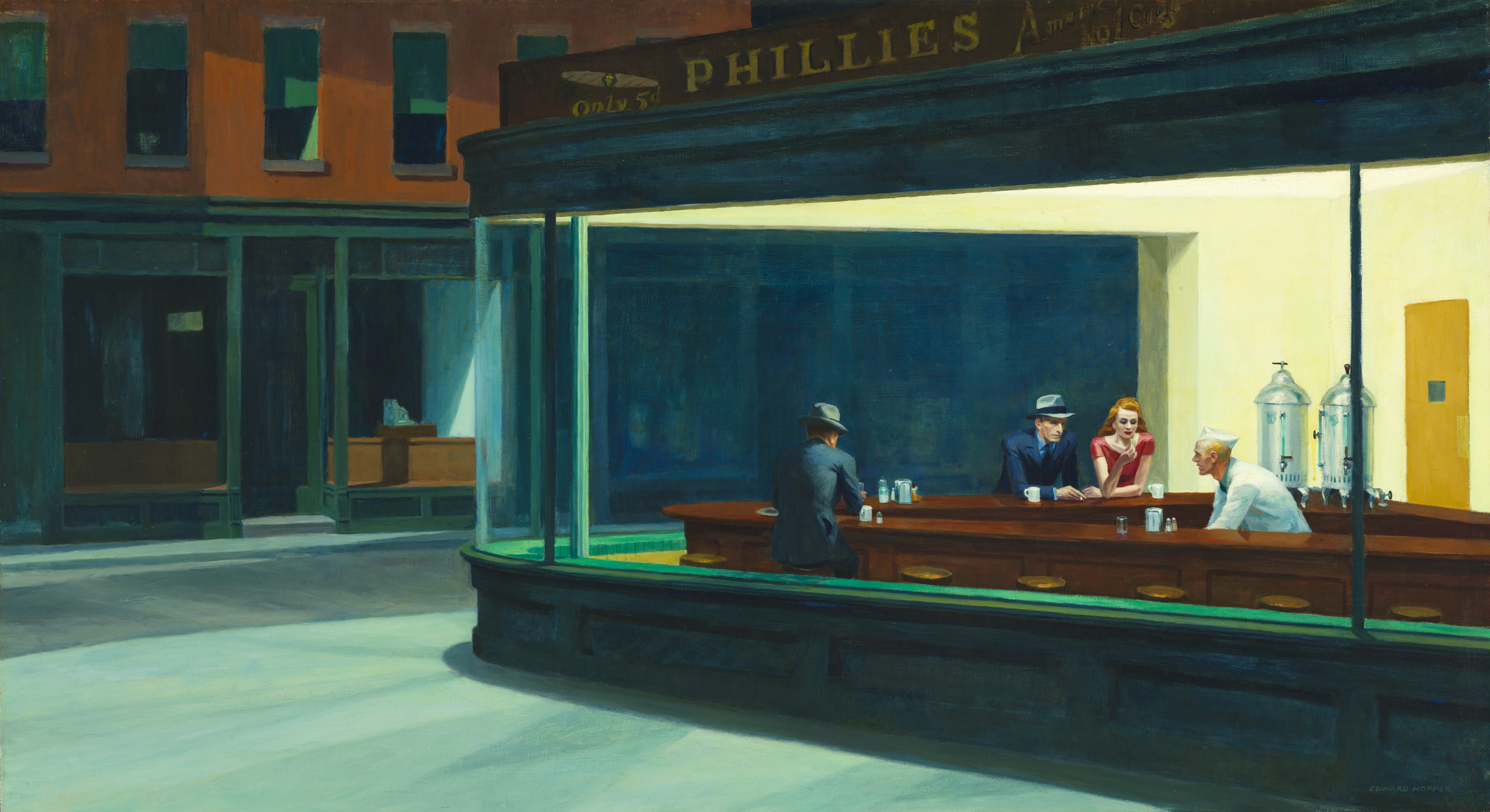
“Nighthawks” (1942) is one of Edward Hopper’s most renowned and iconic works, dramatically portraying the solitude and alienation inherent in modern urban life. The painting depicts the interior of a late-night diner, with four individuals visible through the restaurant’s large glass windows. Each figure displays a different expression, yet there is little to no interaction among them, highlighting their isolation. Hopper employs a dramatic contrast of light and shadow to create a striking visual effect, with the brightly lit diner standing out against the darkened exterior, suggesting a secluded world within the urban landscape. The glass windows function like stage curtains, separating the figures and intensifying the sense of confinement within their shared yet solitary space. “Nighthawks” symbolically captures the disconnection and inner loneliness brought about by the rapid urbanization and industrialization of 20th-century America, reflecting the challenges of personal identity and communication in contemporary society. The painting has garnered global admiration and serves as a subject of extensive interpretation and study. Furthermore, “Nighthawks” has inspired various forms of media, including film, literature, and popular culture, thereby amplifying Hopper’s artistic influence.
“나이트호크스”: 도시 고독의 상징적 표현
“나이트호크스(Nighthawks, 1942)”는 에드워드 호퍼의 가장 유명하고 상징적인 작품 중 하나로, 현대 도시 생활의 고독과 소외를 극적으로 표현한 그림이다. 이 작품은 늦은 밤에 문을 열어 둔 식당 내부를 그린 것으로, 식당 창문 너머로 보이는 네 명의 인물이 등장한다. 이들 인물은 각기 다른 표정을 짓고 있지만, 서로 간의 상호작용은 거의 없어 보이며 그들의 고독한 모습이 도드라진다. 호퍼는 이 작품에서 빛과 그림자의 극적인 대비를 사용하여 어둠 속에서 빛나는 식당의 불빛이 마치 하나의 고립된 세계를 형성하는 듯한 느낌을 주었다. 식당의 유리창은 마치 무대의 커튼처럼 인물들을 분리시키며 관객에게는 그들이 속해 있는 공간의 고립감을 더욱 강하게 전달한다. “나이트호크스”는 20세기 미국의 도시화와 산업화가 가져온 인간관계의 단절과 개인의 내면적 고독을 상징적으로 담아내었으며, 이는 현대 사회에서의 개인의 정체성과 소통의 어려움을 반영한다. 이 작품은 전 세계적으로 많은 사람들에게 사랑받고 있으며, 수많은 해석과 연구의 대상이 되고 있다. 또한, “나이트호크스”는 영화, 문학, 대중문화 등 다양한 분야에서 영감을 주는 원천으로 활용되며 호퍼의 예술적 영향력을 널리 알리고 있다.


“Automat”: A Detailed Reflection of Modern Loneliness
“Automat” (1927) is one of Edward Hopper’s signature works, intricately depicting the loneliness and isolation experienced by individuals within the context of urban life. The painting portrays a woman seated alone at an automat, engrossed in reading a book or lost in thought. The cold lighting and pristine interior space accentuate her solitude. By choosing the commonplace setting of an automat, Hopper symbolically represents the alienation and detachment felt by modern individuals in their daily routines. The woman’s position and posture suggest a disconnection from the surrounding world, highlighting the loss of personal identity and emotional isolation prevalent in urban environments. “Automat” also utilizes the interplay of light and shadow to visually convey the passage of time and spatial changes, eliciting a deep emotional response from the viewer. The combination of Hopper’s minimalist style and precise detailing effectively communicates the complex emotions hidden within a seemingly simple everyday scene. “Automat” holds a significant place in modern art history and is celebrated as a source of inspiration for numerous artists.
“오토매트”: 현대적 외로움의 세밀한 반영
“오토매트(Automat, 1927)”는 에드워드 호퍼의 대표작 중 하나로, 도시 생활 속에서의 개인의 외로움과 고립을 섬세하게 표현한 작품이다. 이 그림은 자동판매기 앞에 혼자 앉아 있는 여성의 모습을 묘사하고 있다. 여성은 창가에 앉아 책을 읽거나 생각에 잠긴 듯한 표정을 짓고 있으며, 주변의 차가운 조명과 깔끔한 실내 공간이 그녀의 고독을 더욱 강조한다. 호퍼는 이 작품에서 일상적인 장소인 자동판매기 앞을 배경으로 선택하여 현대인의 일상 속에서 느끼는 외로움과 소외감을 상징적으로 표현하고자 하였다. 여성의 위치와 자세는 그녀가 주변 세계와 단절되어 있음을 암시하며, 이는 도시 생활에서의 개인의 정체성 상실과 감정적 고립을 나타낸다. “오토매트”는 또한 빛과 그림자의 대조를 통해 시간의 흐름과 공간의 변화를 시각적으로 표현함으로써 관객에게 깊은 정서적 공감을 이끌어낸다. 이 작품은 호퍼의 특유의 미니멀한 스타일과 정밀한 디테일이 결합되어 단순한 일상 장면 속에 숨겨진 복잡한 인간의 감정을 효과적으로 전달한다. “오토매트”는 현대 미술사에서 중요한 위치를 차지하고 있으며 많은 예술가들에게 영감을 주는 작품으로 평가받고 있다.


“Gas”: The Harmonious Intersection of Nature and Industry
“Gas” (1940) is a pivotal work by Edward Hopper that juxtaposes natural landscapes with industrial elements, reflecting the rapid industrial growth and resulting social changes in America. The painting centers on a secluded gas station situated beside a quiet road, surrounded by expansive natural scenery. Hopper delicately portrays the coexistence of industrial structures and the natural environment, exploring how human activities interact with nature. The gas station symbolizes the burgeoning automobile culture and industrialization of the time, representing both the mobility and freedom afforded by such advancements and the accompanying environmental changes and social disconnections. Although the figures in the painting appear to be utilizing the gas station, their expressions and postures hint at an underlying sense of loneliness amid everyday activities. Hopper’s use of light and shadow effectively conveys the time of day and mood, emphasizing the isolation imposed by the vast surrounding spaces. “Gas” delves deeply into the relationship between industrialization and nature, symbolizing the complex interactions between humanity and the environment in modern society. The painting offers a critical perspective on environmental issues and industrialization, continuing to provoke thoughtful reflection among contemporary audiences.
“가스”: 자연과 산업의 조화로운 교차점
“가스(Gas, 1940)”는 에드워드 호퍼의 중요한 작품 중 하나로, 자연과 산업화가 공존하는 풍경을 통해 미국의 급속한 산업 발전과 그로 인한 사회적 변화를 반영하고 있다. 이 그림은 한적한 도로 옆에 위치한 주유소를 중심으로 그려졌으며, 주변에는 넓은 자연 풍경이 펼쳐져 있다. 호퍼는 이 작품에서 산업화된 구조물과 자연환경이 조화를 이루는 모습을 섬세하게 표현함으로써 인간의 활동이 자연과 어떻게 상호작용하는지를 탐구하고자 하였다. 주유소는 당시 미국의 자동차 문화와 산업화의 상징으로, 현대인의 이동성과 자유를 나타내는 동시에 그로 인한 환경 변화와 사회적 단절을 암시한다. 그림 속 인물은 주유소를 이용하는 듯한 모습이지만 그들의 표정이나 자세에서는 일상적인 활동 속에서도 느껴지는 고독감이 엿보인다. 호퍼는 빛과 그림자의 사용을 통해 시간대와 분위기를 효과적으로 전달하며 주유소 주변의 넓은 공간이 주는 고립감을 강조하였다. “가스”는 호퍼의 작품 중에서도 산업화와 자연의 관계를 심도 있게 다룬 작품으로, 현대 사회에서의 인간과 자연의 복잡한 관계를 상징적으로 나타내고 있다. 이 작품은 환경 문제와 산업화에 대한 비판적 시각을 담고 있으며 오늘날에도 여전히 많은 이들에게 생각할 거리를 제공하고 있다.


Lesser-Known Personal Stories of Hopper
Edward Hopper is not only celebrated for his artistic achievements but also for the intriguing aspects of his personal life. Known for his private nature, Hopper preferred to focus on his inner world rather than public appearances. His wife, Josephine Nivison, was also a talented painter and often served as the model for the female figures in Hopper’s works. Their marriage significantly influenced Hopper’s artistic inspiration, with both artists continuously impacting each other’s work. Beyond painting, Hopper had a deep interest in cinema and theater, which greatly influenced the cinematic elements present in his artwork. He drew inspiration from film composition and lighting techniques, meticulously incorporating dramatic scene setups and light usage into his paintings. Additionally, Hopper enjoyed traveling, experiencing diverse landscapes and cultures, which contributed to the variety of backgrounds and themes in his work. He also endured prolonged periods of illness, during which he focused on creating more profound and introspective pieces. Hopper’s artwork reflects his personal experiences and emotions, allowing his paintings to convey deep emotional resonance beyond mere visual aesthetics. These lesser-known facets of Hopper’s life provide crucial insights into his art, enriching the understanding of the profound meanings embedded in his works.
잘 알려지지 않은 호퍼의 개인적 이야기
에드워드 호퍼는 그의 예술적 업적뿐만 아니라 개인적인 삶에서도 여러 흥미로운 사실들을 가지고 있다. 호퍼는 비교적 사적인 성향을 지닌 인물로, 대중 앞에 드러나는 모습보다는 내면의 세계에 더 집중하는 경향이 있었다. 그의 아내 조세핀 니비슨(Josephine Nivison)은 역시 재능 있는 화가로, 호퍼의 작품에 자주 등장하는 여성 인물들의 모델로도 활동하였다. 조세핀과의 결혼은 호퍼의 예술적 영감에 큰 영향을 미쳤으며, 두 사람은 서로의 작품에 지속적인 영향을 주고받았다. 호퍼는 예술 외에도 영화와 연극에 깊은 관심을 가지고 있었으며, 이는 그의 작품에 시네마틱한 요소들이 많이 반영되는 원인이 되었다. 그는 영화의 구성과 조명 기법에서 영감을 받아 자신의 그림에서도 마찬가지로 극적인 장면 연출과 빛의 사용에 신경을 썼다. 또한, 호퍼는 여행을 즐기며 다양한 풍경과 문화를 경험했는데, 이는 그의 작품에 다양한 배경과 테마를 도입하는 데 기여하였다. 호퍼는 건강 문제로 인해 오랜 기간 병원 생활을 했던 시기도 있었으며, 이 시기에 그는 더욱 깊이 있는 작품을 창작할 수 있었다. 호퍼의 작품은 그의 개인적인 경험과 감정을 반영하며, 이는 그의 그림이 단순한 시각적 아름다움을 넘어 깊은 정서적 울림을 전달하는 이유 중 하나이다. 이러한 잘 알려지지 않은 사실들은 호퍼의 예술을 이해하는 데 중요한 단서를 제공하며 그의 작품에 담긴 깊은 의미를 더욱 풍부하게 만든다.


Hopper’s Legacy and Influence on Modern Art
Edward Hopper’s artistic legacy continues to exert a significant influence both during his lifetime and posthumously. His works have left an indelible mark on modern art and popular culture, inspiring countless artists and filmmakers with his unique atmosphere and thematic focus. Hopper’s mastery of light and shadow, as well as his spatial compositions, has profoundly impacted film cinematography and scene direction, with his paintings often being likened to cinematic scenes. He played a crucial role in exploring themes of solitude and the human psyche, providing a vital reference point for modern artists seeking to express the complexities of human existence. Furthermore, Hopper’s work possesses psychological depth, making it a valuable model for visually representing human emotions and mental states. His paintings hold an important place in art history, with numerous scholars analyzing his work to understand the societal transformations of 20th-century America. Hopper’s influence extends beyond the art world into advertising, design, and architecture, demonstrating the wide-reaching impact of his vision. His works continue to be exhibited in museums and galleries worldwide, maintaining their appeal to new generations of audiences. Hopper’s artistic legacy, characterized by his distinctive perspective and profound themes, is expected to sustain its influence in the art world for many years to come.
호퍼의 유산과 현대 예술에 미친 영향
에드워드 호퍼의 예술적 유산은 그의 생애 동안뿐만 아니라 사후에도 지속적으로 영향을 미치고 있다. 호퍼의 작품은 현대 예술과 대중문화 전반에 걸쳐 깊은 영향을 끼쳤으며, 그의 독특한 분위기와 주제는 수많은 예술가와 영화감독들에게 영감을 제공하였다. 특히, 호퍼의 빛과 그림자 사용, 공간 구성은 영화의 촬영 기법과 장면 연출에 많은 영향을 미쳤으며 그의 작품은 종종 영화의 장면을 연상시키는 시네마틱한 요소로 평가받고 있다. 호퍼는 현대 사회의 고독과 인간의 내면을 탐구하는 데 중요한 역할을 했으며, 이는 현대 예술가들이 자신의 작품에서 인간 존재의 복잡성을 표현하는 데 있어 중요한 참고점이 되었다. 또한, 호퍼의 작품은 심리학적 깊이를 지니고 있어 인간의 감정과 정신 상태를 시각적으로 표현하는 데 있어 중요한 모델로 활용되고 있다. 그의 그림은 미술사 연구에서 중요한 위치를 차지하고 있으며, 많은 학자들이 호퍼의 작품을 통해 20세기 미국 사회의 변화를 분석하고 있다. 호퍼의 영향력은 단지 미술계에 국한되지 않고 광고, 디자인, 건축 등 다양한 분야에서도 찾아볼 수 있다. 그의 작품은 여전히 전 세계 미술관과 갤러리에서 전시되며 새로운 세대의 관객들에게도 꾸준한 사랑을 받고 있다. 호퍼의 예술적 유산은 그의 독창적인 시각과 깊이 있는 주제를 통해 앞으로도 오랜 시간 동안 예술계에 지속적인 영향을 미칠 것으로 기대된다.


Conclusion: Hopper’s Art and Modern Society’s Solitude
Edward Hopper stands as a quintessential American painter of the 20th century, with his works meticulously portraying the solitude and alienation of modern individuals, evoking profound emotional responses. Through his simple compositions and intense contrasts of light and shadow, Hopper dramatically captured everyday moments, effectively conveying the complexities of human inner lives and social relationships. His masterpieces, including “Nighthawks”, “Automat”, and “Gas”, each possess unique atmospheres and symbolic meanings, reflecting personal identity and isolation within contemporary society. Hopper’s art remains beloved and extensively studied both during his lifetime and after his death, with his works continuously exhibited in museums and galleries around the world. As an influential figure in modern art, Hopper’s unique vision and deep thematic explorations inspire numerous artists, playing a pivotal role in examining the intricate emotions and human connections in today’s society. His artistic legacy, through his paintings, is expected to inspire people for generations, maintaining a significant presence in modern art. Hopper’s work transcends mere visual beauty, offering viewers profound contemplation and emotional depth, underscoring why he is revered as a leading American artist of the 20th century. Through unwavering dedication and passion, Edward Hopper built a distinctive artistic world, and his works continue to inspire many to this day.
결론: 호퍼의 예술과 현대 사회의 고독
에드워드 호퍼는 20세기 미국을 대표하는 화가로서 그의 작품은 현대인의 고독과 소외를 섬세하게 묘사하며 깊은 정서적 울림을 전달한다. 호퍼는 간결한 구성과 강렬한 명암 대비를 통해 일상의 순간들을 극적으로 포착하였으며 이를 통해 인간의 내면과 사회적 관계의 복잡성을 효과적으로 표현하였다. 그의 대표작들인 “나이트호크스”, “오토매트”, “가스” 등은 모두 독특한 분위기와 상징성을 지니고 있으며 각각의 작품은 현대 사회에서의 개인의 정체성과 고립감을 반영하고 있다. 호퍼의 예술은 그의 생애 동안뿐만 아니라 사후에도 지속적으로 사랑받고 연구되며 그의 작품은 전 세계 미술관과 갤러리에서 꾸준히 전시되고 있다. 호퍼는 현대 미술에 큰 영향을 미친 예술가로 그의 독창적인 시각과 깊이 있는 주제는 많은 예술가들에게 영감을 제공하고 있으며 현대 사회의 복잡한 감정과 인간관계를 탐구하는 데 중요한 역할을 하고 있다. 호퍼의 예술적 유산은 그의 작품을 통해 앞으로도 오랜 시간 동안 사람들에게 영감을 주며 현대 미술의 중요한 부분으로 남아 있을 것이다. 그의 작품은 단순한 시각적 아름다움을 넘어서 관객들에게 깊은 사유와 감정을 불러일으키는 힘을 지니고 있으며 이는 호퍼가 왜 20세기 미국을 대표하는 예술가로 평가받는지를 잘 보여준다. 에드워드 호퍼는 그의 생애 동안 꾸준한 노력과 열정을 통해 독특한 예술 세계를 구축하였으며 그의 작품은 오늘날에도 많은 이들에게 영감을 주고 있다.


Keywords: Edward Hopper, American realism, urban solitude, light and shadow, Nighthawks, Automat, Gas, New York Movie, Josephine Nivison, Robert Henri
키워드: 에드워드 호퍼, Edward Hopper, 미국 사실주의, 도시의 고독, 빛과 그림자, 나이트호크스(Nighthawks), 오토매트(Automat), 가스(Gas), 조세핀 니비슨(Josephine Nivison), 로버트 헨라이(Robert Henri)
Leave a Reply