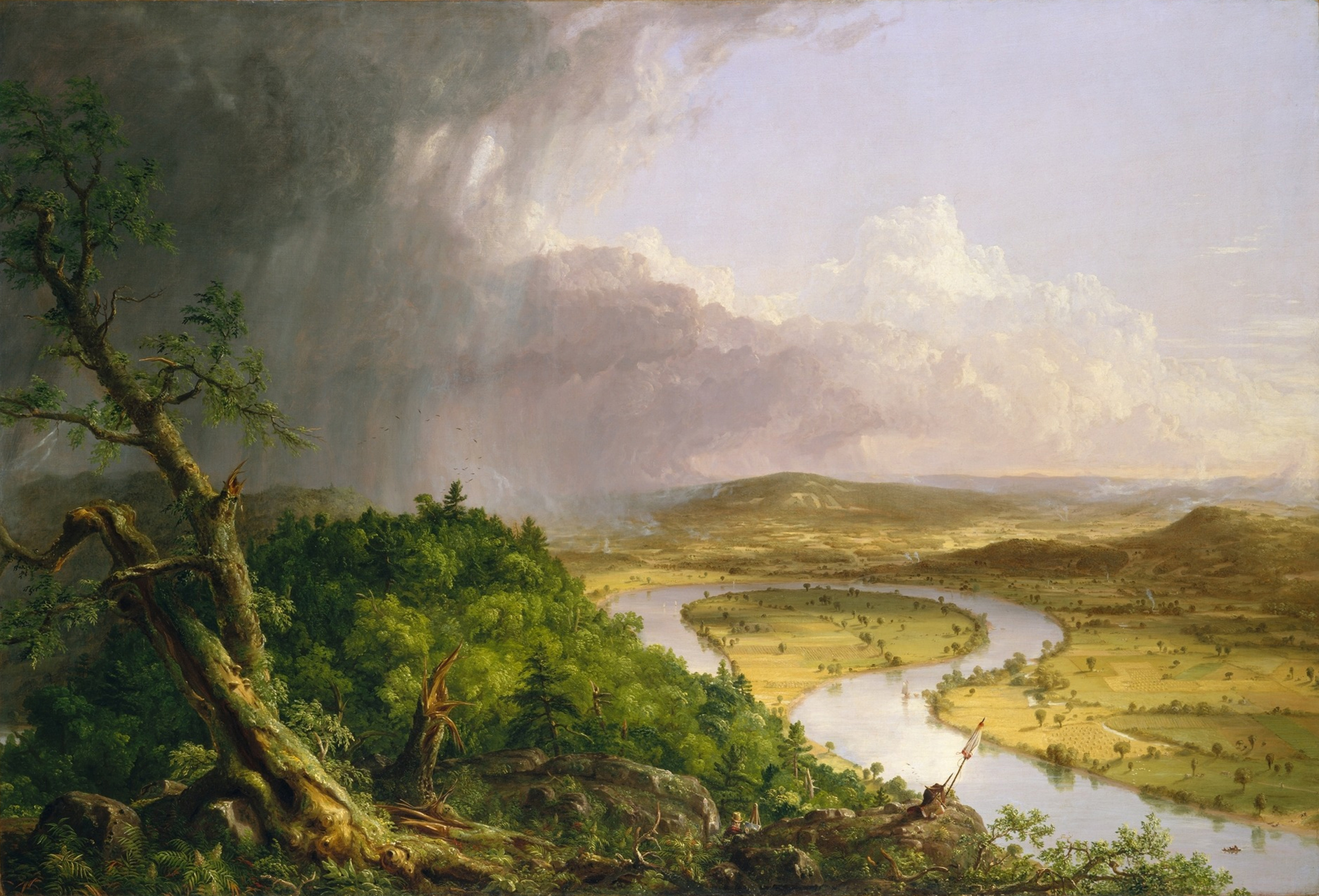


Thomas Cole (1801–1848) was a prominent American Romantic painter and the founder of the Hudson River School, playing a significant role in the development of American landscape painting. Through his majestic depictions of natural landscapes, he deeply explored the relationship between nature and human civilization, embedding philosophical reflections and symbolic messages in his works. Cole’s art emphasized the sublimity of nature, presenting a critical view of the advancement of civilization, and his unique approach greatly influenced many artists and scholars.
토마스 콜(Thomas Cole, 1801–1848)은 미국 낭만주의의 대표적 화가이자 허드슨 강파(Hudson River School)의 창시자로, 미국 풍경화 발전에 중요한 역할을 했다. 그는 장엄한 자연 풍경을 통해 자연과 인간 문명의 관계를 깊이 탐구했으며, 그의 작품은 철학적 성찰과 상징적인 메시지를 담고 있다. 콜의 예술은 자연의 숭고함을 강조하며, 문명 발전에 대한 비판적인 시각을 드러내는 독창적인 접근 방식으로 많은 예술가와 학자들에게 영향을 미쳤다.


Early Life and Artistic Career
Thomas Cole was born in Lancashire, England, in 1801, and immigrated to the United States with his family in 1818. He initially worked in printing and engraving, nurturing his interest in art. He began painting natural landscapes while traveling through the upper Hudson River region of New York. His depiction of the region’s grandeur earned high praise from New York’s elite art patrons, and he quickly gained recognition in the art world. Cole became the central figure of the Hudson River School with his landscapes that interpreted American nature from a philosophical and religious perspective, helping to shape an artistic movement that explored American identity.
초기 생애와 예술적 경력
토머스 콜은 1801년 영국 랭커셔에서 태어나, 1818년 가족과 함께 미국으로 이주했다. 콜은 인쇄업과 판화업에서 처음 일하며 예술에 대한 관심을 키웠다. 이후 뉴욕의 허드슨 강 상류 지역을 여행하면서 자연 경관을 그리기 시작했고 그가 묘사한 자연의 웅장한 풍경은 뉴욕의 상류층 예술 후원자들에게 큰 호평을 받으며, 예술계에서 빠르게 주목을 받았다. 콜은 미국의 자연을 철학적·종교적 시각에서 해석한 풍경화로 허드슨 강파의 중심 인물로 자리 잡았으며, 이 운동은 미국적 정체성을 탐구하는 중요한 예술적 흐름으로 발전했다.


The Sublimity of Nature and Philosophical Messages
In Cole’s works, nature is not merely a backdrop but is portrayed as a sacred and transcendent presence. He depicted nature as a pure space, contrasting with human civilization, while incorporating religious contemplation that revered God’s creations. His Romantic approach emphasized the beauty and sublimity of nature, symbolizing its boundless power, which human civilization could never destroy. This philosophical message was a recurring theme throughout his work.
자연의 숭고함과 철학적 메시지
콜의 작품에서 자연은 단순한 배경이 아니라 신성하고 초월적인 존재로 묘사된다. 그는 자연을 인간 문명과 대립되는 순수한 공간으로 표현하며, 그 속에서 신의 창조물을 경외하는 종교적 성찰을 담았다. 자연에 대한 그의 접근은 낭만주의적이며, 자연의 아름다움과 숭고함을 강조하여 인간 문명이 파괴할 수 없는 무한한 힘을 상징적으로 표현했다. 이러한 철학적 메시지는 그의 작품 전반에 걸쳐 중요한 주제로 다루어졌다.


“The Course of Empire” Series and a Warning about Civilization
One of Thomas Cole’s most significant works, the “The Course of Empire” series, is a grand project that portrays the rise and fall of civilization in five paintings. The series begins with nature in its pure state, moves through the peak and destruction of civilization, and ends with nature reclaiming dominance over human creations. Through this work, Cole warned that the development of American civilization, driven by industrialization and westward expansion, could ultimately lead to its downfall. Cole believed that industrialization threatened the purity of nature, reflecting his philosophical convictions in this masterpiece.
“제국의 행로” 시리즈와 문명에 대한 경고
토머스 콜의 가장 중요한 작품 중 하나로 꼽히는 “The Course of Empire” 시리즈는 문명의 흥망성쇠를 다섯 개의 작품으로 나누어 표현한 대작이다. 이 시리즈는 자연 상태에서 출발해 문명의 절정과 파괴, 그리고 결국 자연이 문명을 압도하는 모습을 묘사한다. 콜은 이 작품을 통해 산업화와 서부 확장으로 인한 미국 문명의 발전이 궁극적으로 파멸로 이어질 수 있다는 경고를 담았다. 당시 콜은 산업화가 자연의 순수함을 위협한다고 믿었으며, 이는 그의 철학적 신념을 반영한 작품으로 해석된다.


European Travels and Artistic Evolution
Between 1831 and 1832, Cole traveled through Europe, visiting countries such as England, France, and Italy, where he explored ancient ruins and natural landscapes. His experience in Italy, in particular, had a profound impact on his artistic direction. Among the ancient ruins and beautiful landscapes of Italy, Cole engaged in deep contemplation about the relationship between civilization and nature, sketching ideas for several symbolic works. This journey marked a period of adding more symbolism and philosophical depth to his art, solidifying his focus on the rise and fall of civilizations as a key theme in his work.
유럽 여행과 예술적 변화
1831년에서 1832년까지 콜은 영국, 프랑스, 이탈리아를 포함한 유럽을 여행하며 고대 문명 유적과 유럽의 자연 풍경을 탐구했다. 특히 이탈리아에서의 경험은 그의 예술적 방향에 큰 영향을 미쳤다. 이탈리아의 고대 유적지와 아름다운 자연 속에서 콜은 문명과 자연의 관계에 대한 깊은 사색을 하며 여러 상징적인 작품의 스케치를 준비했다. 이 여행은 그의 작품에 더 많은 상징성과 철학적 요소를 추가하는 계기가 되었으며, 문명의 흥망성쇠에 대한 주제가 그의 주요 관심사로 자리 잡게 된 중요한 시기로 평가된다.


Artistic Anxiety and Inner Conflict
Despite his success, Thomas Cole was often troubled by a sense of inadequacy in his own work. He frequently felt that his art did not sufficiently convey the depth of his philosophical messages. It is known that he particularly agonized over his “Voyage of Life” series, believing that it did not fully express the intended philosophical depth. This inner conflict reveals how seriously and passionately Cole approached his art.
예술적 불안과 자아에 대한 갈등
토머스 콜은 예술적 성공에도 불구하고, 자신의 작품에 대해 항상 불안감을 가지고 있었다. 그는 자신의 예술적 성취가 충분하지 않다고 느끼며, 작품이 철학적 메시지를 제대로 전달하지 못한다고 생각하곤 했다. 특히 그의 작품 중 하나인 “Voyage of Life” 시리즈에 대해 그는 철학적 깊이를 충분히 표현하지 못했다고 스스로 자책한 것으로 알려져 있다. 이러한 자아에 대한 갈등은 그가 예술에 대해 얼마나 진지하고 깊은 열정을 가지고 있었는지를 보여준다.


Conflict Between Marriage and Artistic Passion
In 1836, Thomas Cole married Maria Bartow, though there are stories of his struggle to balance his artistic passion with family life. He was so intensely focused on his art that he sometimes spent long periods away from his family, which negatively impacted his domestic life. It is rumored that his strong obsession with art strained his relationship with his family. This conflict also connects to the themes of balance between nature, humanity, and life that he explored in his works.
결혼과 예술적 열정 사이의 갈등
토머스 콜은 1836년 마리아 바토우와 결혼했지만, 예술적 열정과 가정 생활 사이에서 갈등이 있었다는 이야기가 전해진다. 그는 예술에 지나치게 몰두해 가끔 가족과 떨어져 지내는 일이 많았고, 이는 가정 생활에 부정적인 영향을 미쳤다. 특히 예술에 대한 그의 강한 집착은 가족과의 관계를 악화시켰다는 소문이 있다. 이러한 갈등은 그가 자연과 인간, 그리고 삶의 균형을 탐구하는 그의 작품 주제와도 연결된다.


Strict Mentorship and Artistic Ideals
Cole was known as a strict mentor to the young artists he sponsored or taught. His students noted that he maintained very high standards when evaluating their work, sometimes to the point of harsh criticism. This strictness was tied to his strong desire to pass on his artistic philosophy. He believed that art was not just about creation but also about philosophical exploration, and this belief was evident in his teaching approach.
엄격한 제자 교육과 예술적 이상
콜은 자신이 후원하거나 가르쳤던 젊은 화가들에게 엄격한 지도자로 알려져 있다. 그의 제자들은 콜이 매우 높은 기준을 가지고 작품을 평가했으며, 때로는 가혹할 정도로 비판적이었다고 전한다. 이는 콜이 자신의 예술적 철학을 제자들에게 전하려는 강한 의지와 연결된다. 그는 예술이 단순한 창작을 넘어 철학적 탐구의 과정이라고 생각했으며, 이러한 신념은 그의 제자 교육에서도 두드러졌다.


The Mystery of His Death
Thomas Cole passed away suddenly in 1848, with the official cause being illness, but mystery still surrounds his death. Some rumors suggest that his health deteriorated due to overwork and stress from his intense dedication to his art, potentially leading to his untimely death. Speculation exists that his excessive passion for art may have contributed to his death.
죽음과 관련된 미스터리
토머스 콜은 1848년 갑작스럽게 사망했으며, 공식적인 원인은 질병으로 알려져 있지만 그의 죽음에 대한 미스터리가 여전히 남아 있다. 일부 소문에 따르면 그는 지나치게 예술 작업에 몰두하면서 과로와 스트레스로 인해 건강이 악화되었고, 이로 인해 갑작스러운 죽음을 맞았을 가능성이 제기된다. 그의 죽음은 예술에 대한 지나친 열정과 관련이 있을 수 있다는 추측도 있다.


Conclusion
As a pioneer of American landscape painting, Thomas Cole depicted nature as a sacred entity and explored the rise and fall of civilizations through his philosophical lens. His works emphasized the sublimity of nature and warned against its destruction due to industrialization and urbanization. Stories of his personal life, artistic conflicts, European experiences, strict expectations for his students, and the mystery surrounding his sudden death provide a deeper understanding of his artistic world.
마무리
토머스 콜은 미국 풍경화의 선구자로서, 자연을 신성한 존재로 묘사하고 문명의 흥망성쇠를 철학적으로 탐구한 예술가였다. 그의 작품은 자연의 숭고함을 강조하며, 산업화와 도시화로 인해 자연이 파괴되는 것에 대한 경고를 담고 있다. 또한, 그의 개인적 삶과 예술적 갈등, 유럽 여행 중의 경험, 제자들에게 가졌던 엄격한 기대, 그리고 갑작스러운 죽음에 관한 이야기들은 그의 예술 세계를 더욱 깊이 이해할 수 있는 배경을 제공한다.


- Wikipedia: https://en.wikipedia.org/wiki/Thomas_Cole
- The National Gallery: https://www.nga.gov/collection/artist-info.1155.html
- MET: https://www.metmuseum.org/toah/hd/cole/hd_cole.htm
- SAAM: https://americanart.si.edu/artist/thomas-cole-943
Leave a Reply