
Founder of Moving Art: Alexander Calder
Alexander Calder (July 22, 1898 – November 11, 1976) was an American sculptor who founded the moving sculpture known as the mobile and was a pioneer who brought revolutionary changes to modern art. He introduced the concepts of movement and balance into artworks, presenting a new form of art that interacts with space. Calder’s works are evaluated as multidimensional art that encompasses not only simple sculptures but also time, space, and randomness. His original approach provided a fresh shock to the art world at the time and redefined the direction of modern sculpture. He also combined color, form, and movement to add philosophical depth as well as visual pleasure. His mobiles reflect the movement of nature and the order of the universe, offering audiences new experiences through constant change.
움직이는 예술의 창시자, 알렉산더 칼더
알렉산더 칼더(1898년 7월 22일 ~ 1976년 11월 11일)는 움직이는 조각인 모빌(Mobile)을 창시한 미국의 조각가로, 현대 미술에 혁신적인 변화를 가져온 선구자이다. 그는 예술 작품에 운동성과 균형의 개념을 도입하여 공간과 상호작용하는 새로운 형태의 예술을 제시하였다. 칼더의 작품은 단순한 조각을 넘어 시간과 공간, 그리고 우연성을 포괄하는 다차원적인 예술로 평가받고 있다. 그의 독창적인 접근 방식은 당시 미술계에 신선한 충격을 주었으며, 현대 조각의 방향을 새롭게 정의하였다. 또한 그는 색채와 형태, 움직임을 결합하여 시각적인 즐거움뿐만 아니라 철학적인 깊이까지 더하였다. 그의 모빌은 자연의 움직임과 우주의 질서를 반영하며, 관객에게 끊임없는 변화를 통해 새로운 경험을 선사한다.

From Engineer to Artist: Calder’s Dual Life
Born in Lawnton, Pennsylvania, into an artistic family, Calder grew up in a creative environment from an early age. His father, Alexander Stirling Calder, was a famous sculptor, and his mother, Nanette Lederer Calder, was a painter. However, instead of following his parents’ artistic influence, he majored in mechanical engineering at Stevens Institute of Technology, graduating in 1919. This engineering background had a profound impact on his artistic works, playing a crucial role in realizing complex balances and movements. Although he later worked as a ship engineer, he did not lose his passion for art and began studying at the Art Students League of New York. During this period, he sought new modes of expression at the intersection of art and science, which greatly helped shape his unique artistic style. He also introduced complex structures and mechanical movements into his artworks by combining technical knowledge with artistic sensibility.
공학도에서 예술가로: 칼더의 삶의 전환
펜실베이니아주 로턴에서 예술가 가정의 아들로 태어난 칼더는 어린 시절부터 창의적인 환경에서 성장하였다. 아버지인 알렉산더 스털링 칼더는 유명한 조각가였고, 어머니인 나네트 레더 칼더는 화가였다. 그러나 그는 부모의 예술적 영향 대신 스티븐스 공과대학교에서 기계공학을 전공하여 1919년에 졸업하였다. 이 공학적 배경은 그의 예술적 작품에 깊은 영향을 미쳐, 복잡한 균형과 움직임을 구현하는 데 중요한 역할을 하였다. 그는 이후 선박 엔지니어로 일하기도 했지만, 예술에 대한 열정을 잃지 않고 뉴욕 예술학생연맹에서 미술을 공부하기 시작하였다. 이 기간 동안 그는 예술과 과학의 교차점에서 새로운 표현 방식을 모색하였으며, 이는 그의 독특한 예술적 스타일을 형성하는 데 큰 도움이 되었다. 또한 그는 기술적인 지식과 예술적인 감각을 결합하여 복잡한 구조물과 기계적인 움직임을 예술 작품에 도입하였다.

Lines in Space: The World of Wire Sculpture
In the 1920s, after moving to New York and Paris, Calder gained artistic inspiration by interacting with avant-garde artists. Through encounters with modern artists such as Piet Mondrian, Fernand Léger, and Joan Miró, he broadened his artistic horizons. During this period, he developed sculptures using wire, exploring unique methods of drawing lines in space. His wire sculptures were attempts to expand two-dimensional lines into three-dimensional space, an innovative idea at the time. The work “Josephine Baker” is a representative example that expresses the contours and movements of a figure with wire, drawing maximum expressiveness from minimal materials. Through such works, Calder built a new understanding of space, line, and form, greatly contributing to the development of abstract sculpture.
공간 속의 선: 철사 조각의 세계
1920년대에 뉴욕과 파리로 이주한 칼더는 아방가르드 예술가들과 교류하며 예술적 영감을 얻었다. 그는 피에트 몬드리안, 페르낭 레제, 조안 미로 등과 같은 현대 예술가들과의 만남을 통해 자신의 예술적 시야를 넓혔다. 이 시기에 그는 철사를 이용한 조각을 개발하여 공간 속에 선(line)을 그리는 독특한 방법을 탐구하였다. 그의 철사 조각은 2차원의 선을 3차원 공간으로 확장시키는 시도로, 이는 당시로서는 혁신적인 발상이었다. 작품 “조세핀 베이커”는 철사로 인물의 윤곽과 움직임을 표현한 대표적인 예로, 최소한의 재료로 최대한의 표현력을 이끌어냈다. 이러한 작업을 통해 칼더는 공간과 선, 형태에 대한 새로운 이해를 구축하였으며, 이는 추상 조각의 발전에 큰 기여를 하였다.

An Artistic Revolution on the Circus Stage: ‘Cirque Calder’
One of Calder’s early representative works, “Cirque Calder”, is a miniature circus made of wire, cloth, wood, and other materials. Through this work, he performed actual shows, offering audiences a unique experience. The piece consists of about 70 figures and props, which Calder manipulated himself, adding music and narration to the performance. He invited artists and acquaintances in Paris and New York to private shows, which received great acclaim. “Cirque Calder” is a work that well reflects his interest in movement and interaction, expanding the boundaries of art through direct communication with the audience. This work is considered a pioneering example of today’s performance art and suggested new possibilities for interaction between artist and audience. It also showcases Calder’s sense of humor and creativity, serving as an important clue to understanding his artistic world.
서커스를 무대로 한 예술 혁명: ‘서커스 칼더’
칼더의 초기 대표작 중 하나인 “서커스 칼더(Cirque Calder)”는 철사와 천, 나무 등으로 만든 미니어처 서커스로, 그는 이 작품을 통해 실제 공연을 펼치며 관객들에게 색다른 경험을 선사하였다. 이 작품은 약 70여 개의 인형과 소도구로 구성되어 있으며, 칼더는 이를 직접 조작하며 음악과 해설을 곁들여 공연하였다. 그는 파리와 뉴욕의 예술가들과 지인들을 초대하여 개인적인 공연을 열었으며, 이는 큰 호응을 얻었다. “서커스 칼더”는 그의 움직임과 상호작용에 대한 관심을 잘 나타내는 작품으로, 관객과의 직접적인 소통을 통해 예술의 경계를 확장하였다. 이 작품은 오늘날 퍼포먼스 아트의 선구적인 예로 평가받고 있으며, 예술가와 관객 간의 상호작용에 대한 새로운 가능성을 제시하였다. 또한 칼더의 유머 감각과 창의성이 돋보이는 작품으로, 그의 예술 세계를 이해하는 데 중요한 단서가 된다.

The Aesthetics of Movement: The Birth of the Mobile
In the early 1930s, at the suggestion of French artist Marcel Duchamp, Calder named his moving sculptures “mobiles.” Mobiles are balanced structures that move by air currents or motors, accepting randomness and change as important elements of art. Calder sought to express the movement of nature and the order of the universe through mobiles, adding philosophical depth to his works. The piece “Universe” (1934) displays forms and movements reminiscent of celestial bodies, while “Lobster Trap and Fish Tail” (1939), installed at the Museum of Modern Art in New York, is a mobile that demonstrates a harmonious balance of form and movement. Mobiles have established themselves as an important medium expressing movement and temporality in modern art, serving as a turning point where artworks transition from static objects to dynamic experiences.
움직임의 미학: 모빌의 탄생
1930년대 초반, 칼더는 프랑스의 예술가 마르셀 뒤샹의 제안으로 그의 움직이는 조각을 “모빌”이라 명명하였다. 모빌은 공기의 흐름이나 동력에 의해 움직이는 균형 잡힌 구조물로, 우연성과 변화를 예술의 중요한 요소로 수용하였다. 칼더는 모빌을 통해 자연의 움직임과 우주의 질서를 표현하고자 하였으며, 이는 그의 작품에 철학적인 깊이를 더해주었다. 작품 “우주(Universe)”(1934)는 천체의 움직임을 연상시키는 형태와 운동을 보여주며 “바닷가재 덫과 물고기 꼬리(Lobster Trap and Fish Tail)”(1939)는 뉴욕 현대미술관에 설치된 그의 모빌 작품으로, 형태와 움직임의 조화로운 균형을 보여준다. 모빌은 현대 예술에서 움직임과 시간성을 표현하는 중요한 매체로 자리 잡았으며, 이는 예술 작품이 정적인 대상에서 동적인 경험으로 전환되는 계기가 되었다.

The Static Beauty of Large Sculptures: Stabiles
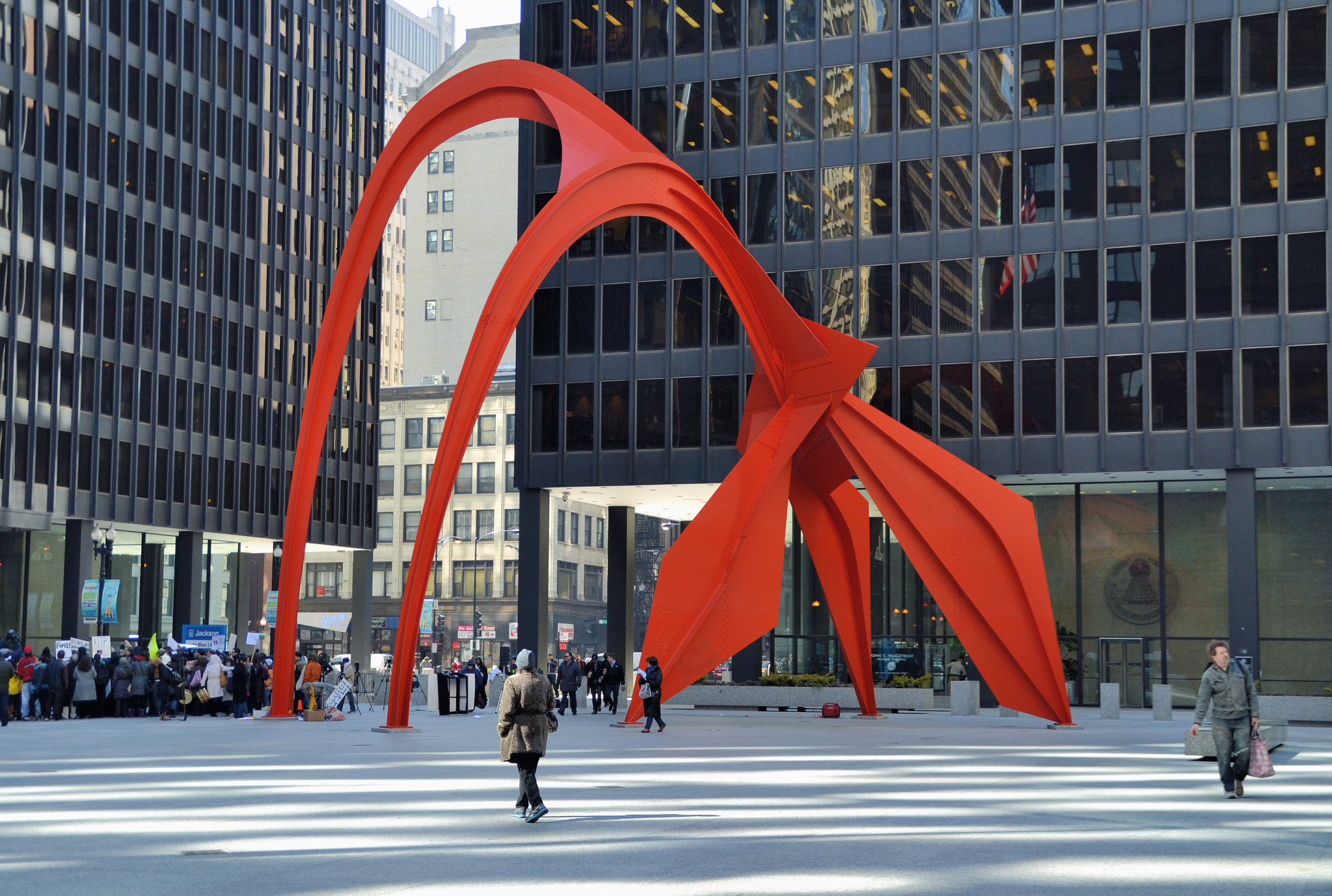
In contrast to mobiles, Calder also created large stationary sculptures called “stabiles.” Stabiles were mainly made of steel and installed in public urban spaces, harmonizing with their surroundings. Through stabiles, he explored the interaction of space and form, playing an important role in integrating art into urban environments. A representative work, “La Grande Vitesse” (1969), located in Grand Rapids, Michigan, has become a symbol of the city. This piece, a huge red steel structure, enhances the city’s aesthetic value by harmonizing with surrounding buildings and the natural environment. Additionally, “Flamingo” (1974), installed in Chicago’s Federal Plaza, symbolizes the city’s vitality and energy. Stabiles are evaluated as important examples showing how art can function in modern urban spaces, greatly influencing the development of public art.
거대 조각의 정적 아름다움: 스태빌
모빌과 대조적으로, 칼더는 움직이지 않는 대형 조각인 “스태빌(Stabile)”도 제작하였다. 스태빌은 주로 강철로 만들어졌으며, 도시의 공공 공간에 설치되어 주변 환경과의 조화를 이루었다. 그는 스태빌을 통해 공간과 형태의 상호작용을 탐구하였으며, 이는 도시 환경에 예술을 통합하는 데 중요한 역할을 하였다. 대표적인 작품인 “라 그랑드 비테스(La Grande Vitesse)”(1969)는 미시간주 그랜드 래피즈에 위치하며, 도시의 상징물로 자리매김하였다. 이 작품은 붉은색의 거대한 강철 구조물로, 주변 건축물과 자연 환경과의 조화를 이뤄 도시의 미적 가치를 높였다. 또한 “플라밍고(Flamingo)”(1974)는 시카고의 연방광장에 설치된 스태빌로, 도시의 활기와 에너지를 상징한다. 스태빌은 현대 도시 공간에서 예술이 어떻게 기능할 수 있는지를 보여주는 중요한 사례로 평가되며, 공공 예술의 발전에 큰 영향을 주었다.

Hidden Stories and Traces of Collaboration
A lesser-known fact is that Calder expanded the scope of his work through collaborations with other artists. He was close friends with Spanish painter Joan Miró, and they inspired each other’s works. The two artists shared common interests in abstract forms and colors, which was reflected in their creations. Calder and Miró held joint exhibitions, and Calder even produced mobiles inspired by Miró’s works. Additionally, Calder engaged in artistic collaborations by interacting with other modern artists through the Pierre Matisse Gallery. Calder was also interested in jewelry design, creating unique pieces that, like his sculptures, embody movement and balance. His jewelry works are highly regarded among collectors and are noted as attempts that cross the boundaries between art and fashion. He also participated in stage set design and illustration work, being active in various fields of art.
숨겨진 이야기와 협업의 흔적
잘 알려지지 않은 사실로는, 칼더가 다른 예술가들과의 협업을 통해 작품의 범위를 넓혔다는 점이 있다. 그는 스페인 화가 조안 미로와 친분이 있었으며, 서로의 작품에 영감을 주고받았다. 두 예술가는 추상적 형태와 색채에 대한 공통된 관심사를 공유하였으며, 이는 그들의 작품에 반영되었다. 칼더와 미로는 함께 전시회를 열기도 하였으며, 미로의 작품에서 영감을 받은 모빌을 제작하기도 하였다. 또한 칼더는 피에르 마티스 갤러리를 통해 다른 현대 예술가들과 교류하며 예술적 협업을 진행하였다. 칼더는 보석 디자인에도 관심이 있어 독특한 주얼리 작품을 만들었는데, 이는 그의 조각 작품과 마찬가지로 움직임과 균형을 담고 있다. 그의 보석 작품은 소수의 컬렉터들 사이에서 높은 평가를 받고 있으며, 예술과 패션의 경계를 넘나드는 시도로 주목받고 있다. 그는 또한 무대 세트 디자인과 삽화 작업에도 참여하여 예술의 다양한 분야에서 활약하였다.

Legacy of Art: Calder’s Lasting Influence
Alexander Calder continues to exert lasting influence on modern art, and his innovative approach has inspired many artists. His works can be appreciated in major museums and public places worldwide, especially at the National Gallery of Art in Washington, D.C., the Museum of Modern Art (MoMA) in New York, and the Centre Pompidou in Paris. His mobiles and stabiles have become important elements that shape the landscapes of modern cities, demonstrating the value and possibilities of public art. Moreover, his works have influenced the fields of modern design and architecture, laying the foundation for contemporary aesthetics that value movement and balance. His artistic legacy is still alive today, providing continuous inspiration to new generations in the art world. Recently, exhibitions and research re-examining his works are actively being conducted, reaffirming the timeliness and universality of his art.
예술의 유산: 칼더의 지속적인 영향력
알렉산더 칼더는 현대 예술에 지속적인 영향을 끼치며, 그의 혁신적인 접근 방식은 많은 예술가들에게 영감을 주었다. 그의 작품은 전 세계 주요 미술관과 공공장소에서 감상할 수 있으며, 특히 워싱턴 D.C. 의 국립미술관, 뉴욕 현대미술관(MoMA), 그리고 파리의 퐁피두 센터에서 그의 작품을 만나볼 수 있다. 그의 모빌과 스태빌은 현대 도시의 풍경을 구성하는 중요한 요소로 자리 잡았으며, 공공 예술의 가치와 가능성을 보여주고 있다. 또한 그의 작품은 현대 디자인과 건축 분야에도 영향을 미쳐, 움직임과 균형을 중시하는 현대적 미학의 기초를 다졌다. 그의 예술적 유산은 오늘날까지도 살아 숨 쉬고 있으며, 예술계의 새로운 세대에게도 지속적인 영감을 제공하고 있다. 최근에는 그의 작품을 재조명하는 전시회와 연구가 활발히 진행되고 있으며, 이는 그의 예술이 가진 시의성과 보편성을 다시 한번 확인시켜 준다.

Keywords: Alexander Calder, mobile, stabile, modern sculpture, Cirque Calder, La Grande Vitesse, collaboration with Joan Miró, wire sculpture, Flamingo sculpture
키워드: 알렉산더 칼더, 모빌, 스태빌, 현대 조각, 서커스 칼더, 라 그랑드 비테스, 조안 미로와의 협업, 철사 조각, 플라밍고 조각
References:
- Alexander Calder Foundation: https://www.calder.org/
- Museum of Modern Art (MoMA): https://www.moma.org/artists/882
- National Gallery of Art: https://www.nga.gov/collection/artist-info.1037.html
- Centre Pompidou: https://www.centrepompidou.fr/en/
- Grand Rapids Public Art: https://www.grandrapidsmi.gov/
- Chicago Public Art: https://www.chicago.gov/
Leave a Reply