
.jpg)
Titian Vecellio (c. 1488/1490–1576) is one of the most prominent painters of the Italian Renaissance, known for his revolutionary use of color and composition. His artistic career transcended that of a mere painter, showcasing his mastery in portraits, mythological scenes, and religious paintings. As a key figure in the Venetian school of painting, Titian pioneered a unique style that incorporated the luminous light and colors of Venice, leaving behind a rich artistic legacy.
티치아노 베첼리(Tiziano Vecellio, 약 1488/1490–1576)는 이탈리아 르네상스의 화가 중에서도 가장 주목받는 인물 중 하나로, 그의 작품은 색채와 구도의 혁신적인 사용으로 예술사에서 중요한 위치를 차지하고 있다. 그의 예술적 경력은 단순한 화가로서의 경지를 넘어서는 수준에 이르렀으며, 인물화, 신화화, 종교화 등 다양한 분야에서 그는 독창적인 기법을 선보였다. 특히 그는 베네치아파의 대표적인 화가로, 베네치아 특유의 빛과 색을 활용한 회화 기법을 완성시키며 예술적 유산을 남겼다.
Leader of the Venetian School – Titian’s Early Career and Color Innovations
Titian was born in Pieve di Cadore, a small town in northern Italy, and moved to Venice, where he received formal artistic training. Under the guidance of Giovanni Bellini and through artistic exchange with Giorgione, Titian developed his distinct artistic style. From his early works, Titian emphasized color as the central element of expression, setting him apart from the Florentine school, which focused on line and drawing (disegno) to define form. In Titian’s works, color was not just a visual element but an essential tool for conveying emotion and narrative.
This innovation in color was deeply intertwined with the Venetian school’s traditions. Venice, with its unique interplay of water, light, and diverse cultural influences, fostered an environment where artists could explore the possibilities of color in new ways. Titian perfected this through his use of subtle gradations of hue and light, creating vibrant compositions that breathed life into his canvases. His mastery of color became so iconic that “Titian red” became a term used to describe the vivid hues present in his works, particularly in the flesh tones and fabrics of his portraits.
베네치아 화파의 선두주자 – 티치아노의 초기 활동과 색채 혁신
티치아노는 이탈리아 북부의 작은 마을 피에베 디 카도레에서 태어나 베네치아로 이주하여 젊은 시절부터 예술 교육을 받았다. 조반니 벨리니의 작업장에서 훈련받은 그는 당시 베네치아에서 활동하던 조르조네와 깊은 예술적 교류를 하며 자신의 예술 세계를 확립해 나갔다. 초기 작품에서부터 티치아노는 색채를 중심으로 한 표현에 주목했으며, 이는 피렌체 화파가 주로 선묘(디세뇨)를 통해 형태를 구성하는 것과는 뚜렷한 차이를 보였다. 그의 작품에서 색은 단순한 시각적 요소가 아니라, 작품의 전체적인 감정을 이끌어내는 중요한 요소로 기능하였다.
이러한 색채의 혁신은 베네치아 화파의 전통과 맞물려 있었는데, 베네치아는 그 특유의 바다와 빛, 그리고 다양한 문화적 영향이 혼합된 환경에서 독자적인 예술적 기법을 발전시켰다. 티치아노는 이 환경 속에서 색채의 배합과 빛의 변화를 통해 회화에 새로운 생명력을 불어넣었으며, 이를 통해 후대에 “티치아노의 붉은색”이라는 별명을 얻기도 했다. 이 색채는 그의 많은 작품에서 두드러지게 나타나며, 화면 전체에 강렬한 생동감을 부여하였다.


Venus of Urbino – Sensual and Idealized Beauty
One of Titian’s most renowned works, Venus of Urbino (1538), is a masterpiece of idealized feminine beauty. The painting depicts a reclining Venus, her serene expression and languid pose juxtaposed against a tranquil domestic backdrop. While ostensibly a depiction of the goddess of love, the painting transcends its mythological subject, merging idealization with a palpable sensuality that gives the figure a lifelike presence.
Venus gazes directly at the viewer, a bold compositional choice that breaks the traditional boundaries of the passive, objectified nude. The softness of her skin, rendered with delicate transitions of light, contrasts with the rich textures of the fabrics and surroundings, creating a balanced and harmonious composition. Titian’s masterful use of light envelops Venus, imbuing her with an ethereal glow while maintaining her tangible physicality. This nuanced treatment of the female form not only showcases the beauty of the human body but also conveys a deeper, emotional resonance that engages the viewer on multiple levels.
“우르비노의 비너스” – 여성의 이상화를 넘은 감각적 표현
티치아노의 대표작 중 하나인 “우르비노의 비너스”(1538년)는 르네상스 시대의 이상화된 여성미를 극적으로 표현한 걸작이다. 이 작품에서 비너스는 평온한 표정으로 침대에 누워 있으며, 그 주위에는 아름다운 풍경과 고요한 실내 장면이 조화를 이루고 있다. 이 작품은 단순히 아름다운 여신을 묘사하는 것에 그치지 않고, 당시 르네상스 미술에서 여성의 이상화된 이미지와 현실적 감각을 조화롭게 담아내고 있다.
비너스의 시선은 관객을 직접 바라보고 있어 관람자로 하여금 그녀와 눈을 맞추게 하는 효과를 주는데, 이는 전통적인 누드화에서 흔히 볼 수 없었던 대담한 표현이다. 특히 티치아노는 이 작품에서 그녀의 피부 톤과 주변 배경의 색채를 섬세하게 조율하며, 비너스의 육체적 존재감을 극대화하였다. 여기서 눈여겨볼 부분은 화면 전체에 흐르는 빛의 사용법이다. 빛은 인물을 둘러싼 공간을 부드럽게 감싸며, 그녀의 신체를 감각적으로 드러내는 역할을 한다. 이러한 표현 방식은 티치아노의 색채 사용이 단순히 시각적 아름다움에 그치지 않고, 그 자체로 이야기를 전달하는 중요한 수단임을 보여준다.

.jpg)
Bacchus and Ariadne – Dynamic Reinterpretation of Classical Myth
Another of Titian’s celebrated works, Bacchus and Ariadne (1522-1523), is a vibrant reimagining of a classical myth, capturing the moment when Bacchus (Dionysus) first encounters Ariadne. The painting is remarkable for its dynamic composition, with the figures in varied poses, creating a sense of movement that animates the entire scene. Bacchus is depicted leaping from his chariot toward Ariadne, his body twisting through the air in a display of vitality that draws the viewer into the unfolding drama.
The emotional intensity of the scene is heightened by Titian’s masterful use of color. The contrast between Ariadne’s deep blue cloak and Bacchus’s vivid red robes serves to visually distinguish the two figures while enhancing their emotional and narrative connection. The surrounding landscape and mythological creatures further enrich the composition, with each element contributing to the overall sense of divine intervention and mortal wonder. Through this intricate interplay of movement, color, and light, Titian transformed a mythological episode into an emotionally charged visual experience, inviting viewers to engage with the narrative on a deeper level.
“바쿠스와 아리아드네” – 고전 신화의 생동감 넘치는 재해석
티치아노의 또 다른 명작인 “바쿠스와 아리아드네”(1522-1523년)는 그리스 신화를 주제로 한 작품으로, 디오니소스(바쿠스)가 아리아드네를 처음 발견하는 장면을 역동적으로 그려냈다. 이 작품에서 티치아노는 여러 인물을 다양한 각도로 배치하여 화면에 활력을 불어넣었으며, 각 인물의 생동감 넘치는 움직임이 시선을 사로잡는다. 특히 디오니소스가 아리아드네를 향해 도약하는 순간은 이 작품의 하이라이트로, 티치아노의 탁월한 구도 감각이 잘 드러나는 부분이다.
화면 속 인물들의 표정과 몸짓은 매우 역동적이며, 그들이 자리 잡고 있는 자연의 풍경은 신화적 장면을 더욱 극적으로 보이게 한다. 또한 티치아노는 다양한 색채를 사용하여 인물들 간의 감정적 대조를 강조하였다. 예를 들어, 아리아드네의 푸른 망토와 디오니소스의 붉은 의상이 대조를 이루며, 이들은 서로의 존재감을 극명하게 드러낸다. 티치아노는 색채를 통해 각 인물의 심리적 상태를 시각적으로 표현했으며, 이는 단순한 이야기를 넘어서 인간 감정의 복잡한 내면을 탐구한 것이다.


The Assumption of the Virgin – Harmonizing the Divine and the Human
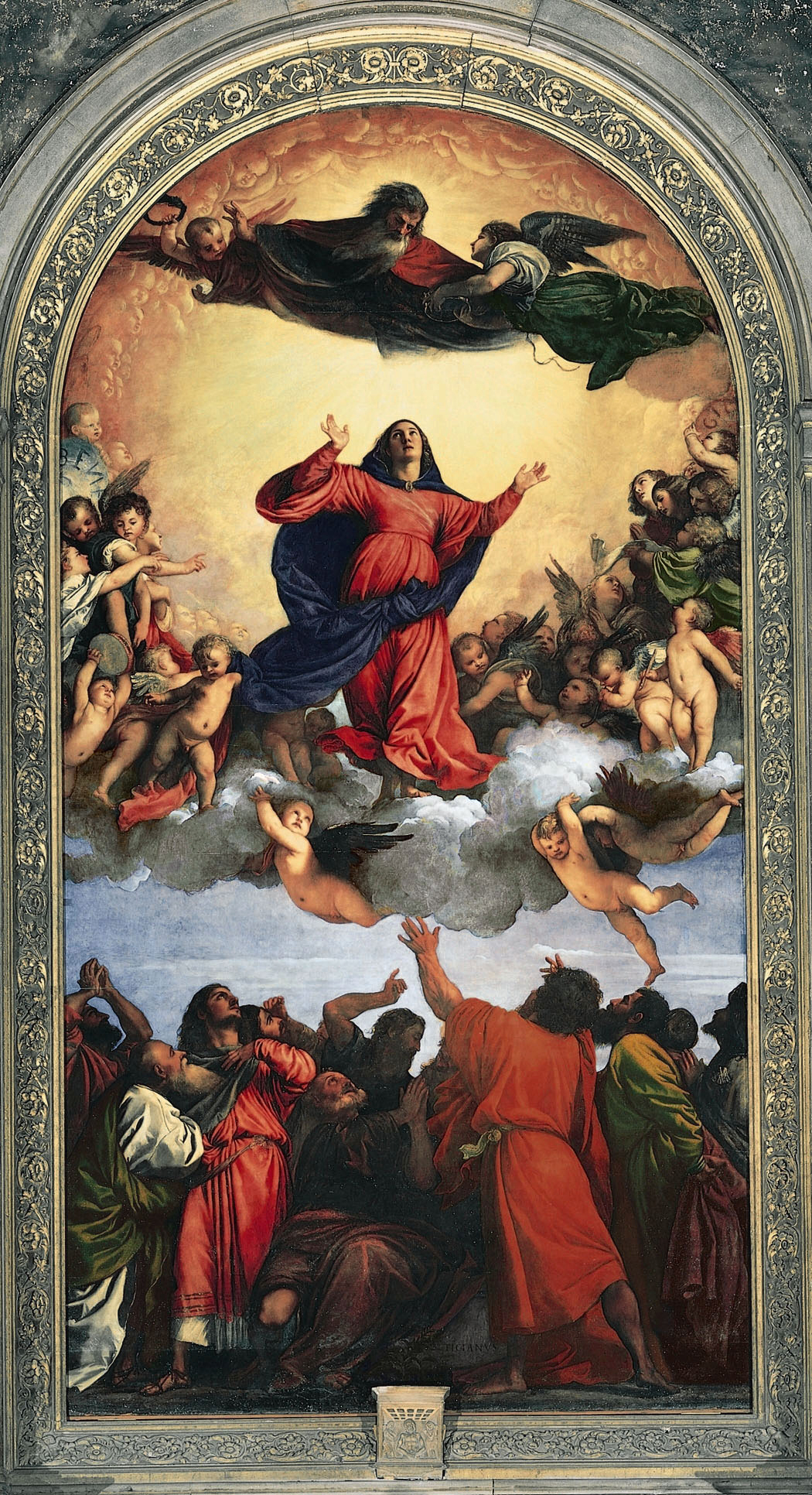
The Assumption of the Virgin (1516-1518), housed in the Basilica di Santa Maria Gloriosa dei Frari in Venice, is one of Titian’s grandest and most emblematic religious paintings. The artwork depicts the Virgin Mary ascending into heaven, surrounded by angels, while the apostles below gaze upward in awe. The painting is notable for its large scale and the way it combines intense religious fervor with a deeply human sense of emotion.
The Virgin is draped in a radiant red cloak, her figure bathed in a golden light that symbolizes divine grace. The interplay of light and shadow across the figures and the dramatic upward motion of the Virgin create a sense of transcendent spirituality. Titian’s use of color here is critical; the bright, glowing hues convey the Virgin’s sanctity while the darker tones in the apostles’ robes ground the scene in the human realm. This harmonious blending of the divine and the earthly reflects Titian’s unique ability to infuse religious subjects with both grandeur and intimate emotion, drawing the viewer into a spiritual and visual experience.
“성모승천” – 신성함과 인간 세계의 조화
“성모승천”(1516-1518년)은 베네치아의 프라리 대성당에 있는 제단화로, 티치아노가 종교화에서 보여준 가장 웅장한 작품 중 하나로 꼽힌다. 성모 마리아가 하늘로 올라가는 장면은 고요하면서도 숭고한 분위기를 자아내며, 그녀를 바라보는 사도들의 표정은 경외와 감동으로 가득 차 있다. 이 작품은 종교적 숭고함을 시각적으로 표현함에 있어 당시 기준을 뛰어넘는 역동성과 감정적 깊이를 보여준다.
마리아는 화려한 붉은 망토를 두르고 있으며, 그녀를 에워싸는 천사들의 빛나는 금빛은 하늘과 연결된 신성한 공간을 나타낸다. 티치아노는 이 작품에서 신성함과 인간 세계 간의 긴장과 조화를 탁월하게 묘사하였다. 특히 하늘에서 쏟아지는 빛이 마리아의 모습과 함께 화면 중앙을 채우며, 관람자가 이 장면에 압도되도록 만든다. 이는 단순한 성서적 이야기의 재현이 아니라, 관람자로 하여금 그 장면에 감정적으로 몰입하게 만드는 티치아노의 능력을 보여준다.


Master of Portraits – Capturing the Power and Personality of Rulers
Titian’s prowess in portraiture is also noteworthy, particularly in his depictions of Europe’s most powerful figures. Throughout his career, he was commissioned by numerous monarchs and popes, including Pope Clement VII, Emperor Charles V, and King Philip II of Spain. His ability to convey both the outward appearance and the inner personality of his subjects made him the preferred portraitist for the European elite.
In Equestrian Portrait of Charles V, Titian presents the emperor as a commanding figure, mounted on horseback in a triumphant posture. The portrait is not merely a representation of the emperor’s likeness but a visual declaration of his political and military authority. The careful attention to the gleaming armor, the noble stance of the horse, and the calm expression of Charles V combine to create a portrait that goes beyond physical likeness to embody the power and majesty of rulership. Through his portraits, Titian helped shape the visual language of authority and influence, setting a standard for future generations of portrait artists.
초상화의 거장 – 권력자들의 얼굴을 담다
티치아노는 인물화에서도 독보적인 재능을 발휘하였다. 특히 그의 초상화는 당대 권력자들의 인물상을 그려내는 데 있어 새로운 지평을 열었다. 교황 클레멘스 7세, 황제 카를 5세, 스페인의 펠리페 2세 등 유럽의 왕족과 귀족들이 그의 붓을 거쳐갔으며, 그는 단순한 외모의 묘사에 그치지 않고 인물의 내면세계를 깊이 있게 포착하였다.
티치아노는 “카를 5세의 기마 초상화“에서 황제를 장엄하게 묘사함으로써, 단순한 초상화를 넘어 정치적 상징으로 기능하는 작품을 만들어냈다. 카를 5세는 전투에서 말에 올라 있는 모습으로 그려졌으며, 이는 그의 군사적 권위와 정치적 우월성을 드러내는 중요한 상징이었다. 티치아노는 이러한 초상화를 통해 인물의 외적 모습을 넘어 그들이 상징하는 힘과 위엄을 캔버스 위에 표현하는 데 탁월한 능력을 발휘하였다.


Later Style – The Evolution of Bold Brushstrokes and Emotional Depth
In his later years, Titian’s painting style evolved significantly. His late works are characterized by a freer, more expressive use of brushstrokes, with looser forms and more emphasis on the emotional atmosphere rather than on meticulous detail. This shift reflected the artist’s growing confidence in his ability to convey emotion through color and light rather than through precise rendering.
In many of his later paintings, the forms are almost abstract, with the figures emerging from a blur of colors and shadows. Titian’s use of chiaroscuro became more pronounced, with sharp contrasts between light and dark creating a heightened sense of drama and tension. These late works are often seen as precursors to the baroque style that would dominate European art in the following century. His bold experimentation with form and technique, especially in his later years, also influenced artists of the Romantic and Impressionist movements, who admired his ability to capture fleeting moments and emotional depth through expressive brushwork.
말년의 화풍 – 자유롭고 직관적인 붓질의 변화
티치아노의 말년 작품들에서는 전성기와는 다른 화풍이 나타난다. 후기 작품들은 형체가 더욱 자유로워지고, 붓질이 거칠어지며, 세밀한 묘사 대신 색채와 빛의 조화를 통해 감정적 깊이를 강조하는 특징을 보인다. 이러한 변화는 그의 나이와 경험에 따른 예술적 성숙과 실험의 결과로 볼 수 있다.
티치아노의 후기 작품 중 일부는 전통적인 르네상스 화풍과는 다르게 보일 정도로 대담한 표현을 보여준다. 그는 특정 인물이나 장면을 묘사할 때, 세부적인 디테일보다는 인물의 내면 감정이나 장면의 전체적인 분위기를 강조하였다. 이러한 변화는 당대에는 다소 생소하게 받아들여졌으나, 이후 인상주의 화가들에게 큰 영감을 주었다. 티치아노는 후반기 작품에서 색채를 사용하여 빛과 어둠의 극적인 대비를 연출하며, 화면에 감정적 깊이를 더해갔다.


Legends and Mysteries Surrounding Titian – Anecdotes from His Life
Many legends and anecdotes have circulated about Titian’s life, some of which have contributed to his mystique as an artist. One such story suggests that Titian was an obsessive perfectionist in his youth, known to never rework a painting once it was finished. If he was dissatisfied with a piece, he would rather discard it than attempt to fix it. This anecdote highlights the high standards he set for himself in pursuit of artistic excellence.
Another legend relates to Titian’s later years, during which he maintained an almost sacred devotion to his work. It is said that his studio was considered a sanctuary, where he spent long hours working on his paintings. Some stories claim that he would work for days on end without sleep, completely absorbed in his artistic process. These tales, while possibly exaggerated, reflect the deep passion and dedication that defined Titian’s approach to his craft.
티치아노에 대한 소문들 – 예술가의 신비로운 일화
티치아노는 그의 생애 동안 여러 가지 소문과 신비로운 이야기를 남겼다. 그중 하나는 그가 젊은 시절부터 그림에 대한 완벽주의적인 성향을 가졌다는 점이다. 그는 작품을 완성한 후 결코 다시 손을 대지 않는다는 원칙을 지켰다고 전해지며, 자신의 작품이 만족스럽지 않으면 과감하게 폐기해 버리기도 했다는 이야기가 전해진다. 이러한 일화는 그가 작품에 대한 엄격한 기준을 가지고 있었음을 보여주는 사례이다.
또 다른 소문은 그의 말년에 관련된 것으로, 그는 노년에도 왕성한 활동을 이어갔으며, 자신의 작업실을 마치 신전처럼 신성한 공간으로 여겼다고 한다. 그는 작업실에서 많은 시간을 보내며, 자신의 작품에 몰두하였고, 때로는 며칠 동안 잠을 자지 않고 작품에 매달리기도 했다는 이야기가 전해진다. 이러한 일화들은 그가 예술에 대한 열정과 헌신을 어느 정도로 가졌는지 잘 보여준다.


Titian’s Artistic Legacy – A Master of Color and Light
Titian’s influence on the course of European art cannot be overstated. His pioneering use of color and mastery of light profoundly impacted the artists who followed him, including baroque masters like Caravaggio and Rembrandt. Titian’s works went beyond mere visual beauty; they explored the depths of human emotion and the complexities of the human experience, using color and light as his primary tools of expression.
His late works, in particular, where form became more abstract and brushstrokes more free, laid the groundwork for later artistic movements such as Impressionism. Artists like Claude Monet and Pierre-Auguste Renoir drew inspiration from Titian’s experimentation with color and light, seeing in his work the possibilities for capturing atmosphere and emotion in new ways. As such, Titian remains not just a figure of historical importance but a timeless influence on the continuing evolution of visual art.
티치아노의 예술적 유산 – 색채와 빛의 마에스트로
티치아노는 단순히 베네치아 화파의 대표적 화가에 그치지 않고, 유럽 전역의 미술사에 큰 영향을 미친 예술가로 남았다. 그의 색채 사용과 빛에 대한 이해는 후대 화가들에게 커다란 영감을 주었으며, 특히 바로크 시대의 화가들인 카라바조와 렘브란트에게도 중요한 영향을 미쳤다. 티치아노의 작품은 단순한 시각적 아름다움을 넘어서, 색채와 빛을 통해 인간의 감정과 내면을 탐구한 예술적 실험으로 평가받는다.
또한 그의 후기 작품에서 나타나는 자유롭고 직관적인 붓질은 현대 미술의 발달에 있어서 중요한 역할을 했다. 특히 인상주의 화가들은 티치아노의 색채 실험에서 많은 영감을 얻었으며, 그의 작품에서 빛과 색의 가능성을 탐구했다. 티치아노는 이러한 면에서 단순한 과거의 거장이 아니라, 오늘날에도 살아 숨 쉬는 예술적 유산을 남긴 위대한 예술가로 평가된다.


Keywords: Titian, Tiziano Vecellio, Venus of Urbino, Bacchus and Ariadne, The Assumption of the Virgin, Titian portraits, Renaissance art, Venetian school, Titian’s color
키워드: 티치아노, Titian, 우르비노의 비너스, 바쿠스와 아리아드네, 성모 승천, 티치아노 초상화, 르네상스 미술, 베네치아 화파, 티치아노의 색채
References:
- “The Art of Titian” by Charles Hope
- “Titian: His Life and the Golden Age of Venice” by Sheila Hale
- Google Arts & Culture (Titian), British Museum, Louvre Museum
Leave a Reply