

From Greek Origins to Spanish Master: El Greco’s Early Life and Education
El Greco (real name: Domenikos Theotokopoulos, 1541–1614) was a seminal artist of the Spanish Renaissance, born in Heraklion on the Greek island of Crete. Coming from a middle-class family where his father was a tax collector and merchant, he displayed artistic talent from a young age. He began his artistic career in Crete by learning Byzantine icon painting. At the time, Crete was under the rule of the Republic of Venice, which naturally exposed him to Italian Renaissance art and nurtured his interest in it.
At 26, El Greco moved to Italy to explore the broader world of art. In Venice, he worked in the workshop of the great painter Titian, where he gained deep knowledge about the use of color and light. He was also significantly influenced by Tintoretto’s dynamic compositions and dramatic expressions. Later, he moved to Rome and, under the patronage of architect and art supporter Giulio Clovio, studied the works of Michelangelo. The dynamics and grandeur of the human form in Michelangelo’s sculptures and paintings added a new dimension to El Greco’s expressive capabilities.
Through his experiences in Italy, El Greco developed a unique artistic language that combined Byzantine and Italian Renaissance styles. This fusion style further evolved in Spain, contributing to the establishment of his distinctive artistic world.
그리스 태생에서 스페인 거장으로: 엘 그레코의 초기 생애와 교육
엘 그레코(El Greco, 본명: 도메니코스 테오토코풀로스, 1541년 ~ 1614년)는 스페인 르네상스 시대를 대표하는 예술가로, 그리스 크레타 섬의 이라클리온에서 태어났다. 그의 가족은 중산층으로, 아버지는 세금 징수원이자 상인이었다. 어린 시절부터 예술에 대한 재능을 보인 그는 크레타에서 비잔틴 양식의 아이콘화를 배우며 미술 경력을 시작했다. 당시 크레타는 베네치아 공화국의 지배 아래 있었기 때문에, 자연스럽게 이탈리아 르네상스 미술에 대한 관심을 키울 수 있었다.
26세에 엘 그레코는 더 넓은 예술 세계를 탐구하기 위해 이탈리아로 건너갔다. 베네치아에서는 위대한 화가 티치아노의 작업장에서 일하며 색채와 빛의 사용에 대해 깊이 있는 지식을 쌓았다. 또한 틴토레토의 역동적인 구도와 드라마틱한 표현 방식도 그의 예술적 발전에 큰 영향을 주었다. 이후 로마로 이동한 그는 건축가이자 예술 후원자인 줄리오 클로비오의 후원을 받으며 미켈란젤로의 작품을 연구하였다. 미켈란젤로의 조각과 회화에서 보이는 인체의 역학과 웅장함은 엘 그레코의 작품에 새로운 차원의 표현력을 더해주었다.
엘 그레코는 이탈리아에서의 경험을 통해 비잔틴 양식과 이탈리아 르네상스 양식을 결합한 독특한 예술적 언어를 개발하였다. 그의 이러한 융합적 스타일은 이후 스페인에서 더욱 발전하여 독자적인 예술 세계를 구축하는 데 기여하였다.


Migration to Toledo and the Establishment of a Unique Artistic Realm
In 1577, El Greco moved to Toledo, the religious center of Spain. At that time, Toledo was the heart of the Spanish Catholic Church, leading to a high demand for religious art. El Greco briefly went to Madrid to seek royal patronage, but his unique style did not align with the royal family’s tastes. Instead, he continued his work in Toledo, receiving support from numerous religious institutions and nobles.
In Toledo, El Greco was able to freely develop his artistic expression. His works are characterized by elongated human proportions, unrealistic spatial compositions, intense and rich colors, and a spiritual atmosphere. This style was in stark contrast to the traditional Spanish Renaissance styles and was difficult to understand at the time. However, his exceptional ability to express the inner emotions and souls of his subjects made his work particularly effective in religious contexts.
El Greco’s originality demonstrates that he was an artist ahead of his time. His works later influenced Expressionism and Abstract Art, cementing his reputation as a pioneer of modern art.
톨레도로의 이주와 독창적 예술 세계의 확립
1577년, 엘 그레코는 스페인의 종교적 중심지인 톨레도로 이주하였다. 당시 톨레도는 스페인 가톨릭 교회의 중심지로, 종교 예술에 대한 수요가 높았다. 엘 그레코는 스페인 왕실의 후원을 받기 위해 마드리드로도 잠시 갔으나, 그의 독특한 스타일은 왕실의 취향과 맞지 않았다. 그 대신 톨레도에서 그는 많은 종교 기관과 귀족들의 후원을 받으며 작품 활동을 이어갔다.
톨레도에서 엘 그레코는 자신의 예술적 표현을 더욱 자유롭게 발전시켰다. 그의 작품은 길게 늘어진 인체 비례, 비현실적인 공간 구성, 강렬하고 풍부한 색채, 그리고 영적인 분위기로 특징지어졌다. 이러한 스타일은 스페인 르네상스의 전통적인 양식과는 크게 대조되었으며, 당시에는 이해받기 어려웠다. 그러나 그의 작품은 인물의 내면적 감정과 영혼을 표현하는 데 탁월하였으며, 이는 종교적 주제를 다루는 데 있어 큰 장점이었다.
엘 그레코의 독창성은 그가 시대를 앞서간 예술가였음을 보여준다. 그의 작품은 후에 표현주의와 추상 미술에까지 영향을 미치게 되었으며, 이는 그가 현대 미술의 선구자 중 한 명으로 평가받는 이유이다.


The Confluence of Heaven and Earth: ‘The Burial of the Count of Orgaz’
“The Burial of the Count of Orgaz” is a masterpiece completed by El Greco in 1586 for the Church of Santo Tomé in Toledo. Commissioned to honor the charity and piety of a local nobleman, Count Orgaz, the painting vividly portrays his funeral. The canvas is vertically divided into two sections: the lower earthly realm and the upper heavenly realm.
In the earthly section, the body of Count Orgaz is being laid to rest by Saints Augustine and Stephen. Surrounding them are figures dressed in splendid attire, observing the funeral with solemn expressions. The elongated forms and detailed depictions of these figures showcase El Greco’s unique style. Particularly, the expressions and postures of each individual delicately convey their inner emotions and spiritual states.
The heavenly section features the Virgin Mary and Jesus Christ appearing amidst luminous clouds, welcoming the soul of Count Orgaz. Surrounded by angels and saints, this scene exudes a mystical and spiritual atmosphere through its brilliant colors and light effects. By connecting heaven and earth, the painting offers viewers a sacred experience and is considered a pinnacle of El Greco’s religious conviction and artistic expression.
천상과 지상의 만남: ‘오르가스 백작의 매장’
‘오르가스 백작의 매장‘은 1586년에 완성된 엘 그레코의 걸작으로, 톨레도의 산토 토메 교회를 위해 제작되었다. 이 작품은 지역 귀족인 오르가스 백작의 선행과 신앙심을 기리기 위해 의뢰되었으며, 그의 장례식 장면을 화려하게 그려내고 있다. 그림은 수직으로 크게 두 부분으로 나뉘는데, 아래쪽은 지상의 현실 세계, 위쪽은 천상의 영적인 세계를 나타낸다.
지상 부분에서는 오르가스 백작의 시신이 성 아우구스티누스와 성 스테파노에 의해 묻히는 장면이 그려져 있다. 주변에는 화려한 의상을 입은 인물들이 엄숙한 표정으로 장례식을 지켜보고 있다. 이들 인물들의 길게 늘어난 형태와 세밀한 묘사는 엘 그레코의 독특한 스타일을 잘 보여준다. 특히 각 인물의 표정과 자세는 그들의 내면적 감정과 영혼의 상태를 섬세하게 표현하고 있다.
천상 부분에서는 빛나는 구름 속에 성모 마리아와 예수 그리스도가 등장하며, 오르가스 백작의 영혼을 맞이하는 장면이 그려져 있다. 천사들과 성인들이 둘러싸고 있는 이 장면은 화려한 색채와 빛의 효과로 신비롭고 영적인 분위기를 자아낸다. 하늘과 지상을 연결하는 이 작품은 관객으로 하여금 성스러운 경험을 하게 하며, 엘 그레코의 종교적 신념과 예술적 표현력이 절정에 달한 작품으로 평가된다.


Capturing the Soul of a City: ‘View of Toledo’
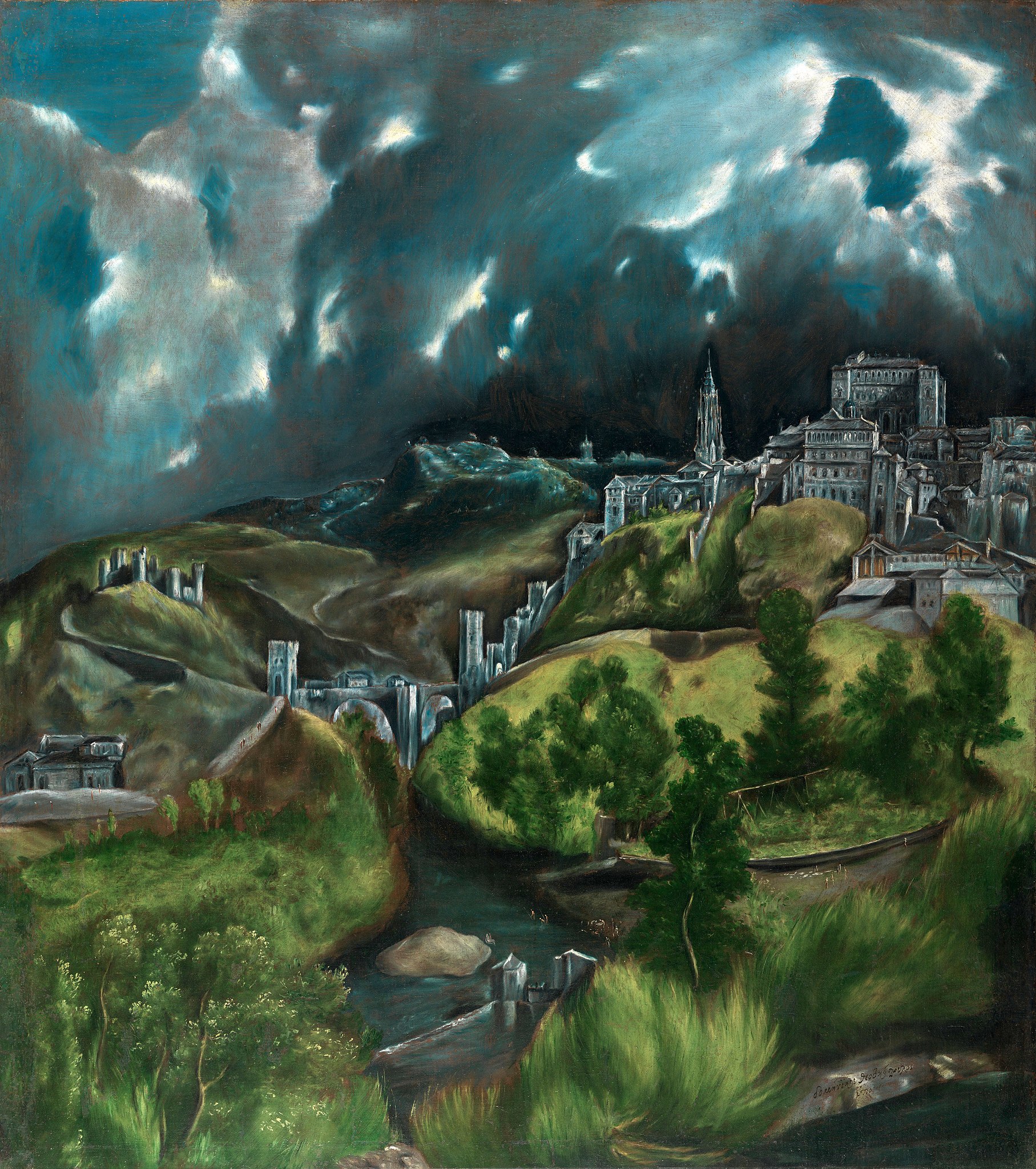
“View of Toledo” is a work painted by El Greco between 1596 and 1600 and is regarded as one of the pioneering cityscape paintings in Western art history. The painting depicts the city of Toledo under a dark, stormy sky. Unlike typical landscapes, El Greco did not aim for an accurate representation of the city’s geography and architecture. Instead, he sought to express the soul and atmosphere of the city through his artistic interpretation.
Toledo is portrayed perched on a hill, with its walls and towers standing majestically. The sky is filled with swirling clouds and lightning, symbolizing the forces of nature and the presence of the divine. This backdrop emphasizes the city’s mystique and spiritual significance. El Greco’s restrained yet powerful use of color adds dramatic effect to the entire composition.
“View of Toledo” transcends a simple cityscape to delve deeply into the relationships between humans, nature, and God. The painting reflects El Greco’s philosophical contemplation and artistic vision, significantly influencing modern art.
도시의 영혼을 그리다: ‘톨레도의 풍경’
‘톨레도의 풍경‘은 엘 그레코가 1596년에서 1600년 사이에 그린 작품으로, 서양 미술사에서 도시 풍경화를 개척한 작품 중 하나로 여겨진다. 이 그림은 폭풍우가 몰아치는 어둡고 음울한 하늘 아래 위치한 톨레도 도시의 모습을 그려내고 있다. 일반적인 풍경화와 달리, 엘 그레코는 도시의 실제 지형과 건축물을 정확하게 재현하기보다는, 자신의 예술적 해석을 통해 도시의 영혼과 분위기를 표현하였다.
그림에서 톨레도는 언덕 위에 자리 잡고 있으며, 성벽과 탑들이 위엄 있게 서 있다. 하늘은 휘몰아치는 구름과 번개로 가득하며, 이는 자연의 힘과 신의 존재를 상징한다. 이러한 배경은 도시의 신비로움과 영적인 중요성을 강조한다. 엘 그레코는 색채를 절제하면서도 강렬하게 사용하여, 작품 전체에 드라마틱한 효과를 더하였다.
‘톨레도의 풍경‘은 단순한 도시의 풍경을 넘어, 인간과 자연, 그리고 신과의 관계를 깊이 있게 탐구한 작품이다. 이는 엘 그레코의 철학적 사유와 예술적 비전이 결합된 결과물로서, 현대 미술에까지 큰 영향을 미쳤다.


Reinterpreting Mythic Tragedy: ‘Laocoön’
“Laocoön” is a work from around 1610 in which El Greco depicts the tragic scene from Greek mythology where Laocoön, a Trojan priest, and his sons are attacked by sea serpents. The story reflects Laocoön’s fate after he incurs the wrath of the gods by warning against the Trojan Horse.
In this painting, El Greco departs from traditional composition and expression. Through the intense movements and dramatic expressions of the figures, he powerfully conveys human suffering and despair. The elongated bodies and contorted poses generate tension and anxiety, drawing viewers into the characters’ agony. The dark sky and desolate landscape in the background further accentuate the painting’s tragic atmosphere.
“Laocoön” demonstrates El Greco’s exploration of fundamental human questions through classical mythology, beyond religious themes. His unique expressive methods influenced later Baroque art and Expressionism, underscoring his role as an innovative artist in art history.
신화 속 비극의 재해석: ‘라오콘’
‘라오콘‘은 엘 그레코가 1610년경에 그린 작품으로, 그리스 신화에 등장하는 트로이의 사제 라오콘과 그의 아들들이 바다뱀에게 공격당하는 비극적인 장면을 묘사하고 있다. 이 이야기는 트로이 목마에 대한 경고를 무시한 대가로 신들의 분노를 산 라오콘의 운명을 담고 있다.
엘 그레코는 이 작품에서 전통적인 구도와 표현 방식을 탈피하여, 인물들의 격렬한 움직임과 극적인 표현을 통해 인간의 고통과 절망을 강렬하게 전달한다. 인물들의 길게 늘어진 신체와 뒤틀린 자세는 긴장감과 불안을 조성하며, 관객으로 하여금 그들의 고통에 동참하게 만든다. 배경의 어두운 하늘과 황폐한 풍경은 작품의 비극적 분위기를 한층 더 강조한다.
‘라오콘‘은 엘 그레코가 종교적 주제 외에도 고전 신화를 통해 인간 존재의 근원적인 질문을 탐구하였음을 보여준다. 그의 독특한 표현 방식은 이후 바로크 미술과 표현주의에 영향을 주었으며, 그가 예술사에서 혁신적인 예술가로 평가받는 이유 중 하나이다.

_-_Laocoön_-_Google_Art_Project.jpg)
Rediscovery of a Forgotten Master and His Influence on Modern Art
While El Greco received both criticism and praise during his lifetime due to his unique style, his works were largely forgotten after his death. The artistic tastes of the 17th and 18th centuries found his distorted figures and unrealistic expressions difficult to accept. His works were often considered unfinished or technically flawed.
However, by the late 19th century, as new art movements like Impressionism and Expressionism emerged, El Greco’s work began to be reevaluated. Artists and critics in France and Germany focused on his intense emotional expression and original style. Notably, modern artists like Paul Cézanne, Pablo Picasso, and Jackson Pollock drew inspiration from his work, contributing to the development of abstract art and Expressionism.
El Greco’s rediscovery affirmed the timeless artistic value of his work. His deep interest in the human psyche and spiritual exploration resonated with key themes in modern art.
잊힌 거장의 재발견과 현대 미술에의 영향
엘 그레코는 생전에도 독특한 스타일로 인해 비판과 찬사를 동시에 받았으나, 사후에는 그의 작품이 오랫동안 잊혀졌다. 17세기와 18세기의 예술적 취향은 그의 왜곡된 인체와 비현실적인 표현을 받아들이기 어려웠다. 그의 작품은 종종 미완성으로 간주되거나, 기술적인 결함이 있는 것으로 평가되었다.
그러나 19세기말에 이르러, 인상주의와 표현주의를 비롯한 새로운 예술 운동이 등장하면서 엘 그레코의 작품이 재평가되기 시작하였다. 프랑스와 독일의 예술가들과 비평가들은 그의 강렬한 감정 표현과 독창적인 스타일에 주목하였다. 특히 폴 세잔, 파블로 피카소, 잭슨 폴록과 같은 현대 미술가들은 그의 작품에서 영감을 받았으며, 이는 추상 미술과 표현주의의 발전에 기여하였다.
엘 그레코의 재발견은 그의 작품이 시대를 초월한 예술적 가치를 지니고 있음을 입증하였다. 그의 예술은 인간의 내면세계와 영적인 탐구에 대한 깊은 관심을 반영하며, 이는 현대 미술의 중요한 주제 중 하나로 자리매김하였다.


A Multifaceted Artist: Musical Interactions and Rumors
El Greco was a versatile artist with deep interests in music and literature, not limited to painting alone. He is said to have interacted with musicians and poets in Toledo, sharing artistic inspiration. Some interpretations suggest that the rhythmic compositions and harmonious use of color in his paintings are connected to his musical sensibilities.
An intriguing rumor about El Greco is that he also ventured into architecture. Records indicate that he participated in several architectural projects in Toledo, applying his artistic sense to design. However, it remains uncertain whether any of these structures still exist today.
Another rumor suggests that El Greco engaged in deep discussions on religious and philosophical topics with contemporary philosophers and theologians. This aligns with the profound spiritual themes in his work, highlighting his intellectual stature beyond that of a mere painter.
다재다능한 예술가: 음악과의 교류 및 소문들
엘 그레코는 단순히 회화에만 국한되지 않은 다재다능한 예술가로서, 음악과 문학에도 깊은 관심을 가졌다. 그는 톨레도에서 음악가들과 시인들과 교류하며 예술적 영감을 나누었다고 전해진다. 그의 작품에서 보이는 리드미컬한 구성과 조화로운 색채의 사용은 음악적 감수성과 연결되어 있다는 해석도 있다.
또한 그에 관한 흥미로운 소문 중 하나는 엘 그레코가 건축에도 손을 댔다는 것이다. 실제로 그는 톨레도에서 몇몇 건축 프로젝트에 참여하였으며, 그의 예술적 감각을 건축 디자인에 적용하였다는 기록이 남아 있다. 그러나 이러한 건축물들이 현재까지 남아 있는지는 확실하지 않다.
또 다른 소문으로는 엘 그레코가 당시의 철학자들과 신학자들과도 교류하며, 종교적이고 철학적인 주제에 대한 깊은 토론을 즐겼다는 이야기가 있다. 이는 그의 작품에서 나타나는 심오한 영적인 주제들과 연결되며, 그가 단순한 화가를 넘어 지성인으로서의 면모를 지녔음을 보여준다.


The Intersection of Humanity and Divinity: El Greco’s Artistic Philosophy and Legacy
Throughout his life, El Greco was profoundly interested in the human soul and its relationship with God. His works transcend mere doctrinal representation of religious themes, visually expressing the essence of human existence and spiritual inquiry. He sought to reveal the unseen world through color, light, and form, which is the source of the powerful spiritual impact of his art.
His artistic philosophy centered on expressing inner emotions and states of the soul. This focus explains why his figures often deviate from realistic proportions, appearing elongated or distorted. Such expressions enable viewers to sense a reality beyond the physical world, allowing for spiritual experiences through art.
El Greco’s legacy extends beyond his paintings. By exploring deep questions of human existence through art, he greatly inspired future generations of artists. His works continue to move and inspire people today, exemplifying the power and potential of art.
인간과 신의 교차점: 엘 그레코의 예술적 철학과 유산
엘 그레코는 평생 동안 인간의 영혼과 신과의 관계에 대한 깊은 관심을 가지고 있었다. 그의 작품은 종교적 주제를 다루면서도 단순한 교리의 전달을 넘어, 인간 존재의 본질과 영적인 탐구를 시각적으로 표현하였다. 그는 색채, 빛, 형태를 통해 보이지 않는 세계를 보여주고자 하였으며, 이는 그의 작품이 지닌 강력한 영적인 힘의 원천이다.
그의 예술적 철학은 인간의 내면적 감정과 영혼의 상태를 표현하는 데에 중점을 두었다. 이는 그의 인물들이 종종 현실적인 비례를 벗어나 길게 늘어나거나 왜곡된 형태로 그려지는 이유 중 하나이다. 이러한 표현은 관객으로 하여금 현실을 넘어선 세계를 느끼게 하며, 예술을 통한 영적인 경험을 가능하게 한다.
엘 그레코의 유산은 그의 작품에 국한되지 않는다. 그는 예술을 통해 인간 존재의 깊은 질문을 탐구하였으며, 이는 후대의 예술가들에게 큰 영감을 주었다. 그의 작품은 오늘날에도 많은 사람들에게 감동과 영감을 주며, 예술이 지닌 힘과 가능성을 보여준다.

.jpg)
Keywords: El Greco, The Burial of the Count of Orgaz, View of Toledo, Laocoön, Spanish Renaissance, Byzantine Art, Domenikos Theotokopoulos, Modern Art, Expressionism, Toledo Art
키워드: 엘 그레코, 오르가스 백작의 매장, 톨레도의 풍경, 라오콘, 스페인 르네상스, 비잔틴 미술, 도메니코스 테오토코풀로스, 현대 미술, 표현주의, 톨레도 예술
- Wikipedia: https://en.wikipedia.org/wiki/El_Greco
- El Greco.net: https://www.elgreco.net/
- MET: https://www.metmuseum.org/toah/hd/grec/hd_grec.htm
- El Greco: Master of the Spanish Renaissance, National Museum of Korea Exhibition Catalogue
- G. Schwartz, The Art World of El Greco, 2010
- Official website of the Toledo Museum of Art, Spain
- The Story of Art, E.H. Gombrich, 1995
- J. Brown, El Greco: Life and Times, 1982
Leave a Reply