
A Childhood that Led to the Path of Art
Joan Miró (1893-1983), born in Barcelona, Spain, was an artist who played a crucial role in defining 20th-century modern art. Although Miró had a deep passion for art from an early age, he continued his studies at a commercial school to fulfill his parents’ wishes, who were jewelers. However, the stress of life as an office worker took a toll on his health, leading him to quit his studies due to nervous breakdowns and eventually return to the path of art. While studying at the Francesco Galí Academy, he began his artistic career by realistically depicting the landscapes and daily life of the Catalonia region. His early works focused on detailed representations of the real world, but as he developed his style, he gradually moved toward surrealism and abstraction.
예술의 길로 이끈 어린 시절
호안 미로(Joan Miró, 1893-1983)는 스페인 바르셀로나에서 태어나 20세기 현대 미술을 정의하는 데 중요한 역할을 한 예술가이다. 어린 시절부터 예술에 대한 깊은 열정을 가졌던 미로였지만 금 세공사였던 부모님의 뜻에 따라 상업 학교에서 학업을 이어간다. 하지만 회사원의 생활이 너무도 힘들었는지 신경쇠약등 건강악화로 인해 학업을 중단하고 결국 예술의 길로 돌아선다. 프란세스 갈리 아카데미에서 미술을 공부하면서, 그는 카탈루냐 지방의 풍경과 일상을 사실적으로 묘사하는 작품을 통해 예술적 경력을 시작했다. 그의 초기 작품은 현실 세계를 세밀하게 표현하는 데 중점을 두었지만, 점차 자신의 스타일을 발전시키면서 초현실주의와 추상주의의 방향으로 나아갔다.

The World of Surrealism Discovered in Paris
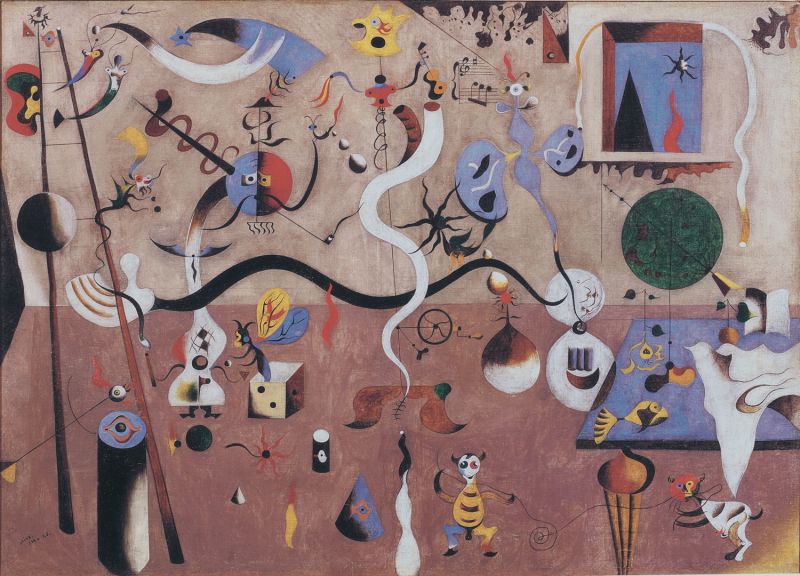
In the 1920s, Miró moved to Paris, where he continued his activities in the heart of European art. There, he interacted with leading artists of the time, such as Picasso, Braque, and Matisse, drawing artistic inspiration from them. Miró joined the Surrealist movement and began creating works that explored dreams, the unconscious, and imagination. His famous work, “The Harlequin’s Carnival,” is composed of geometric shapes and vibrant colors, showcasing Miró’s unique imagination. These works not only provide visual pleasure but also attempt to explore the boundaries between reality and unreality, consciousness and the unconscious.
파리에서 발견한 초현실주의의 세계
1920년대에 미로는 파리로 이주하여 유럽 예술의 중심지에서 활동을 이어갔다. 이곳에서 그는 피카소, 브라크, 마티스 등 당시의 선도적인 예술가들과 교류하며 예술적 영감을 받았다. 미로는 초현실주의 운동에 합류하며 꿈과 무의식, 상상력을 탐구하는 작품들을 제작하기 시작했다. 그의 대표작인 “아를르깽의 카니발(The Harlequin’s Carnival)“는 기하학적인 형태와 생동감 넘치는 색채로 이루어져 있으며, 미로의 독창적인 상상력이 그대로 드러나는 작품이다. 이러한 작품들은 단순히 시각적인 즐거움을 넘어서, 현실과 비현실, 의식과 무의식의 경계를 탐구하는 시도였다.
Art Flourished Amidst War
The late 1930s and early 1940s, marked by the Spanish Civil War and World War II, deeply impacted Miró’s art. During this period, he reflected on the meaning of art amidst the horrors of war and social unrest, delving into darker themes and colors. The “Constellations” series, created during the war, is a representative work that expresses the complex forms of the universe and the human psyche. This series encapsulates Miró’s artistic struggle to find hope in the midst of chaos and anxiety, while also being heavily influenced by poetic inspiration.
전쟁 속에서 피어난 어두운 예술
1930년대 후반과 1940년대 초반, 스페인 내전과 제2차 세계대전은 미로의 예술에 깊은 영향을 미쳤다. 이 시기 동안 그는 전쟁의 공포와 사회적 불안 속에서 예술의 의미를 되새기며 어두운 주제와 색채를 탐구하게 된다. “콘스텔라시온(Constellations)” 시리즈는 전쟁 중에 탄생한 대표작으로, 우주의 복잡한 형태와 인간의 내면을 표현한 작품들이다. 이 시리즈는 혼란과 불안 속에서 희망을 찾으려는 미로의 예술적 고민을 담고 있으며, 동시에 시적인 영감을 많이 받았다.


Encountering Poetry, the Visual Poetization of Art
Miró’s “Constellations” series is closely related to the poetry of the French Surrealist poet André Breton. Breton’s poetry deeply inspired Miró, and this series is the result of Miró visually expressing poetic sensitivity and imagination. Using surreal images such as stars, birds, and mysterious symbols, he created a poetic and dreamlike atmosphere. Additionally, he sought to incorporate the poetic worlds of other poets, such as Pablo Neruda, into his works, drawing inspiration from their poetry.
시와의 조우, 예술의 시각적 시적화
미로의 “콘스텔라시온” 시리즈는 프랑스의 초현실주의 시인 앙드레 브르통(André Breton)의 시와 깊은 관련이 있다. 브르통의 시는 미로에게 깊은 영감을 주었으며, 이 시리즈는 미로가 시적 감성과 상상력을 시각적으로 표현한 결과물이다. 그는 별, 새, 신비로운 기호와 같은 초현실적인 이미지를 사용하여 시적이고 몽환적인 분위기를 만들어냈다. 또한, 파블로 네루다(Pablo Neruda)와 같은 다른 시인들의 시에서도 영감을 받아, 시적인 세계를 자신의 작품 속에 담아내고자 노력했다.

Artistic Doubt and the Introduction of Unconscious Creative Techniques
It is said that during this period, Miró experienced doubt and frustration regarding the purity of art and temporarily considered abandoning it. Believing that art was meaningless amid social turmoil, he contemplated laying down his brush but ultimately overcame these thoughts and resolved to redefine art in a new way. Miró experimented with expressing forms and images that emerged naturally from within through unconscious creative techniques. This approach transformed his work into more free and spontaneous forms, allowing him to delve deeper into the essence of surrealism.
예술적 회의와 무의식적 창작 기법의 도입
이 시기에 미로는 예술의 순수성에 대한 회의감과 좌절을 느끼며 일시적으로 예술을 포기하려 했다는 이야기가 전해진다. 그는 예술이 사회적 혼란 속에서 무의미하다고 생각하며 붓을 내려놓으려 했지만, 결국 이러한 생각을 극복하고 새로운 방식으로 예술을 정의하려는 결심을 하게 된다. 미로는 무의식적 창작 기법을 통해 내면에서 자연스럽게 나오는 형상과 이미지를 표현하는 방법을 실험했다. 이러한 접근법은 그의 작품을 더욱 자유롭고 즉흥적인 형태로 변화시켰고, 초현실주의의 본질을 한층 더 깊이 탐구하게 만들었다.

Exploring Public Art and Connecting with the Masses
After the 1950s, Miró became increasingly interested in public art and large-scale projects, sharing his artistic expression with the public. His murals at the United Nations headquarters in New York and his works installed at the UNESCO headquarters in Paris gained international acclaim, helping his art become widely known worldwide. Along with this, Miró expanded his artistic range by experimenting with various media, including sculpture, ceramics, and textile art. He continued his creative work in various media, including producing large ceramic works at the Pfalz State White Porcelain Manufactory in Germany.
대중과 소통하는 공공 예술의 시도
미로는 1950년대 이후 공공 예술과 대형 프로젝트에 관심을 기울이며 그의 예술적 표현을 대중과 나누기 시작했다. 뉴욕 유엔 본부의 벽화와 파리 유네스코 본부에 설치된 그의 작품들은 국제적으로 큰 명성을 얻었으며, 그의 예술이 전 세계에 널리 알려지는 계기가 되었다. 이와 함께 미로는 조각, 도자기, 섬유 예술 등 다양한 매체를 실험하며 자신의 예술적 범위를 확장했다. 그는 독일의 팔츠 주립 화이트니 도자기 공장에서 대형 도자기 작품을 제작하는 등, 다양한 매체에서 창의적인 작업을 이어갔다.


Personal Symbols and the Influence of Dadaism
Miró’s art is deeply reflective of his personal interests and tastes. He had a close relationship with bulls from his childhood on a Catalan farm, and bulls often appear as symbolic elements in his works. Miró was also influenced by the Dadaism movement, secretly striving to integrate the anti-artistic attitude and imagination of Dadaists into his work, making his art more original and complex.
개인적 상징과 다다이즘의 영향
미로의 예술에는 개인적인 관심사와 취향도 깊이 반영되어 있다. 그는 어린 시절부터 카탈루냐 농장에서 황소와 밀접한 관계를 맺었고, 황소는 그의 작품에서 상징적인 요소로 자주 등장했다. 또한 미로는 다다이즘(Dadaism) 운동의 영향을 받았으며, 다다이스트들의 반(反) 예술적 태도와 상상력을 존경하여 이를 자신의 작품에 통합하려는 비밀스러운 노력을 기울였고 이러한 요소들은 미로의 예술을 더욱 독창적이고 복합적인 것으로 만들었다.
Miró’s Artistic World as a Legacy
In 1975, Miró established the Miró Foundation (Fundació Joan Miró) in Barcelona, exhibiting his vast collection of works and strengthening communication with the public. This museum is an important place where one can view the artistic journey of Miró at a glance and appreciate his diverse works. Although Miró passed away in 1983 in Mallorca, his works and artistic legacy continue to deeply influence contemporary art. He built a unique artistic world that traversed the boundaries of surrealism and abstraction, and he is remembered as an artist who continues to inspire many people today.
유산으로 남은 미로의 예술 세계
1975년, 미로는 바르셀로나에 미로 미술관(Fundació Joan Miró)을 설립하여 자신의 방대한 작품 컬렉션을 전시하고 대중과의 소통을 강화했다. 이 미술관은 미로의 예술적 여정을 한눈에 볼 수 있는 중요한 장소로, 그의 다양한 작품들을 감상할 수 있다. 미로는 1983년 마요르카에서 사망했지만, 그의 작품과 예술적 유산은 여전히 현대 미술에 깊은 영향을 미치고 있다. 그는 초현실주의와 추상주의의 경계를 넘나드는 독창적인 예술 세계를 구축했으며, 오늘날에도 많은 사람들에게 영감을 주는 예술가로 기억되고 있다.

- Wikipedia: https://en.wikipedia.org/wiki/Joan_Mir%C3%B3
- MOMA: https://www.moma.org/artists/4016
- Joan-Miro.net: https://www.joan-miro.net/
- Joan Miro Foundation: https://www.edgar-degas.net/
Leave a Reply